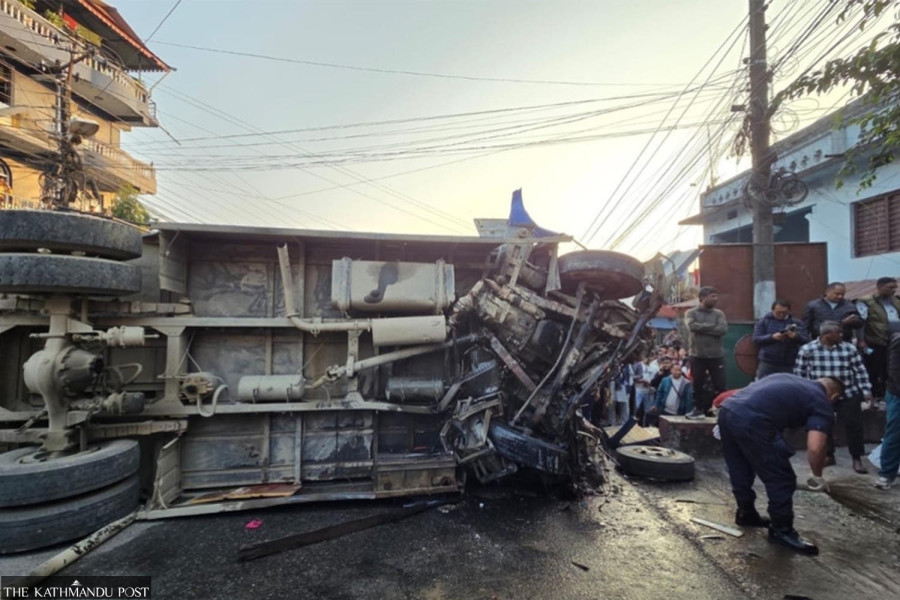
Road accidents in Koshi Province have continued to rise over the past three fiscal years, with a parallel increase in fatalities and injuries, according to police data.
In the fiscal year 2022-23, the province recorded 3,463 accidents, resulting in 371 deaths. A total of 258 people were seriously injured, while 5,750 sustained minor injuries.
The situation worsened in 2023-24, with accidents climbing to 4,626. The death toll rose to 452, alongside 371 serious injuries and 5,830 minor injuries.
In the current fiscal year, up to mid-March, 4,290 accidents have already been reported. These incidents have claimed 308 lives, with 475 people seriously injured and 6,455 suffering minor injuries.
Motorcycles account for the highest number of accidents, followed by cars, buses, trucks and tankers, and jeeps and microbuses.
Officials and stakeholders say the rising toll reflects systemic weaknesses, particularly the lack of coordination among agencies responsible for road infrastructure. The Department of Roads, Nepal Electricity Authority, Nepal Telecom, drinking water projects and local governments have failed to work in tandem, leaving roads increasingly hazardous.
Experts say rapid urbanisation along the East–West Highway and expanding traffic volume have outpaced safety upgrades. Poor lane discipline, and roadside encroachment have further increased risks, particularly for two-wheelers, which remain the most vulnerable group in daily crashes. Emergency response capacity is also limited, with delays in ambulance access and hospital referrals worsening outcomes in serious cases.
Saroj Shrestha, Koshi Province coordinator of the Federation of Nepalese National Transport Entrepreneurs, said two-wheelers are disproportionately involved in accidents. He said transport operators are often blamed, while authorities have failed to implement effective control measures.
Traffic rules introduced to reduce accidents remain poorly enforced. The traffic police continue to face shortages of personnel and budget, further limiting their capacity.
Superintendent of Police Deepak Giri, chief of the Highway Safety and Traffic Management Office in Itahari, said traffic police have been conducting regular checks, awareness campaigns and taking action against violators. “However, long-term solutions require coordination among all stakeholders, infrastructure improvements and strict compliance with rules,” he said. “Road safety is a multi-sectoral issue that demands equal responsibility from all agencies.”
Despite successive policy measures, implementation remains weak. Lack of cooperation from relevant agencies has disrupted traffic management, causing inconvenience to commuters.
Six years ago, authorities banned the unnecessary use of horns across 14 eastern districts and ran a year-long campaign to declare them no-horn zones. A year later, e-rickshaws were barred from operating on major highways. Neither measure has been effectively enforced.
Following protests over reckless tipper operations, authorities restricted tipper movement on major highways from 9am to 11am and 3pm to 5pm. The rule, too, has seen weak compliance.
In response to rising accident rates, a time-card system has been reintroduced over the past two years in Jhapa, Morang, Sunsari, and Udayapur. However, inconsistent monitoring has limited its impact.
Dibash Pokharel, spokesperson for Itahari Sub-metropolitan City, said traffic police continue to introduce new rules, but poor coordination among agencies responsible for roads, transport management and utilities has prevented meaningful improvement.




 13.13°C Kathmandu