RSP’s emergence edged Congress out. Now it’s not easy for Thapa to reclaim Nepal’s democratic space
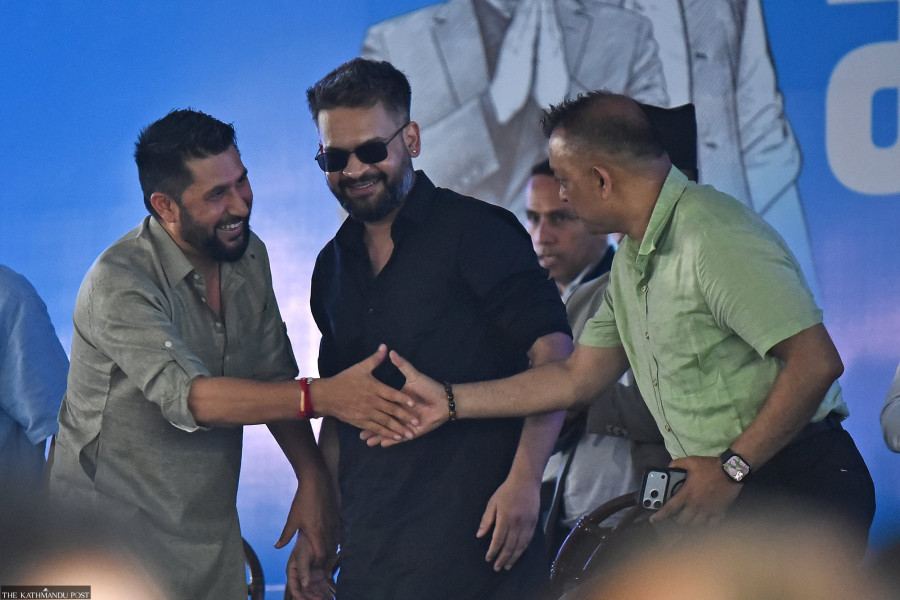
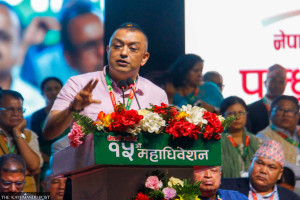
For decades, the Nepali Congress fought its biggest political battles against communist parties. The emergence of Rastriya Swatantra Party has fundamentally altered that equation. (From left) RSP chair Rabi Lamichhane, senior leader Balendra Shah and Nepali Congress President Gagan Thapa at RSP’s first national convention in Chitwan last Sunday. Angad Dhakal/TKP
The rapid rise of the Rastriya Swatantra Party (RSP) as the largest force within the country’s liberal democratic sphere has placed the Nepali Congress under unprecedented pressure, forcing the country's old democratic force to defend not only its electoral base but also its long-held identity as the principal democratic force.
For decades, the Congress fought its biggest political battles against communist parties, with ideological competition largely divided between democratic and leftist forces. The emergence of the RSP has fundamentally altered that equation.
Instead of facing its strongest challenge from the left, the Congress is now competing with a party that has consciously positioned itself within the same democratic tradition while appealing to many of the same voters.
The RSP, which built its political identity around democratic republicanism, the rule of law and good governance, has steadily expanded its influence among urban voters, young professionals and sections of the middle class that historically leaned towards the Congress. Political observers say this has created an entirely new contest inside Nepal's democratic space.
Before the RSP entered politics, the Congress primarily competed with the CPN-UML and the then Maoists, now the largest constituent of the Nepali Communist Party (NCP). In the 2022 general election, the Congress secured 25.71 percent of the proportional representation vote while the UML received 26.95 percent and the Maoist Centre won 11.13 percent. Together, the two major communist parties obtained almost 38 percent of the proportional vote, comfortably surpassing the Congress.
Although the RSP had been established only six months before the 2022 elections, it surprised the political establishment by securing 10.70 percent of the proportional vote, signalling that a new political force had emerged.
The political equation altered drastically in the March 5 elections. The RSP alone bagged 47.84 percent of the vote, becoming the country's largest democratic party. The Congress plunged to 16.24 percent, while the UML and the NCP were reduced to 13.44 percent and 7.49 percent respectively.
Political analysts say the latest electoral verdict suggests that the Congress now faces its principal challenge not from communist parties but from an organisation that claims to represent democratic politics more effectively than the party that has occupied that position for nearly eight decades.
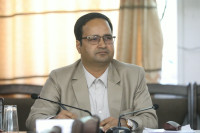
Political analyst Bishnu Sapkota believes the election marked a historic turning point because the RSP has effectively replaced Congress as the country's principal democratic force.
"Winning or losing elections is a part of politics. Parties grow and shrink over time," said Sapkota. "But for the first time in history, the Congress is facing an identity crisis. Even when it became much smaller after previous elections, such as in 2008 and 2017, its ideological position as the main democratic force remained intact. That is no longer the case now."
According to Sapkota, the centre of democratic politics has shifted from the Congress to the RSP, leaving the former with the daunting task of convincing voters that it remains the country's foremost democratic party.
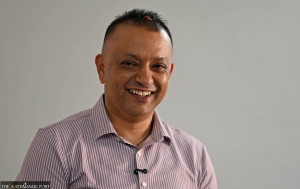
Another political analyst Geja Sharma Wagle also believes the RSP has mounted a serious challenge to the Congress, both electorally and ideologically, particularly after the RSP's first general convention approved a comprehensive political document outlining the party's long-term direction.
"The RSP appears to have consciously borrowed many ideological positions traditionally associated with the Congress," said Wagle. "It is attempting to establish itself among democratic constituencies by projecting itself as a democratic alternative. That naturally creates significant overlap between the two parties."
Indeed, the policy documents endorsed by both parties reveal substantial common ground. Both commit themselves to protecting Nepal's democratic republic, strengthening the rule of law, improving governance, safeguarding human rights, combating corruption and promoting a competitive market economy.
Both also embrace the broad principles of social democracy, emphasising social justice, equality of opportunity, accountable government and democratic freedoms as the foundations of the state.
Inclusive representation forms another major point of convergence. Both parties argue that inclusion is not merely an electoral arrangement but an essential democratic value that should shape state institutions and public policy.
Likewise, neither party advocates an uncontrolled free-market economy. Instead, both argue that while markets remain important, the state must actively improve citizens' living standards, reduce inequality and provide essential public services.
Their political programmes also target many of the same constituencies, including urban residents, educated youth, the middle class and voters seeking institutional reform.
Following the Gen Z movement of last year, the Congress concluded that Nepal requires sweeping political, administrative and economic reforms. The party identified youth unemployment, unequal opportunities, weak public institutions and the widening disconnect between political parties and ordinary citizens as major national concerns.
RSP Chairman Rabi Lamichhane's political document reaches broadly similar conclusions. His document attributes growing public frustration to corruption, impunity, political patronage, lack of opportunities, youth migration, declining public trust in state institutions and poor public service delivery.
The parallels become clearer on governance. The Congress advocates restoring public confidence in state institutions, reducing political interference, ensuring merit-based appointments and strengthening institutional accountability. The RSP similarly prioritises public service reform, digital governance, transparent appointments, anti-corruption measures and stricter enforcement of the rule of law.
Sapkota believes that because the two parties now occupy similar ideological grounds, future competition between them will revolve less around abstract political philosophy and more around which party can offer cleaner governance, more credible leadership and better public delivery.
He argues that as the RSP has emerged as the leading force within Nepal's democratic camp, the Congress must now convince voters that it remains the more authentic defender of democratic values, rather than relying on its historic legacy.
"History alone will no longer convince voters. The real challenge before Gagan Thapa is to find a new political narrative that convinces people that the Congress remains the strongest democratic force,” said Sapkota.
Wagle, however, cautions that while the RSP's convention documents present the party as democratic in theory, its practical politics have yet to be tested. "The documents show some similarities with the Congress in terms of democratic principles. But when one examines the party's agenda, policy choices and governing style, the RSP appears more populist, economically illiberal and centre-right than its rhetoric sometimes suggests."
Sapkota disagrees. He argues that the RSP's first general convention in Chitwan refined the party's ideological direction by embracing social democracy instead of what he considers the vague socialism traditionally advocated by both the Congress and communist parties.
Sapkota argues that the RSP used its first general convention in Chitwan to position itself as an even more refined representative of Nepal's democratic mainstream than the Congress. He contends that the ‘socialism’ traditionally espoused by both the Congress and communist parties has become largely indistinguishable in practice and accuses mainstream political parties of distorting that concept.
"Following its special general convention, socialism no longer appears to be a priority for the Congress, and that is a welcome development," said Sapkota. "In the name of socialism, both the Congress and communist parties have effectively pursued a model of crony capitalism. That approach was flawed. The RSP had also previously subscribed to the same socialist line, but it corrected its course at the Chitwan convention. The Congress should now move in the same direction."
The political proposal presented by the RSP chairman at the party's first general convention in Chitwan revised its earlier ideological commitment to ‘constitutional socialism’.
"The constitution of the country and a political party's ideology and guiding principles are two separate matters. While remaining committed to preserving and strengthening Nepal's constitutional achievements, we have concluded—based on an assessment of the country's current socio-economic conditions and citizens' expectations of the state's fundamental character—that social democracy should serve as the party's principal political philosophy,” reads the RSP’s document.
The two parties nevertheless continue to differ sharply on constitutional reform.
The Congress remains committed to the existing parliamentary system. The RSP, by contrast, advocates a directly elected executive and a fully proportional electoral system. It also proposes transforming the National Assembly into a chamber of non-partisan experts.
Federalism remains another major point of disagreement. While the Congress advocates improving the performance of federal, provincial and local governments without fundamentally altering the constitutional structure, the RSP has yet to settle on a clear position. Debate within the party ranges from abolishing provincial assemblies altogether to restructuring the provinces without eliminating them.
Analysts say the absence of a definitive proposal leaves uncertainty over the party's long-term constitutional vision.
Wagle believes the differences extend beyond institutional design. "Inclusive democracy, pluralism, federalism, social justice and inclusion remain areas where the RSP has not fully internalised democratic principles," he said. He argues that some proposals contained in the party's documents carry inherent contradictions.
"The commitment to democracy sits uneasily alongside proposals such as a directly elected executive, abolishing provincial assemblies, introducing a fully proportional electoral system and creating non-partisan local governments," Wagle said. "These proposals could ultimately weaken pluralism, federalism and inclusive democracy while concentrating power."
The Congress itself is undergoing an ideological transition. Although the party's recent special general convention formally embraced constitutional liberalism, pluralism and inclusion as core principles, many leaders continue to defend the socialist philosophy championed by BP Koirala. Party president Thapa, however, has increasingly argued that the Congress should view itself through the lens of social democracy rather than traditional socialism. The political proposal adopted by the convention avoided explicit references to socialism.
Instead, it pledged that the Congress would provide intellectual and ideological leadership in transforming Nepal's existing democracy into a more liberal, inclusive, responsive and delivery-oriented democratic system.
The rivalry is also shaped by generational change. Both parties are now led by comparatively younger political leaders seeking to redefine Nepal's democratic politics. Although relations between Lamichhane and Thapa are often described as strained, both acknowledge each other primarily as political competitors rather than enemies.
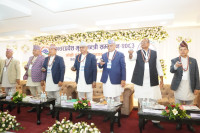
Addressing delegates during the opening ceremony of the RSP's first general convention in Chitwan, Thapa congratulated the party on its remarkable electoral success while acknowledging that its rise had created new pressure on the Congress.
"The RSP is Congress's competitor, not its enemy," said Thapa. "We want to become taller than you, but not by cutting your legs. We want to become cleaner, not by portraying you as dirty but by cleaning our own house. We are competitors, not adversaries."
Lamichhane echoes a similar message in his political document. "For decades, politics revolved around identifying friends and enemies," he writes. "Nation-building requires a different approach. Political parties are not enemies. At most, they are competitors with different ideas, programmes and priorities."
Organisationally, the two parties also display striking similarities. Both maintain multi-tiered structures extending from grassroots committees to the national leadership. The Congress operates through neighbourhood (tol), ward, municipal, provincial, district and central committees, while the RSP has established a comparable network beginning with booth-level organisations and extending to provincial and national bodies.
Despite leading a government backed by an overwhelming parliamentary majority within just a few years after its formation, the RSP's continued success is not guaranteed, analysts say. Sustaining public confidence through effective governance will determine whether its electoral gains are here to stay.
For the Congress, the challenge goes beyond confronting the RSP.
The party must first overcome its own internal divisions following the special general convention, where competing factions continued to disagree over the pace of organisational reform and ideological renewal. While much of the conflict revolves around leadership and power-sharing, broader disagreements persist over whether the Congress should continue relying on its traditional political identity or embrace a more comprehensive programme of reform.
Sapkota argues that Thapa possesses both experience and political credibility but now faces the monumental task of rebuilding the Congress's democratic identity.
"He must convince democratic voters why the Congress deserves their trust again. That cannot be achieved simply by invoking history,” said Sapkota.
Wagle shares a similarly cautious take. Unless the Congress undergoes fundamental organisational and ideological transformation, he believes its prospects of recovery will remain uncertain.
"If genuine restructuring takes place, the Congress can certainly make a comeback," said Wagle. "If it continues with the status quo, its future will be bleak. Both the future of Congress and Gagan Thapa's leadership will depend on the choices they make now, learning from history while preparing for the future."




 14.4°C Kathmandu