RSP’s first general convention turns into a tiring and costly affair for delegates
As the election process draws out, delegates are frustrated by heat and mismanagement and head back home short on cash.Rastriya Swatantra Party delegates are pictured at the party’s general convention venue in Chitwan at midday, Wednesday. Angad Dhakal/TKP
The Rastriya Swatantra Party (RSP), which entered the country’s political arena promising an alternative political culture, has faced severe criticism from its own delegates during its first national convention.
Delays in leadership selection, logistical mismanagement in extreme heat conditions and the rushed endorsement of crucial ideological documents without floor debates have triggered widespread resentment.
Many delegates from remote districts have begun returning home prematurely due to mounting hotel bills, raising fundamental questions about the party’s internal democracy and its departure from old political habits.
Bishnu Bahadur Khadka, the newly appointed RSP district secretary in Doti district, arrived in the sweltering city of Bharatpur with high hopes of personally witnessing a historic political transformation. Having joined the party following the Gen Z movement in September last year, Khadka expected a seamless, digitally driven democratic exercise. Instead, he found himself trapped in long queues under sweltering heat, counting his rapidly depleting personal finances.
"We, ordinary middle-class citizens, are forced to pay up to Rs2,000 every day just for our basic hotel accommodation," said Khadka. "How long can we sustain this heavy financial burden? I am certainly not the only one here. Hundreds of passionate delegates are facing this financial and mental distress due to the complete lack of institutional preparations."
The RSP’s grand national convention, which was supposed to showcase a modern alternative to the traditional parties frequently criticised by the four-year-old party, quickly degenerated into complete administrative chaos.
The opening session on Sunday set an incredibly disappointing tone. Scheduled to begin at 1:00 pm, the entire event was delayed by hours. Party Chair Rabi Lamichhane and Prime Minister Balendra Shah, who also serves as a senior RSP leader, finally arrived at 3:30 pm. This mirrored the standard operating delays of the older parties that the RSP had vowed to replace.
By Wednesday afternoon, Prime Minister Shah had returned to Kathmandu with his family without casting his ballot.
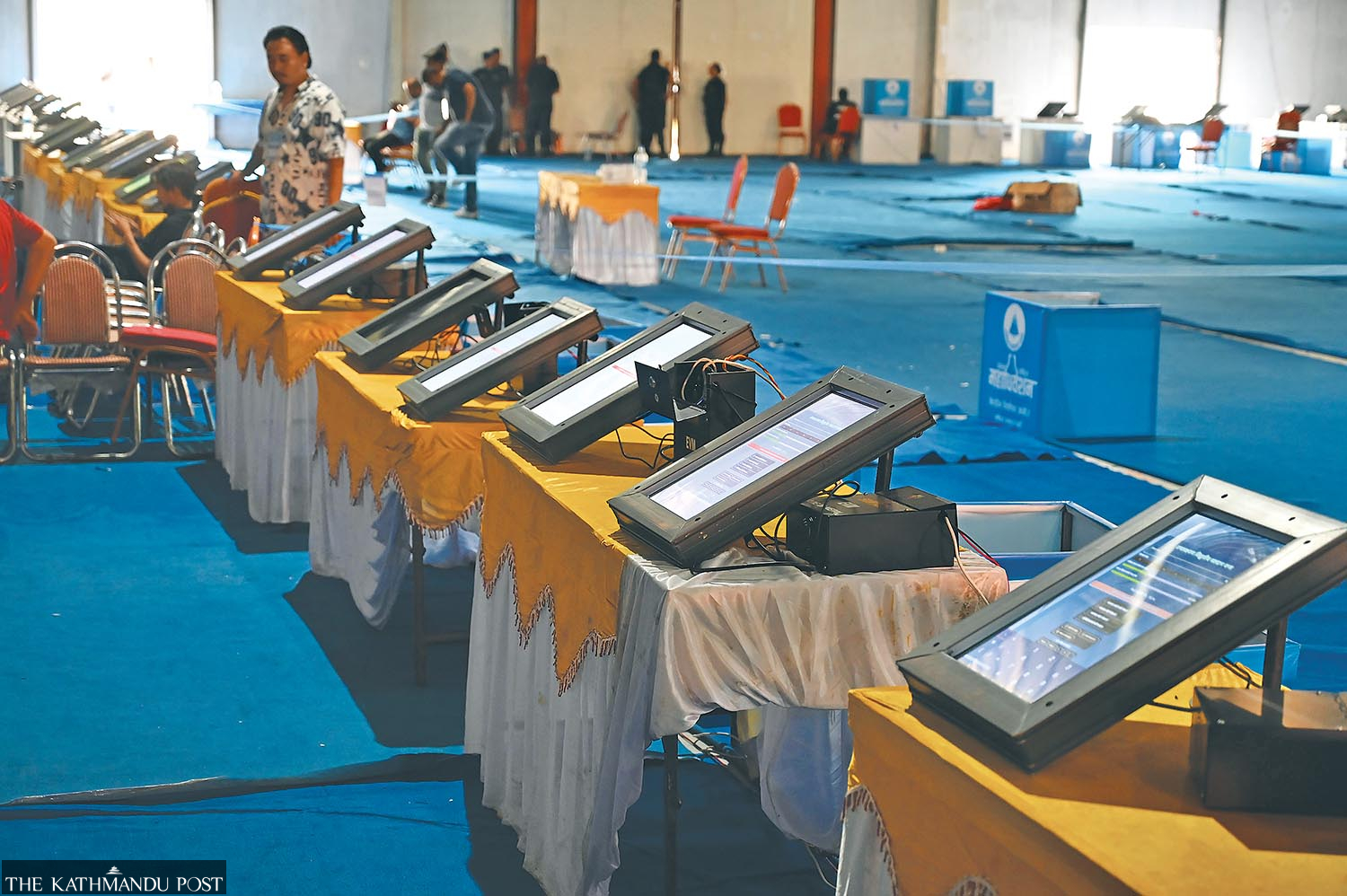
Deeply disillusioned by the total chaos of the voting system, many delegates started returning home. The mismanagement extended deep into the operational core of the convention. The RSP had continuously championed automated governance, yet delegates were forced to stand in lines for hours just to register their details into electronic voting machines. Over 400 candidates filed nominations for central committee positions, leaving the technical infrastructure overwhelmed.
"The party promised a fully digitised system," said Khadka. "Yet, we have to stand in line for two hours just to fill out a single nomination form. They did no homework. The internal management is an absolute disaster."
Beyond these logistical failures, serious questions have emerged regarding the party's core commitment to internal democracy. During closed sessions, key ideological roadmaps were pushed through without deliberations on the floor. Party Chief Lamichhane presented his political report, which was instantly endorsed through a forced applause without allowing a single delegate to speak or raise questions.
RSP Central Committee member Ramesh Paudel openly expressed his dismay over this lack of debate. In a public message addressed to Lamichhane following the latter's re-election as party chief, Paudel wrote: "There was a mere seven-second gap between the completion of your report reading and your call to the hall for its endorsement. At this rate, the 'deep discussion' conducted by 4,200 delegates in seven seconds is automatically eligible for the Guinness World Records."
Delegates from remote regions felt totally excluded from the policy-making process. Janak Raj Joshi, a convention delegate who travelled from the far-western district of Darchula, expressed deep concerns over the rushed proceedings.
"We undertook an exhausting journey to actively participate in defining the ideological direction of our party," said Joshi. "Tragically, we were not permitted to discuss a single political document during the closed session."
Electronic voting machines at the Rastriya Swatantra Party’s national convention venue in Bharatpur. Angad Dhakal/TKP
A primary point of contention arose from the economic-political document presented by party Vice-chair and Finance Minister Swarnim Wagle. Wagle’s report introduced radical proposals, including the dissolution of provincial assemblies and a major restructuring of federalism by reducing the number of local units from the current 753.
"Wagle presented the document without any group discussion or debate," said Joshi. "While the leadership expects us to nod along due to time constraints, this document represents a direct assault on the spirit of federalism. The people of Sudurpaschim, Madhesh, and Karnali provinces will never accept this. Altering constitutional rights so casually will trigger severe public backlash,” he warned.
Another delegate, speaking on the condition of anonymity, noted that if the RSP outlaws intellectual dissent and robust debates, it ceases to be different from traditional political parties. "The old parties always suppressed ideological debates. If the same culture is adopted, what alternative political values do we represent?"
Political analyst Uddhav Pyakurel is of the opinion that Wagle's proposals to dissolve provincial assemblies and reduce the meaning of local units are problematic. "These sensitive matters will naturally provoke intense resistance across the provinces," said Pyakurel. "The leadership must allow exhaustive debates on these issues. Suppressing them now will only invite a far more complicated and dangerous political crisis in the future."
The administrative failures have also fuelled suspicions of internal political engineering. Pramod Mandal, an RSP Koshi provincial committee member, accused the leadership of deliberately prolonging the election process to exhaust independent delegates and force them to leave.
"Delegates from faraway districts cannot afford to stay [here] indefinitely," Mandal stated. "Many are packing their bags. This artificial delay gives us reasons to suspect a conspiracy designed to clear the field and ensure the victory of handpicked loyalists close to the leadership.”
Stating that he does not oppose chair Lamichhane, Mandal said he was protesting “this absolute failure of management”. The election committee must explain “the paralysis”, he demanded.
Mandal directly confronted Wagle on Wednesday afternoon to voice his dissatisfaction. "I told him directly that our financial situations are fragile and we are running out of money," said Mandal.
Wagle, who is also contesting a leadership position, acknowledged the mess but deflected immediate responsibility.
In a brief conversation with Kantipur, Wagle said: "I need to look into the details, but someone must definitely be held accountable for this delay."
Ganesh Parajuli, the lawmaker and RSP joint general secretary, defended the party, attributing the delays to initial disputes over the delegates list and unforeseen technical snags.
"We integrated electronic voting machines, but candidate data forms were collected manually," said Parajuli. "Verifying physical documents, checking photographs, and converting them into digital formats created a bottleneck for the election commission. Since this is their first time managing a digital election of this scale, it took longer than anticipated."
The RSP has purportedly struggled with organisational indiscipline and internal power struggles as its highly centralised decision-making often courts controversies. Observers note that the party rushed into the national convention without holding conventions in seven out of the eight districts of Madhesh Province.
Political analyst Navin Tiwari said that the RSP squandered a great opportunity to set a new benchmark for Nepali politics. "There was neither ideological debate nor adherence to the official timetable. The new party has failed to demonstrate any alternative character,” said Tiwari.
Defending the management, Law Minister and RSP leader Sobita Gautam said that party officials had worked tirelessly. "As this is our very first experience handling a national convention, delays occurred," Gautam acknowledged. "We agree that there are areas needing improvement, and we will return far better prepared for the next convention.”




 20.12°C Kathmandu