RSP convention: Madhesh delegates participate under ad hoc arrangement amid leadership dispute
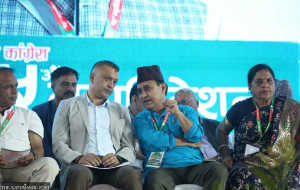
With district conventions unable to take place outside Parsa, delegates are attending the party’s general convention after being selected through existing ad hoc committees and previously completed local-level conventions.Angad Dhakal/TKP
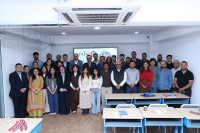
The first general convention of the ruling Rastriya Swatantra Party (RSP) opened in Bharatpur, Chitwan, on Sunday, but the party entered the landmark gathering without completing its organisational process in most of Madhesh Province.
The party failed to hold district conventions in seven of the province’s eight districts, leaving Parsa as the only district where a convention took place. As a result, delegates from the remaining districts were chosen through existing ad hoc committees rather than elected at district conventions.
The development is significant because Madhesh has become one of the RSP’s strongest electoral bases. The party secured 57.33 percent of proportional representation votes in the province in the March polls.
According to RSP leader Ranjit Ram, the party had no option but to rely on temporary organisational structures after district conventions proved impossible.
“Delegates were selected based on the previous ad hoc committees and the local-level conventions that had already been completed,” Ram told Kantipur. “District and provincial committees also nominated delegates using the earlier structure, while some additional members were appointed. In total, 592 delegates from Madhesh have attended the convention.”
Party leaders say internal rivalries, competition between founding members and those who joined after the party’s electoral success, and disputes over organisational control prevented the conventions from taking place.
The tensions escalated into physical clashes in several districts, with local leaders accusing RSP lawmakers of interfering in the organisational process and deepening factional divisions.
District chairs in all eight Madhesh districts reportedly sought another term. In Parsa, the only district where a convention was completed, district chair Hari Pant retained his position despite a convention marked by scuffles and tension.
District chairs from across Madhesh also lodged complaints with the party’s central committee, accusing provincial chair Tapeshwar Yadav of favouring a particular caste group and handpicking loyalists, allegations they said undermined the convention process.
The race for the provincial chairmanship had centred on Tapeshwar Yadav and Shiva Yadav, both from Siraha district.
Even in Mahottari, the ancestral district of senior party leader Balendra Shah, which received the highest number of proportional representation votes, the district convention was suspended indefinitely after disputes erupted during the closed-door session.
In Dhanusha, party members locked the district office on June 5 while leader Bali Sharma staged a hunger strike. On the day scheduled for the district convention, district chair Lakshmeshwar Yadav was suspended by the party's Central Disciplinary Commission, further intensifying the dispute.
In Siraha, clashes left several leaders and activists injured, including Dinesh Thapa, the district chief of the party's Rapid Action Team.
Bara also witnessed heated confrontations during an extended party meeting, forcing the district’s four lawmakers, Ganesh Dhimal, Chandan Singh, Arbinda Sah and Rahbar Ansari, to leave the venue under police protection.
Ahead of the national convention, party chair Ravi Lamichhane held discussions with lawmakers from Madhesh in an attempt to resolve the impasse.
According to one lawmaker who attended the meeting, Lamichhane proposed selecting provincial leadership through consensus while allowing delegates to be chosen through ad hoc committees for the time being.
Party spokesperson Manish Jha said the RSP had received only about 72,000 votes in Madhesh in the 2022 general election. Still, membership surged rapidly after the party’s subsequent electoral gains, delaying the expansion of its organisational structure.
“The rapid increase in support meant that organisational expansion could not keep pace,” Jha said. “The institutional development of the party was delayed, and that eventually contributed to the disputes that affected the convention process.”
On June 9, the party’s Central Election Commission formally suspended all activities related to the Madhesh provincial convention until further notice.
Jha said the party later decided to postpone the conventions to strengthen its organisational base before the upcoming local and provincial elections. Delegates were therefore selected through the existing ad hoc committees, with a commitment to complete the organisational process after the national convention.
“For now, delegates have been chosen through the existing ad hoc committees,” he said. “The organisational issues will be addressed after the convention.”
Rameshwar Yadav, a delegate from Siraha, said holding district conventions before the national gathering would have been preferable, but participants accepted the central leadership's interim arrangement.
“No one has been excluded from the convention,” he said. “The central committee issued a circular to ensure broad participation, and we are attending as delegates under that arrangement.”




 14.7°C Kathmandu