A vote for generational change or just another election?
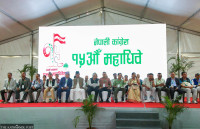
The March 5 snap election, triggered by a deadly Gen Z-led protest, is reshaping political competition. Yet questions remain about the parties’ visions, ideologies and promises of delivery. Election Commission records show that 114 political parties are contesting the polls under 107 election symbols, the second-highest number after the November 2013 second Constituent Assembly election. Post file photo
Mid-term elections are not new to Nepal, and the country is once again on the cusp of another one.
Barring a few exceptions, Nepal has repeatedly gone to elections before the House of Representatives could complete its full five-year term since the restoration of democracy in 1990. Seen only through the prism of timing, the March 5 election is just another manifestation of that familiar cycle.
The upcoming election, however, deviates from the old pattern in significant ways.
All previous mid-term elections were the result of inter- and intra-party disputes that eventually led to the dissolution of the lower house. Snap polls were held even when the Nepali Congress had secured a clear majority on its own, largely due to rifts within the party.
This time, an unprecedented and deadly Gen Z-led protest forced the collapse of the coalition government led by CPN-UML chair KP Sharma Oli.
Former Supreme Court chief justice Sushila Karki was appointed prime minister following the violent protests of September 8–9, and in response to protesters’ demands. Karki’s government dissolved the House of Representatives and announced the snap polls for March 5.
While earlier mid-term elections were dominated by debates over stability and ideology, the upcoming contest centres on good governance, effective service delivery, economic prosperity, job creation and—above all—a critical test of the credibility of mainstream political parties.
Election Commission records show that 114 political parties are contesting the polls under 107 election symbols, the second-highest number after the November 2013 second Constituent Assembly election.
Around two dozen of these are new parties contesting their first election.
Some parties that also fought previous polls, such as the Rastriya Swatantra Party (RSP), have strengthened themselves with the entry of new forces that have remained sharply critical of traditional parties.
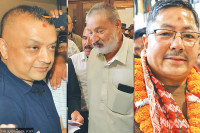
The entry of Balendra Shah, popularly known as Balen, the mayor of Kathmandu Metropolitan City, a rapper and pan-Nepal popular figure, has revitalised the RSP. The party’s momentum has further intensified with the merger of the Ujyalo Nepal Party, whose backbone is current Energy Minister Kulman Ghising.
“The upcoming election is a contest between the old parties that have long dominated politics and the new forces, most notably the RSP,” says Sanjeev Humagain, a faculty member in the PhD programme for Political Science and International Relations at Tribhuvan University.
According to commission records, as many as 28 new parties were registered following its call after the election announcement. However, several of them did not register for the election.
Besides the revitalised RSP, experts believe that Shram Sanskriti Party led by Harka Sampang Rai, Dinesh Prasai’s Gateeshil Loktantrik Party—backed by aviation tycoon Birendra Basnet—and Harmo Nepal Party of Dalit activist Khagendra Sunar could take some gains from the polls.
The Pragatisheel Loktantrik Party—formed jointly by former CPN (Maoist Centre) deputy general secretary Janardan Sharma, Santosh Pariyar, former RSP chief whip, Durga Sob of the Nepal Samajwadi Party (Naya Shakti), Netra Bikram Chand’s Nepal Communist Party (Maoist), and Janadesh Party Nepal, which includes some Gen Z leaders—is another notable force trying its luck in the upcoming election.
While 114 parties are contesting under the first-past-the-post system, only a little over half have submitted their closed lists to the Election Commission for the proportional representation system. Of the 100 parties registered, 64—including those contesting under a single election symbol—have submitted their PR lists.
Under election laws, only parties that qualify as national parties by securing at least 3 percent of the total votes cast are entitled to seats under the PR category. Of more than 70 parties that contested the 2022 election, only seven managed to achieve national party status.
Observers of Nepal’s electoral politics say that, along with the entry of new political forces, the growing number of voters—most of them young—is another factor that could shape the outcome.
The commission’s final tally puts the number of eligible voters at 18.90 million, an increase of 915,119 compared to the 2022 elections. Male voters number 9.66 million, female voters 9.24 million, while 200 voters are listed under the “other” category.
To accommodate the growth, the Election Commission has decided to set up 10,967 polling centres and 23,117 polling booths. Voting will take place between 7 am and 5 pm on election day.
“The entry of new political players has made the election interesting,” Humagain, the political science professor, says. “However, I don’t see ideological clarity or a clear vision among the new forces that are currently in the limelight. The traditional parties, too, are silent on how they intend to transform themselves despite the massive shift in political dynamics.”
Managing portfolios for top leaders and sharing positions within party committees dominated merger talks between Ghising and Shah and the RSP leadership led by Rabi Lamichhane. Discussions on governance models, federalism, economic policy and other substantive issues barely featured in those dialogues.
The Lamichhane-led RSP did not contest the 2022 provincial elections, citing reservations about the current structure of provinces. Several leaders close to Ghising, however, are staunch supporters of federalism. If claims by some Gen Z leaders, including Rakshya Bam, are to be believed, Shah has said he is committed to the existing federal system and republicanism.
“If managing positions were not their sole priority and they were genuinely concerned about policy, why have they failed to raise such crucial issues in discussions?” Humagain asks.
“They were vocal critics of the previous government’s governance—and rightly so. But shouldn’t they now explain how they intend to be different?”
Humagain adds, “Considering these factors, the upcoming poll appears more like a routine election than a snap poll announced after a major political upheaval.”
Binod Ghimire covers parliamentary affairs and human rights for The Kathmandu Post. Since joining the Post in 2010, he has reported primarily on social issues, focusing on education and transitional justice.




 20.79°C Kathmandu