Inside the five days when Army headquarters became Nepal’s political centre
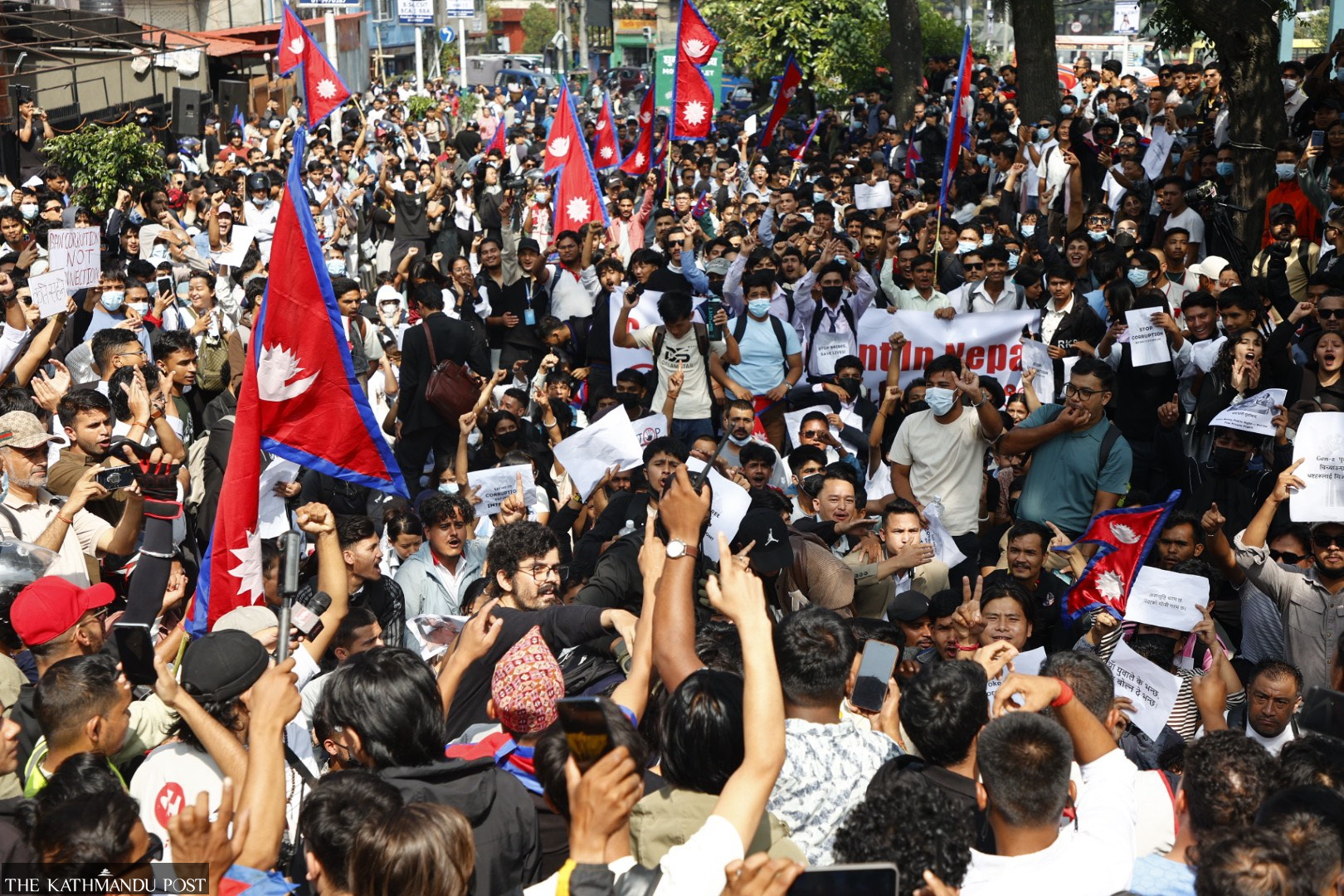
Days after September 9, as the elected government collapsed, Nepal Army found itself at the heart of negotiations over a new government, the fate of Parliament and the country’s political transition. Nepali Army deployed marching in the streets of Kathmandu on September 9, 2025. File Photo
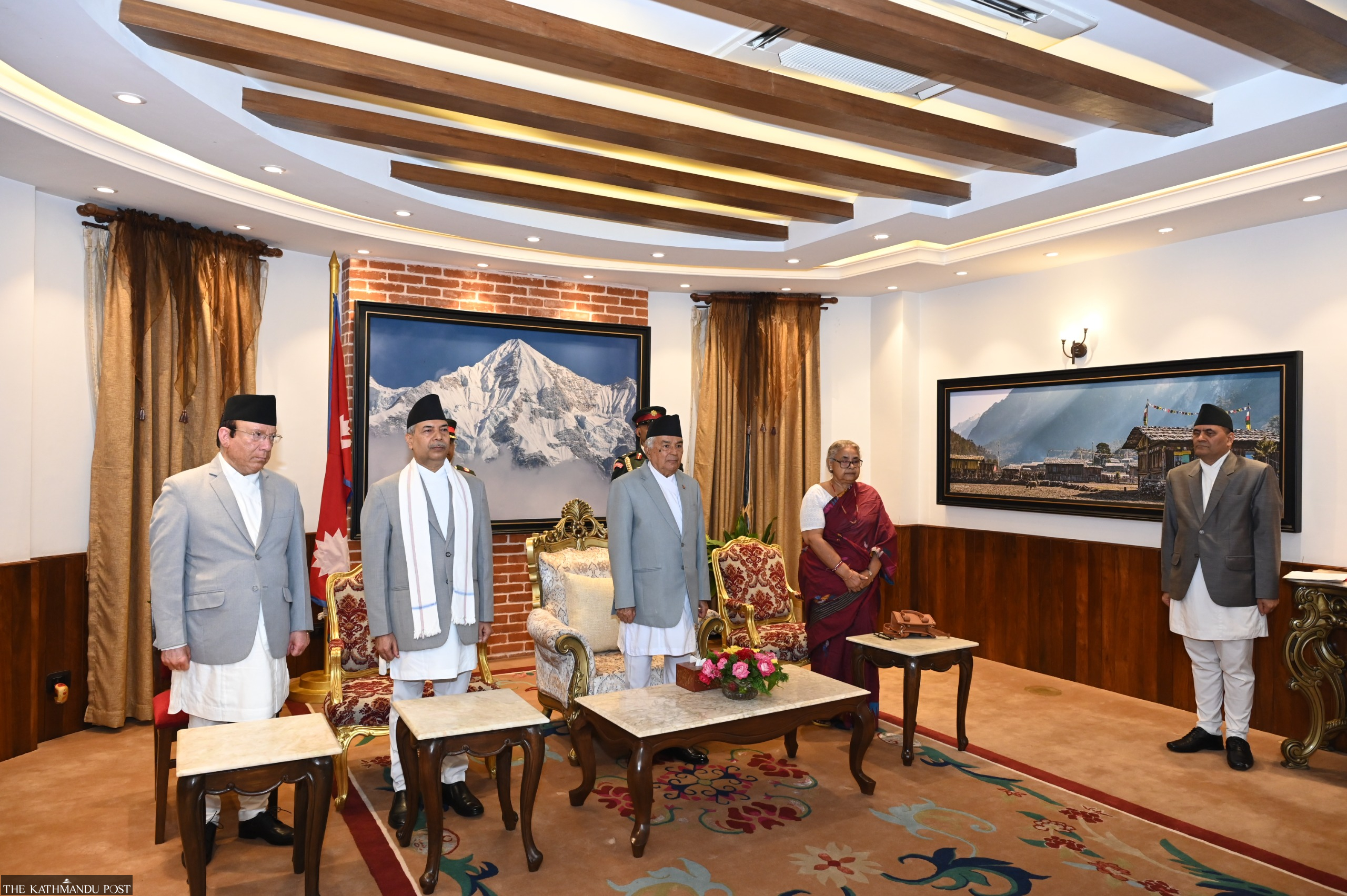
It was past 11 pm on September 11 last year. President Ram Chandra Paudel sat on a sofa at Sheetal Niwas, both hands pressed against his cheeks.
This was not the usual room where Paudel held his meetings. It was Kanchanjunga Hall, in a separate building behind the President’s Office. To the President’s right were Pushpa Kamal Dahal, Madhav Kumar Nepal, Narayankaji Shrestha, Ramesh Lekhak, Badri Pandey and others, seated in that order. To his left sat the President’s legal adviser, Baburam Kunwar; political advisor Sunil Bahadur Thapa; Chief of the Army Staff Ashokraj Sigdel; Secretary of the President’s Office Deepak Kafle; and others.
It was a high-stakes meeting. By then, scores of unarmed young protesters had been killed, while the state itself was coming apart. On September 8 and 9, Parliament, Singha Durbar, Sheetal Niwas and the Supreme Court had been set ablaze.
Then someone raised a question that had barely featured in Nepal’s political conversation for the previous decade and a half: Should former King Gyanendra Shah be brought into the discussions?
The proposal came from Army Chief Sigdel. President Paudel, also the Supreme Commander of the Nepal Army, remained pensive, his hands still pressed against his cheeks.
A high-ranking Army source, speaking to Kantipur on condition of anonymity because of the sensitivity of the matter, said that no one in Kanchanjunga Hall objected to the proposal.
“No one asked why he [Gyanendra] should be made a stakeholder,” the source said. “What the [Army] Chief proposed did not mean restoring the monarchy. He was simply proposing that the former king also could be brought into the discussion as different options for finding a way out of the crisis were being considered.”
A senior official from the President’s Office was then sent to Nirmal Niwas, Gyanendra’s residence about a kilometre from Sheetal Niwas. But the former king replied that he could not come unless the major political parties formally invited him in writing.
What transpired in Kanchanjunga Hall that night was not simply a conversation about whether to bring a former king into the discussions. It was one episode in a frantic series of discussions, proposals and negotiations unfolding as the state struggled to determine what would happen next after the protests had upended Nepal’s politics and triggered a constitutional crisis.
The constitutionally elected government had fallen. The President stood as the guardian of the Constitution. Yet the irony confronting the country was that the very Constitution he was charged with protecting also constrained his room to act.
And so the Army, an institution itself shaped by Nepal’s long transition to democracy, suddenly found itself at the centre of the country’s political crisis. For five days, Nepal’s political centre of gravity shifted from Singha Durbar to Jangi Adda — the Army Headquarters.
To understand how the transition unfolded during those critical days, Kantipur over the course of four weeks interviewed more than 25 people — including officials from the President’s Office, Army and police personnel, civil servants and politicians, and those involved in negotiations — for more than 40 hours. Kantipur also examined the answers given to the Gauri Bahadur Karki Commission by five senior Army officers, including the Army Chief; statements by the then Chief Secretary, Home Secretary, Kathmandu Chief District Officer and other officials; reports of the Karki Commission and National Human Rights Commission; and records of meetings and decisions made at the time by the Council of Ministers, National Security Council, Central Security Committee and Kathmandu District Security Committee.
The events of that night had begun unfolding hours earlier.
Earlier in the day, Paudel held a meeting at Nepal Army’s Bhairavnath Battalion, situated just opposite Sheetal Niwas, where he had been lodged since September 9, when parts of Sheetal Niwas were set on fire. Present were his legal advisor Kunwar, General Sigdel, and the chiefs of the Nepal Police, Armed Police Force and National Investigation Department — Chandrakuber Khapung, Raju Aryal and Hutaraj Thapa, respectively.
Paudel told the chiefs of the security agencies that a solution had to be found within the framework of the constitution.
According to people familiar with the discussion, Paudel floated three proposals: appointing a former chief justice or a non-parliamentarian as prime minister, with a mandate to hold elections within six months; summoning meetings of the House of Representatives and National Assembly, amending the Constitution to accommodate this arrangement, and immediately approving the constitutional amendment bill; and declaring a state of emergency for the period required to complete the process, allowing the security agencies to manage the situation.
Sources told Kantipur that all of them, including the Army chief, expressed a different view. They said the Gen Z protesters were demanding the scrapping of the constitution, an interim government, an interim constitution and elections, and questioned whether Paudel’s proposal would be enough to bring the situation under control.
When no concrete agreement emerged, at around 3:30 pm, in an episode that had not previously been made public, Paudel, accompanied by Sigdel, boarded an Army helicopter and flew to the Chanwan barracks in Makawanpur. Oli, the sitting prime minister, was there. He and other senior leaders had been helicoptered to the barracks by the army on September 9 amid violent protests in Kathmandu.
According to sources at the President’s Office, the two spoke for about an hour and a half. Paudel proposed a state of emergency as a way of avoiding the dissolution of the House of Representatives. He told Oli that if he, as the caretaker prime minister, recommended an emergency declaration, he was prepared to make an immediate decision. Oli would not agree.
Paudel, however, obtained Oli’s consent for the formation of a new government. He returned from Chanwan with an understanding that, even if Sushila Karki, the former chief justice, had to be made prime minister, the House would not be dissolved.
Hours later, he was back in Kanchanjunga Hall. In the adjoining Saipal Hall, Sushila Karki was waiting with Om Prakash Aryal, an advocate and longtime confidant of hers.
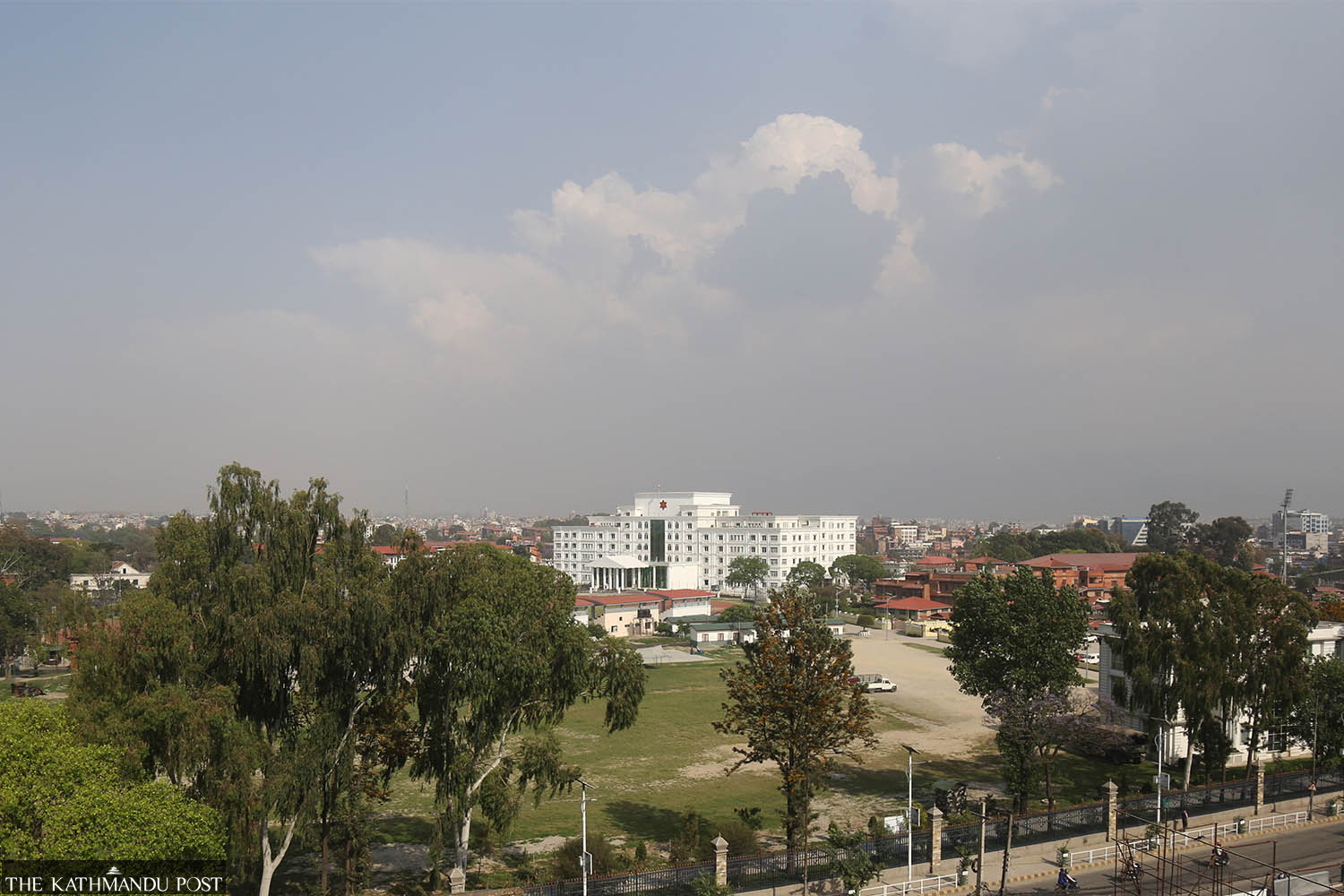
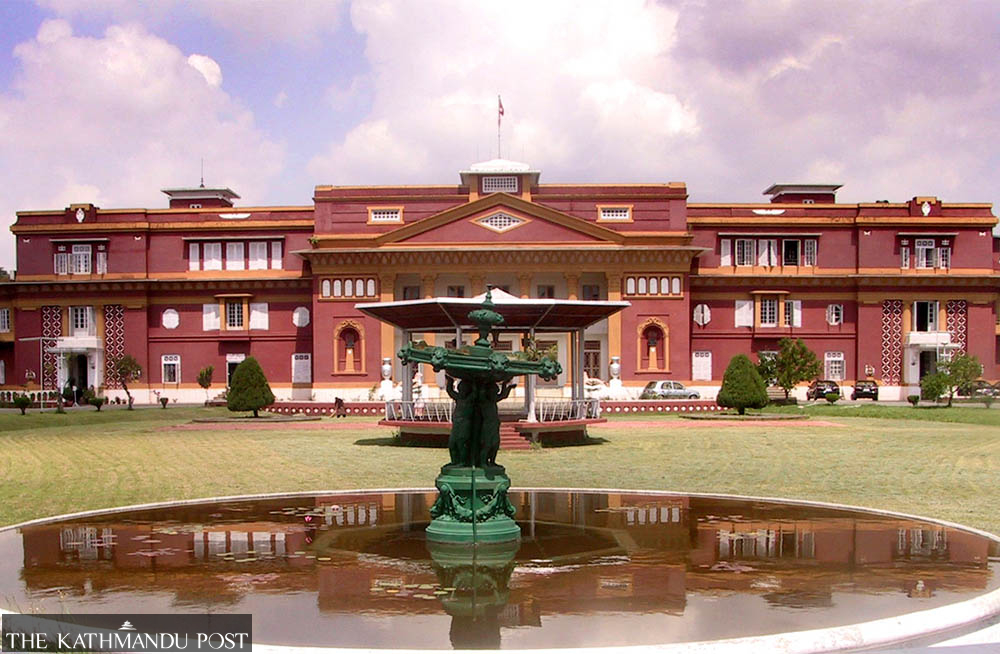
Nepali Army Headquarters
In an interview with Kantipur, Kunwar said the President wanted democracy to survive. “He was overwhelmed with tears. He was extremely worried, saying that democracy, the system and the achievements were at stake,” Kunwar recalled.
The September 11 meeting continued almost till dawn, but without any resolution.
Another meeting was held at the President’s Office after 9 am on September 12. Karki, Aryal, Sudan Gurung (now home minister), Kunwar, and Kafle took part.
But the morning meeting again failed to produce an agreement on forming an interim government without dissolving Parliament. Kunwar and the security chiefs briefed him that the situation had already deteriorated beyond that possibility. They also informed him that the Gen Z protesters were opposed to keeping Parliament in place.
The deadlock finally broke: Parliament would be dissolved, and the country would move on to an entirely new course.
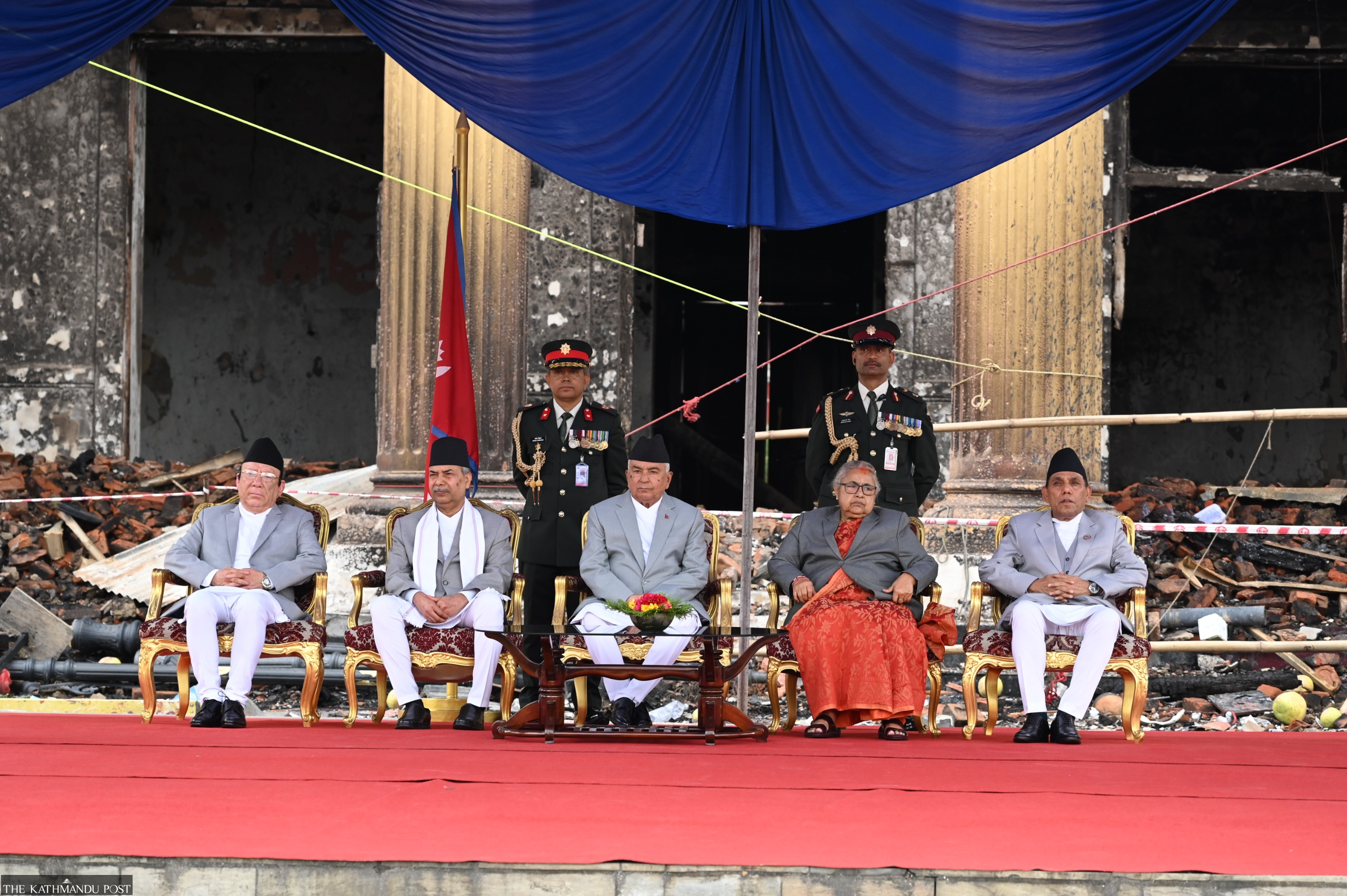
On the evening of September 12, Paudel appointed Karki prime minister of the interim government in front of the burnt presidential palace, stating that the appointment was being made “...on the basis of the Prime Minister’s recommendation and consent...”
UML leader Pradeep Gyawali told Kantipur that during the discussion with Oli at Chanwan, there had been an agreement that the House would not be dissolved after Karki’s appointment as prime minister, but that the President and Army Chief failed to uphold that agreement.
“The way an open call was made for a prime minister — as if recruiting someone — and the way that was done inside Army Headquarters raised questions about the purity and integrity of that institution,” he said. “On one hand, the Army Chief took the initiative and Army Headquarters became active; on the other, the prime minister was selected through voting on an app like Discord. This was an extremely serious contradiction.”
Gyawali’s criticism points to a broader set of questions that have been raised repeatedly over the past year about the Army’s overall role during the crisis: Did it go beyond its constitutional mandate in the name of managing the political transition? Did it assume a role that properly belonged to civilian political institutions? Some criticism has gone even further, alleging that the Army failed to protect certain state structures during the upheaval.
The questions about the Army’s role actually began on the second day of the protest. Protests intensified across the country on September 9, there was growing anticipation that President Paudel would come forward to address the nation. Instead, at around 9 pm, Army Chief Sigdel appeared on television.
“...A great deal of loss of life and property has already occurred during the course of the movement,” he said. “...In order to prevent further losses, we appeal for negotiations.”
An hour after that address, the Army formally came onto the streets. Other security agencies were deployed under its command.
By then, 51 people, including three police personnel, had already been killed. Much of the state had been left exposed: the Parliament building, Singha Durbar, the Supreme Court, the President’s Office at Sheetal Niwas, party offices and the homes of political leaders had been burned, along with dozens of private and commercial establishments in Kathmandu.
The Office of the President at Sheetal Niwas, Kathmandu
At around 3:15 pm, Balendra Shah, the then Kathmandu mayor, posted on Facebook, urging protesters to “be prepared to negotiate with the Army Chief.” His post swiftly brought the Army into the political process.
Around the same time, then-chief secretary Ek Narayan Aryal, Army Chief Sigdel, home secretary Gokarna Mani Duwadi, Nepal Police chief Chandrakuber Khapung, Armed Police Force chief Raju Aryal and National Investigation Department chief Hutaraj Thapa flew by Army helicopter from Baluwatar to Jangi Adda.
From there, Jangi Adda became the country’s administrative nerve centre. Aryal, who has since retired, said he led Zoom meetings from Army Headquarters with the civil service apparatus across the country, arranged physical security for critical government facilities, and worked to keep supply chains essential to the daily lives of ordinary people functioning.
On September 10, talks with various Gen Z groups began at Jangi Adda, with the Army Chief himself present.
Retired Major General Purna Silwal, who had been invited to participate in the talks, recalled arriving at the Tribhuvan Army Officers Club and seeing Durga Prasai, the controversial former Maoist and UML activist turned pro-monarchy campaigner, seated with around seven other Gen Z representatives.
“After I entered, Chief Sab [Sigdel] said, ‘You all talk among yourselves for a while,’ and stepped outside,” Silwal told Kantipur in an interview. “There were other Gen Z groups outside as well. Om Prakash Aryal was with those groups.”
“Chief Sab said ‘We should not prolong this any further. I want the name of the prime minister by tomorrow,’” Silwal recalled.
Sudan Gurung, representing the Gen Z groups, then said, “We cannot gather the Gen Z people by tomorrow. We will select [someone] through Discord,” and left.
The Gen Z groups were divided over who should lead the government. Army personnel eventually had to make an announcement outside Jangi Adda, asking representatives of the various groups to come forward with their names and phone numbers.
“Those of you who are leaders, tell us who you are and how many of you there are. Please contact us tomorrow morning with the name and phone number of your group,” an Army representative announced over a loudspeaker outside Jangi Adda on the evening of September 10. “Write down the name of each group leader and give it to us.”
But the name of Sushila Karki had already been put forward.
Om Prakash Aryal, who later became home minister in the interim government led by Karki, told Kantipur that he had proposed her name as prime minister at Jangi Adda that very morning. He said he had gone there after being invited by some Gen Z groups to participate in the talks.
“I proposed her name because I felt that, in that situation, she was the person who could provide the country with the necessary guardianship,” he said. “There was a broader agreement among the Gen Z groups at that point, but they later formalised it by voting on Discord.”
Aryal said that on the afternoon of September 9, he and Karki, accompanied by some associates, had visited protesters injured the previous day who were receiving treatment at Civil Hospital in Min Bhawan. They then went to a house in Mid-Baneshwar. It was around that time, at Aryal’s suggestion, that Karki spoke to the Army Chief by phone.
The conversation, Aryal said, was about how to deal with the destruction unfolding across the country, not about Karki becoming prime minister. The call took place before Oli resigned.
Silwal also confirmed that Karki had met the Army Chief at Jangi Adda, accompanied by her husband, Durga Subedi.
“The Army was facilitating the process,” Silwal said.
Yet the process failed to move swiftly because President Paudel was still trying to persuade Gurung, Aryal, Karki and others to accept the agreement he had reached with Oli to keep the House intact.
He failed.
At one point, an angry Gurung accused President Paudel of working in the interests of the Nepali Congress. He warned that if Karki was not appointed prime minister immediately, they would come and surround the President’s Office. A video that became public around that time captures Gurung saying that he was in communication with the Army Chief and that, if a decision was not made accordingly, he was prepared to “take the bullet” but would not back down.
Gurung’s reference to his communication with the Army Chief was revealing. By then, the Army’s role had extended well beyond managing security and protecting state institutions; it had become part of the political negotiations over who would lead the country.
The Army, however, maintains that even before the question of its deployment — and its role as a facilitator — arose, the scale of what was coming had been badly underestimated.
On September 7, on the eve of the protests, the Central Security Committee met at the Home Ministry but made no decision on a security strategy for the following day. The prevailing assessment was that the demonstration, called against the social-media ban, would be small and peaceful — around 8,000 people, according to the estimate presented to the Kathmandu District Security Committee.
“We all failed at intelligence, including the Nepal Army. On both days — September 8 and 9. No one had information that something like this would happen,” a senior military officer told Kantipur on condition of anonymity.
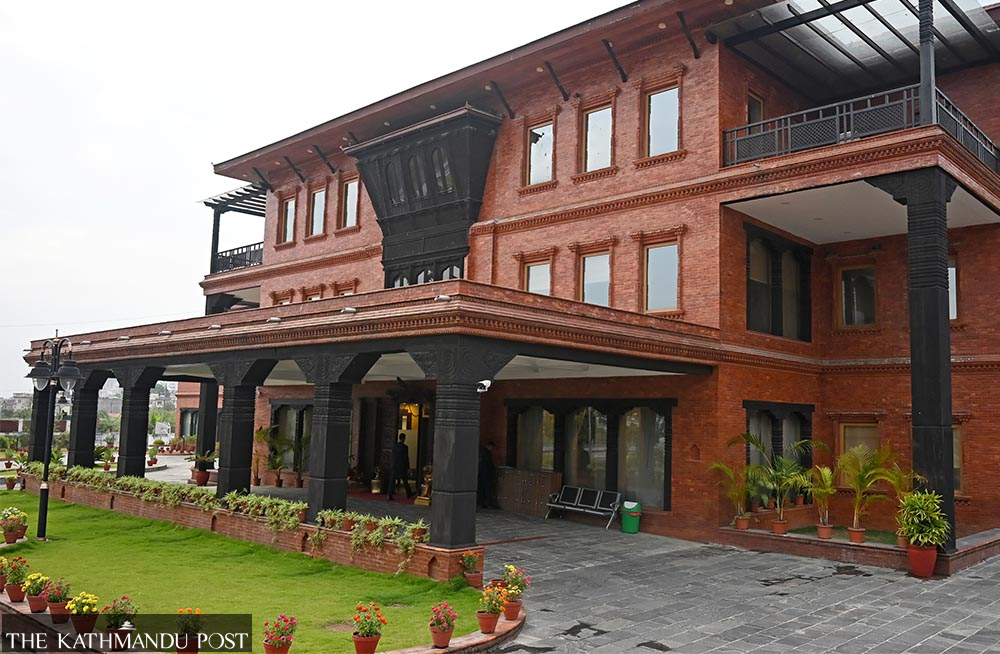
The Official Residence of Prime Minister at Baluwatar, Kathmandu Post Photo
The Army Chief, however, later told the Karki Commission (the Gauri Bahadur Karki-led panel formed to investigate the state crackdown and violence during the Gen Z protests) that the National Investigation Department and other security agencies had warned that the movement could become widespread. What began as a peaceful demonstration at Maitighar on September 8 turned violent after protesters broke through a police barricade near the Everest Hotel and moved towards Parliament. At 12:30 pm, Kathmandu’s chief district officer imposed a curfew.
Normally, curfew orders are issued in advance so that protesters already inside the curfew area have an opportunity to leave, while those outside the area cannot enter.
Immediately after issuing the curfew order, the District Security Committee, under the leadership of the Chief District Officer, decided to request assistance from the Army.
Lieutenant Colonel Ganesh Khadka, commander of the Narsingh Dal Battalion at Singha Durbar and himself a member of the District Security Committee, deployed troops under the command of Lieutenant Colonel Santosh Dhungel. The troops left the battalion at Singha Durbar at 12:45 pm but did not enter the compound of the Parliament building in Baneshwar until 2:50 pm.
In other words, the force deployed to enforce the curfew took two hours to travel less than two kilometres. By then, approximately an hour earlier, a protester had already been killed by police gunfire in New Baneshwar.
The Army’s delay raised considerable questions.
Lieutenant Colonels Khadka and Dhungel, the commander of the military team deployed for additional security at the Parliament building, both said the delay had been caused by obstruction from protesters.
In his response to the Karki Commission, Khadka said: “The movement of the force was difficult because prior notice of the curfew had not reached [the protesters], and most routes towards Baneshwar had been blocked by demonstrators.”
UML’s Gyawali, however, does not agree with the Army’s explanation.
“The Army was mobilised after the curfew was imposed. It does not appear that the duties required under the curfew order were carried out by the Army,” he told Kantipur
“Their argument is that they could not reach Baneshwar because vehicles were stopped at [nearby] Thapagaun. How can anyone be convinced by the argument that even when the Army itself wanted to, it could not reach its destination? Either you have to say: ‘Our state has failed; we are in the condition of Haiti or Sudan.’ If that is the conclusion, then I can agree. Therefore, it appears that the Army failed somewhere.”
But that raises another question: what had the elected government been doing as the crisis unfolded?
The decisions made by Cabinet at its 6 pm meeting on September 8 reveal how lightly the government regarded the events of that day. The Cabinet made no decision concerning scores of dead or injured protesters. It did not address the movement in any way.
Instead, it decided to promote two technical under-secretaries of the Ministry of Agriculture, Gangadatta Acharya and Rajendra Kumar Malla, to joint-secretary and grant them voluntary retirement.
It also decided to transfer Police Additional Inspector General Dan Bahadur Karki (now Inspector General of Nepal Police) from the Human Resources Development Department at Police Headquarters to the Kathmandu Valley Police Office in Ranipokhari.
Dan Bahadur Karki had been assigned there under a verbal order. He received the formal transfer letter only on September 13, after the new government had been formed.
After the Cabinet meeting, the then government spokesperson Prithvi Subba Gurung said that relief would be provided to the families of those killed, arrangements would be made for the treatment of the injured, a judicial committee would be formed to investigate matters including the search for anarchic groups that had infiltrated the movement, and immediate steps would be taken to restore social-media services.
However, an examination of the decisions of that day’s Cabinet meeting shows that none of these matters was actually decided upon.
What the Cabinet decided that day becomes even more revealing when compared with its decisions following the incident six months earlier, on March 28, 2025. During a pro-monarchy demonstration in Kathmandu’s Tinkune area, police had also used excessive force. Two people were killed—one by a police bullet and the other after protesters set fire to a house.
The Cabinet that met afterwards strongly condemned the demonstration. At the same time, however, it paid tribute to those who had died, wished the injured a speedy recovery, assigned the Ministry of Health responsibility for their free treatment, and instructed the Home Ministry to “investigate the facts and take action against those responsible.”
The government had at least performed those formalities for people killed in a movement that it itself characterised as violent. Yet six months later, on the evening when 21 young people were killed by police bullets, it neither remembered the dead nor the injured, nor ordered any investigation.
No questions were raised about the excessive use of force by police during the pro-monarchy demonstration of March. According to some, it was precisely that impunity that opened the way for the level of force used on September 8.
“The police were emboldened from March 28 (pro-monarchy protest) onwards. At the Central Security Committee meeting on March 27, the Home Minister had apparently said, ‘Use the power you have. From the very beginning, use force against these reactionary, regressive, anti-system forces,’” a senior military officer said.
“He [then home minister Lekhak] apparently said the same thing on the night of September 7: ‘Do what you did on March 28. No one has the freedom to become anarchic.’ That led to September 8.”
At around 8 pm on September 8, a meeting of the National Security Council was held at Baluwatar. But that meeting too did not make any concrete decision about the extraordinary circumstances prevailing at the time.
Under the Constitution, the National Security Council exists specifically for the purpose of recommending to the Council of Ministers that the Army be mobilised. The constitutional provision is that the President declares Army mobilisation on the basis of a Cabinet decision following a recommendation from the National Security Council.
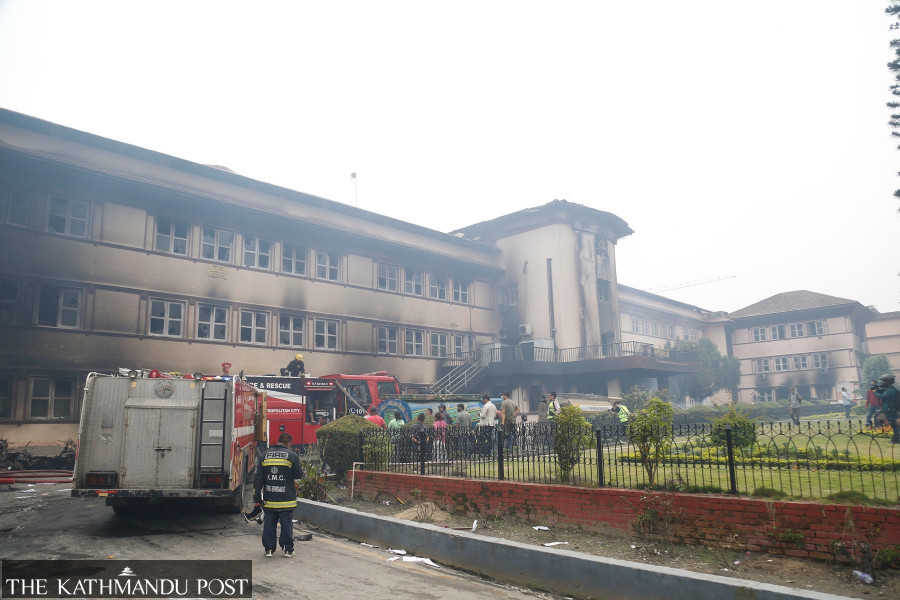
Supreme Court of Nepal after arson on September 9, 2025. File Photo
The Council meeting that evening did decide to “mobilise all security agencies effectively and in a coordinated manner.” However, although the decision referred to “all security agencies,” that did not necessarily mean the Army was being mobilised, because the procedures prescribed by the Constitution had not been completed.
Army Chief Sigdel told the Karki Commission that the Nepal Army is not an institution that automatically comes out onto the streets.
However, Sigdel said that by the time the National Security Council met on the evening of September 8, Home Minister Lekhak had already resigned, the restriction on social media had been lifted, and the expectation was that the protesters’ demands would be addressed. “Because the possibility of what might happen the following day was not anticipated, there was neither a decision nor a discussion regarding Army mobilisation,” he said.
Oli told the Karki Commission that the government had no intention of mobilising the Army, and that the Army’s advice had also been in line with that position. Therefore, no decision to mobilise it was made.
UML leader Gyawali, however, says that when reviewing the situation one year later, he thinks “perhaps it would have been better if the Security Council had recommended Army mobilisation.”
“But the Army cannot make this argument,” he said. “Because the prime minister was clearly in favour of bringing the situation under control by imposing a curfew. The Army should have been mobilised under the curfew, but that was not effectively done.”
“If the argument is that mobilisation was impossible without a recommendation from the Council, then after 10 pm on September 9, on whose recommendation and by whose decision was the Army mobilised?” he questioned.
The National Human Rights Commission also raised a question similar to the one posed by Gyawali. When the Commission summoned the Army Chief to give a statement, he did not appear. Instead, he sent a letter presenting his position.
The Commission, however, pointed out the apparent contradiction.
“It was stated that the Army could not be mobilised because the government had made no decision throughout the day on September 8 and 9, but it appears that the Army was mobilised from 10 pm on the 9th. As it appears that the Army was mobilised without a government decision, there was no consistency in the Army’s position,” the Commission wrote in its report. “It further stated that the Army had already been stationed at Singha Durbar and the President’s residence for the purpose of protecting those buildings, yet it appeared that it had not even made a basic effort to protect them.
At 10 pm on September 8, Oli again held discussions at Baluwatar with the heads of the security agencies, the Chief Secretary, Home Secretary and other officials.
The discussion continued until past midnight — 1 am. But rather than developing a concrete strategy for September 9, Oli spent a considerable amount of time giving the security chiefs a lengthy explanation of how the merger of Sikkim with India had taken place.
According to then-chief secretary Ek Narayan Aryal’s testimony to the Karki Commission, the heads of the security agencies gave oral presentations during the meeting.
Aryal stated: “At that meeting, no concrete intelligence information was presented indicating that there would be widespread violence, arson or large-scale vandalism through social-media platforms such as Discord and Reddit.”
According to Sigdel’s testimony to the Karki Commission, on the morning of September 9, Oli asked him for his advice there as well.
President Ramchandra Paudel, Vice President Ram Sahaya Prasad Yadav, and then Prime Minister of the interim government Sushila Karki in front of the burnt Sheetal Niwas building. Post photo
Sigdel told the Commission that he suggested two options: “Resignation [by the prime minister] would be appropriate to prevent further loss of human life, or, if constitutionally recommended, the Nepal Army was fully prepared to control the situation.”
But the conversation was not as cordial as Sigdel formally described it to the Commission.
According to a Baluwatar source, Oli was not happy with the Army Chief’s suggestion that he “provide a way out.”
“You don’t fulfil your defined responsibilities, and then you come to me talking about a way out? Are you going to preach politics to me?” Oli snapped.
Directing his response to the Army Chief, Oli added: “I am not sitting here to occupy this chair. I am here to meet the nation’s challenges. You should fulfil those challenges too.”
Army sources said the relationship between Oli and Sigdel had ceased to be cordial some time before that meeting. They said whenever Sigdel told Oli that he was receiving information about the situation beginning to deteriorate, the latter refused to take it seriously.
After one meeting with Oli, Sigdel returned to Army Headquarters and, while speaking with senior officers, recounted an incident in which he said: “the prime minister had been ‘looking down on’ him.”
According to a senior military officer, following the Tinkune incident of March 28, 2025, the Army Chief himself had repeatedly warned Oli that “there is anger among the people, and it could erupt further.”
At a meeting attended by other security chiefs as well, Oli said: “He is a soldier. He has no contact with the people. So his assessment is of its own kind. We, on the other hand, are politicians.”
Oli continued: “We are representatives of the people. Sitting here, I know what is happening in every household in all 77 districts. I am that updated. According to the information I have received, the people are happy with this government. The dissatisfaction with us may be from one or two people, or from reactionary forces.”
On the night of September 8, a meeting was held at Army Headquarters, with officials from other security agencies also present, to discuss how to deal with the security challenges expected the following day.
Gen Z protestors at Maitighar, Kathmandu, on September 8, 2025. File Photo
According to a brigadier general, those present included Major General Anup Jung Thapa, head of the Army’s Directorate of Military Operations; Brigadier General Manoj Thapa of the same directorate; Nepal Police and Armed Police Force AIGs Siddhi Bikram Shah and Narayan Dutta Paudel, respectively — Paudel is now the inspector general of the Armed Police Force — and Tekendra Karki, additional chief research director of the National Investigation Department, who is now its chief research director.
Kathmandu Chief District Officer Chhabilal Rijal had also been invited, but he did not attend.
Three curfew orders were issued in different parts of Kathmandu on September 8. The final order was to remain in effect from midnight until 5 am. At the Army Headquarters meeting, the security officials agreed that the District Security Committee should be advised to continue the curfew from 5 am on September 9.
However, a curfew order effective from 5 am was not issued. Chief District Officer Rijal issued it only at 8:30 am.
“Curfew can be effectively enforced only when the streets are empty. Once protesters have already taken to the streets, enforcing a curfew reaches a situation where troops may have to fire,” said Silwal. “Therefore, failing to continue the previous day’s curfew into the next day [September 9] was a serious error.”
After that, everything happened: arson, vandalism, looting, beatings and attacks.
Chief District Officer Rijal — the official who had issued the curfew order — himself felt unsafe even inside the Home Ministry at Singha Durbar. Before 2 pm, he went to the Army’s Narsingh Dal Battalion.
By then, news had reached Baluwatar that protesters had attacked the Deuba couple at their residence in Budhanilkantha. Protesters had also already entered the Baluwatar compound through its eastern gate.
Oli’s resignation came at around 2:30 pm. A military officer carried Oli’s resignation letter from Baluwatar to Sheetal Niwas.
In a conversation with Kantipur, then-Chief Secretary Ek Narayan Aryal said that “if the prime minister’s resignation had come earlier, the arson, vandalism and physical damage might have been reduced.”
According to then-Secretary of the President’s Office Dipak Kafle’s testimony to the Karki Commission, the resignation letter was received at 2:45 p.m. and was accepted just five minutes later. Another 25 minutes later, President Paudel himself had to be moved from Sheetal Niwas to Bhairavnath Battalion.
According to Assistant Brigadier General Manoj Baidwar, the security commander at the President’s Office, they had already received information around 11 a.m. that protesters were gathering in different places. At 12:30 p.m., President Paudel discussed the matter with all his advisers, including Baidwar.
At 2 pm, the President again asked him for an update on the situation. Baidwar told him that Sheetal Niwas remained secure and that preparations had been made to move the President to an alternative location if the situation reached a critical stage. Once protesters began entering Sheetal Niwas, the Army moved Paudel to Bhairavnath Battalion at around 3:15 pm.
At 3:20 pm, protesters entered Sheetal Niwas by climbing over the low walls on either side of the main gate.
A small unit of nine Nepal Police personnel was stationed inside Sheetal Niwas. The Armed Police Force was not deployed in the inner compound. There were 224 Nepal Army personnel deployed there.
Because residential and commercial buildings surrounded the area, there was a risk of serious loss of human life, said Baidwar, adding that for that reason, the security forces did not use gunfire, warning shots or tear gas.
However, another senior Army officer acknowledged Army’s weaknesses in its security strategy for the building housing the residence and office of the President. “Sheetal Niwas could have been protected. It could have been protected without killing people,” he said.
He argued that attempts had been made to protect the Supreme Court and Parliament building, but they were unsuccessful. “The Supreme Court was not under Army security, and the Parliament building was the same, but we made a very strong effort for Singha Durbar,” he said. “We had given orders not to allow human casualties. Remember what it was like at that time — the number of protesters kept increasing. They would beat their chests and come forward saying, ‘Shoot me!’ What were we supposed to do?”
The Army deployed at the prime minister’s official residence in Baluwatar received information at around 2 pm that protesters were approaching the residence. By 2:30 pm, Nepal Police and Armed Police Force personnel deployed around the outer perimeter of the prime minister’s residence had been unable to withstand the crowd and withdrew. Only after that did Oli resign.
According to Lieutenant Colonel Diwakar Khadka, the security commander at the prime minister’s residence in Baluwatar, the Army evacuated Oli by helicopter to the Chanwan barracks at 2:55 pm.
When this is compared with the time President Paudel accepted Oli’s resignation, the Army had flown him out of Baluwatar to Chanwan within 5 minutes.
The Army, however, has constantly pointed to the constitutional limits on its mobilisation. Multiple Army field commanders say the instruction from above was to “exercise restraint and prevent human casualties.”
President Ramchandra Paudel, Vice President Ram Sahaya Prasad Yadav, and then Prime Minister of the interim government Sushila Karki. Post photo
Similarly, regarding criticism that the Army failed to protect buildings such as Singha Durbar, Sheetal Niwas and the Supreme Court, Sigdel told the Commission: “I gave priority to human safety over the protection of physical structures.”
The soldiers deployed in the field also say they received the same instructions.
“Our first concern was precisely that people should not die,” a soldier who was deployed on the streets at the time said.
Critics give an exactly opposite response.
UML’s Gyawali says: “Nobody has said that the Army should have used indiscriminate force. The Army’s symbolic presence alone is sufficient to control disorder.” He believes that had the Army been mobilised immediately after the prime minister’s resignation, rather than at 10 pm on September 9, the destruction might not have been so catastrophic.
“That is why I believe that somewhere along the line, the Army failed,” he said.
Asked why the Army might have failed, he said, “I don’t have the answer to that question right now. I also don’t want to connect it to too many conspiracy theories.”
Another Army officer responded to the criticism in somewhat stronger terms.
“They seem to think that the Army did not save their government,” he said. “The Army’s job is not to save any government. That is the responsibility of Parliament and the people. The Army’s job is to protect the sovereignty of the country according to the Constitution.”
From the time the Army came out onto the streets on the night of September 9, rumours swirled that it was taking over. The following day, Army Headquarters called in the defense attachés of various embassies and briefed them about the developing situation.
Army Chief Sigdel explained the intention behind his televised address the previous night. He said that the Army had been trying to manage the situation but did not want to become involved in politics.
“There were widespread rumours and suspicions that the Army was trying to stage a coup,” a source at Army Headquarters said. “We explained to them that, because the country’s politics had suddenly changed, we were only trying to manage the situation until a civilian government could be formed.”
On the unrelenting criticism the Army has faced ever since last year’s Gen Z protests, a senior military officer put it this way, citing General Sigdel: “The Chief told a few senior officers, including me: ‘If the government did the right thing on September 8 [by opening fire on protesters], then we did the wrong thing on September 9 [by not opening fire to protect structures]. But if what happened on September 8 was wrong, then we took the right step on September 9.”
The marathon meetings of September 11–12 finally led to the appointment of Sushila Karki, paving the way for the political power that had shifted from Singha Durbar to Jangi Adda to return to Singha Durbar. Even now, a year later, many of the questions surrounding that transition remain unanswered.




 13.8°C Kathmandu