New land bank procedure aims to revive unused plots, but challenges persist
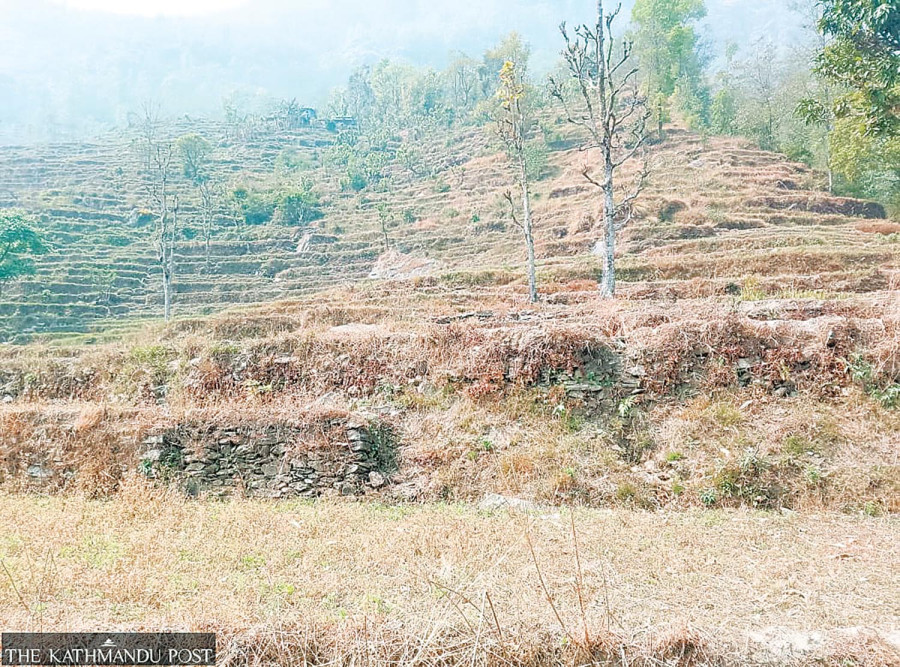
Federal rules allow local units to manage unused land, while earlier attempts struggled due to regulatory gaps. The land bank system seeks to bring unused privately owned land into use through local unit. Post file photo
The federal government has introduced a land bank system to bring unused private land and vacant plots into productive use through local government.
The initiative aims to enforce land-use classification provisions and increase productivity by ensuring the maximum utilisation of land resources. Under the system, local units will establish land banks to bring privately owned land that is unused or underutilised into use through specific conditions and incentives.
Under the arrangement, local units will issue notices inviting landowners who wish to make their land available through the land bank. Landowners must submit applications containing details such as ownership status, plot number, land area and the period for which they are willing to allow the land to be used.
To establish and operate land banks at every local unit, the government has introduced the Land Bank (Establishment and Operation) Procedure, 2026, in line with the Land Use Act, 2019 and the Land Use (Third Amendment) Regulations, 2025.
The federal Ministry of Land Management, Cooperatives, Federal Affairs and General Administration has approved the procedure and circulated it to all local units. The government has also urged people to use the new arrangement through their respective local units.
The Ministry of Land Management said local units do not need to prepare separate procedures as the federal government has already issued the framework. However, Section 21(1) of the Land Use Act, 2019 requires local units seeking to establish land banks to obtain approval from the federal ministry.
“Local units wishing to establish land banks must submit a copy of the executive decision to the ministry,” the procedure states. “The ministry’s division responsible for land use will examine the request as necessary and recommend the establishment of the land bank.”
The procedure adds that local units must establish a land section with the required infrastructure to operate a land bank. The section will identify private land within its jurisdiction that is unused, cannot be utilised by landowners or has remained vacant for other reasons, and prepare details of such land.
After receiving approval to operate a land bank, local units must form a land bank operation committee as required under Rule 13A(2) of the regulations.
The committee will be headed by the mayor of a municipality, chairperson of a rural municipality or a designated executive member. The chief administrative officer of the local unit will serve as a member, while the head of the section responsible for land-related affairs will serve as the member secretary.
The procedure requires local units to open a separate account for the land bank. Deposits made by land users, returns paid by users for using the land and service fees collected from landowners must be deposited into the account.
The account will also include grants provided by the federal, provincial and local governments, as well as other funds allocated by the local executive.
The funds can be used to pay returns owed to depositors, purchase machinery and office supplies required for the land bank, cover expenses incurred during field inspections and provide incentive allowances to employees assigned to operate the land bank.
The procedure also allows multiple local units to jointly operate a land bank. For this, the local units must sign a written agreement specifying the location of the joint land bank’s secretariat, the person responsible as member secretary, the official authorised to sign agreements on behalf of the joint land bank when leasing land in and out, the method for managing income and expenditure from the joint land bank fund, and responsibility for auditing the land bank’s accounts.
The land section must maintain a land bank registration register and record details of land submitted by owners. Before accepting land into the bank, the section must verify that there are no disputes over ownership, including joint ownership or tenancy rights. In cases involving tenanted land, consent from the tenant must also be obtained.
The section must also verify that the plot number, area and boundaries of the land are accurate, that the land is not under any restriction and that it can be used according to the land-use classification. If necessary, technical officials must conduct field inspections and submit a report assessing whether the land is suitable for use.
If the land is found unsuitable, the section must inform the landowner. If it is deemed suitable, the section must submit details of the land, along with the expected returns sought by the landowner, to the operation committee for approval to accept it into the land bank.
The operations committee can either approve or reject the proposal. If approved, the landowner and the section must sign an agreement within seven days. After the agreement is signed, the land must be recorded in the land deposit register and listed as available for use.
The land section must then publish a notice seeking applications from those interested in using land listed with the land bank. The notice must include details of the available land and allow applicants 15 days to submit requests.
Applications received from potential users must be registered in the land bank register. Before providing land through the bank, authorities must consider factors including the return proposed by the landowner, views of adjoining landowners, the practicality of the proposed use, potential for employment generation and environmental suitability.
The land section must prepare a priority list for allocating land and obtain approval from the local executive. For applications received from individuals seeking land use, the section must submit proposals to the operation committee within seven days after the application deadline, and the committee must decide whether to provide the land.
The committee must clearly specify the annual return that the user will be required to pay. The procedure states that individuals seeking to use land through the bank must deposit 10 percent of the annual return amount as security.
After permission is granted to use the land, the land section must write to the Land Revenue Office to restrict the property, preventing the landowner from selling, transferring ownership or registering a mortgage on it.
The procedure allows the restriction to be lifted if the landowner takes back the land with the consent of the user, if the local government withdraws the land it had provided for use, or if the user does not renew the agreement after the usage period expires.
If no one applies to use land listed with the land bank, the land bank can invite applications from cooperatives, groups or companies, according to the procedure. If a local unit decides to use the land itself, it must make the land available to interested target groups within its jurisdiction to use it according to specified conditions.
Local units must prepare a priority list of target groups, including landless and squatter communities, Dalit families owning less than five kattha of land (one kattha equals 0.03386 hectares), freed Kamaiya or freed Haliya families, families of martyrs, families holding government-issued identity cards for access to state benefits, and small-scale farmers.
If the user does not renew the agreement after the land-use period expires, the land will automatically be considered returned to the owner. If either party wants to return or take back the land before the agreement ends, both parties must inform the operation committee at least three months in advance. The procedure states that land returned after use must be handed back in the same condition in which it was received.
However, if any structure has been built on the land and the landowner has no objection to keeping it, the user will not be required to demolish and remove the structure.
The return received by landowners will be determined according to the agreement signed with the local unit. The procedure states that the land bank may charge landowners a service fee of no more than 10 percent of the return amount for taking responsibility for the land and making it available for use.
The local unit must deposit the remaining amount into the landowner’s bank account after deducting the service fee payable to the land bank.
Users must deposit 10 percent of the annual payment amount as a security deposit at the time of signing the agreement and pay the remaining amount according to the terms of the agreement. If users fail to pay the amount owed to the land bank, the local unit can recover it as government arrears.
The procedure also defines the rights and responsibilities of landowners and users.
Under the rights and responsibilities of landowners, the procedure states that ownership and legal rights over the land will remain with the landowner throughout the agreement period. Landowners must continue paying land revenue and property taxes payable to the government, must not interfere during the agreement period and cannot sell the land without the user’s consent.
Users, meanwhile, must use the land only for the specified purpose, protect the boundaries, existing infrastructure and soil fertility, and cannot allow anyone else to use the land.
If the boundary walls, embankments or borders of the land are damaged due to negligence or any other reason during the period of use, the user must repair the damage and return the land to its original condition before handing it back.
Users are also prohibited from changing the condition or structure of the land without the landowner’s approval.
The procedure requires local units to provide seeds, fertilisers, technical support and cash grants under their regular production-enhancement programmes to individuals, organisations or companies using vacant land through the land bank.
While providing grants, local units must prioritise activities such as grain production, vegetable farming, cash crops, fish farming, livestock and poultry farming, fruit cultivation, purchasing and processing local products, and other businesses.
If disputes arise between land users, land banks and landowners regarding land use or the payment and receipt of returns, the operation committee must resolve them based on the terms of the agreement, according to the procedure.
If a user is unable to fully utilise land because of a legal dispute that existed before the land was handed over for use, the landowner will be responsible for paying compensation through the land bank.
Similarly, if users damage embankments, boundary walls or land borders due to negligence or any other reason during the period of use, they must pay compensation for the damage.
The procedure states that users will not be held responsible for damage caused by natural disasters. The amount of compensation in such cases will be determined by the local unit.
Although the federal government approved and implemented the procedure in 2026, some local units had already introduced their own land bank procedures under the Local Government Operation Act, 2017. However, these initiatives have not yet been effectively implemented.
Rupa Rural Municipality in Kaski, Modi Rural Municipality in Parbat, Gulmi Darbar Rural Municipality in Gulmi and Kaligandaki Rural Municipality in Syangja introduced land bank-related procedures as early as 2020.
Similarly, Machhapuchchhre Rural Municipality introduced such procedures in 2023, Resunga Municipality in Gulmi and Bhanu Municipality in Tanahun introduced them in 2024, and Phikkal Rural Municipality in Sindhuli also introduced a land bank procedure in 2026. However, implementation remains limited.
Parbati Sunuwar, chairperson of Phikkal Rural Municipality, said the local unit has already introduced the Land Bank (Establishment and Operation) Procedure, 2026 and has begun issuing notices inviting both landowners willing to lease out land and individuals or organisations seeking land for lease.
“We have fixed rental rates based on the lease period. We have also informed the federal government that we have already prepared the procedure,” she said.
Sunuwar added that the rural municipality has also been providing a subsidy of Rs2,500 per ropani (one ropani equals 0.0509 hectares) to those cultivating vacant land. The programme, which started last year, has been continued this year as well, she said.
Gulmi Darbar Rural Municipality introduced its land bank procedure and issued a public notice in 2020. However, no landowners have come forward to make their vacant land available for use, said Tara Thapa Dhenga, vice-chairperson of the rural municipality.
“We have been issuing notices for the past three or four years asking landowners with unused land to make it available for use, but nobody has shown interest,” she said.
Rupa Rural Municipality has also prepared the Land Bank Operation Procedure, 2020. However, vice-chairperson Lal Subba Gurung said the local unit has faced difficulties because the federal land-use regulations did not provide detailed provisions on land banks.
Although the rural municipality introduced the procedure and began preparations in 2020, it could not implement the programme because the federal government had not included detailed rules on land banks, said the municipality chair, Nawaraj Ojha.
“We prepared the procedure, established the land bank, and even issued notices, but the land was not placed under restriction,” he said. “The Land Revenue Office said it could not restrict transactions unless the federal government issued clear instructions. We had already completed the process of taking and providing land on lease.”
The government had announced the establishment of land banks across the country in the fiscal year 2020-21 to bring vacant and unused private land into productive use.
The announcement came as the number of privately owned plots lying unused continued to rise. The government said such land would be commercially utilised to increase productivity. The policy and programme for fiscal year 2020-21 stated that land bank units would be established in 300 local units through joint investment by the federal, provincial and local governments.
The Land Use Act, 2019, also included provisions related to land banks under Section 21.
However, the Land Use Regulations issued on June 6, 2022, did not include provisions on land banks. Although the concept was included in the Act, it was absent from the regulations.
The federal government later incorporated land banks into the Land Use (Third Amendment) Regulations, 2025.
Ganesh Bhatta, spokesperson for the Ministry of Land Management, said local units can operate land banks only after obtaining approval from the federal government.
“One local unit had sought approval before the procedure was approved,” he said. “But since our procedure had not been approved at that time, approval was not granted. Since then, no local unit has sought approval.”




 14.69°C Kathmandu