From Juddha Shumsher’s speech to Malla-era manuscripts, 800 historical documents return to Nepal
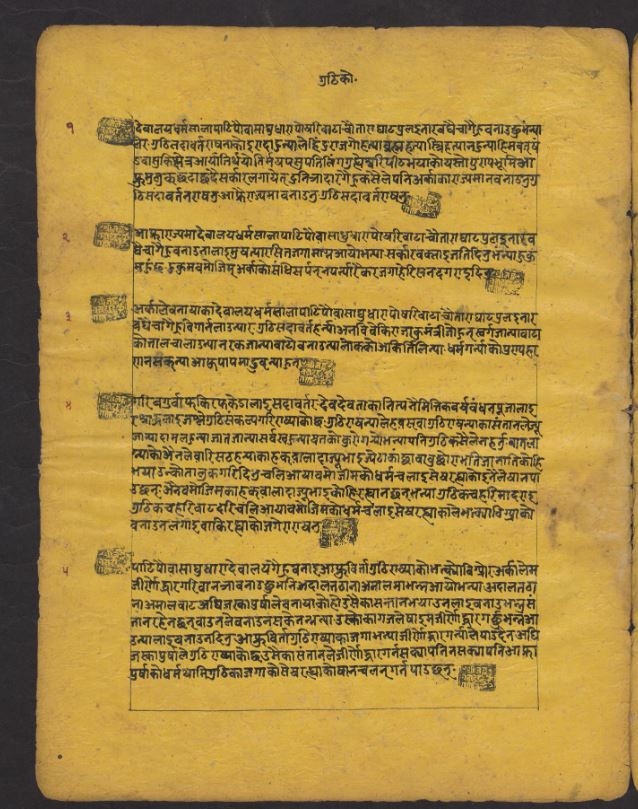
The collection, spanning the 13th to 20th centuries, includes royal edicts, legal records, court documents, manuscripts, and travel diaries. Historical documents dating to around 1241 AD, written on palm leaves. Photo: Courtesy of Rajan Khatiwada
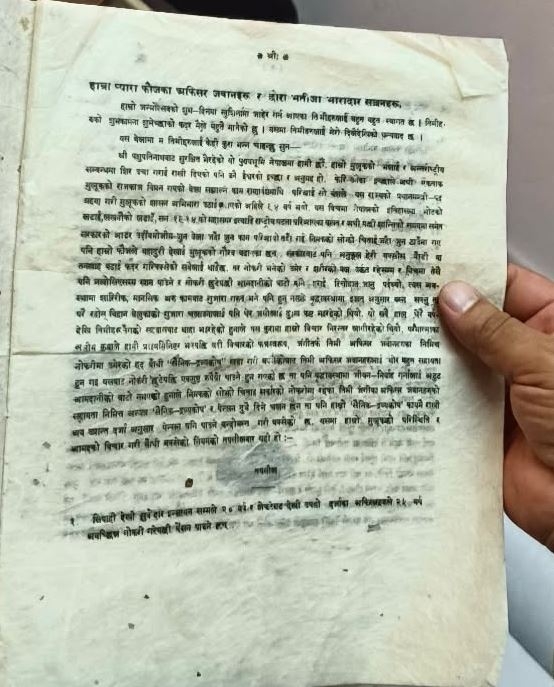
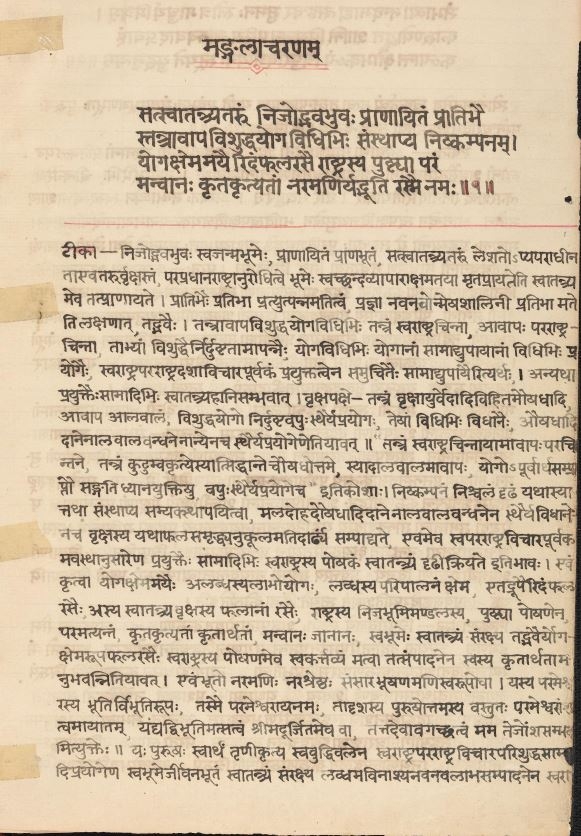
“...When the administration of the country began to deteriorate, the Rana family took on the responsibility of running the state and assumed the prime-ministership. It has now been 94 years since the family took over the country’s administration…,” read an excerpt from a speech delivered by Rana Prime Minister Juddha Shumsher on his birthday in 1941, when he addressed members of the court, government officials and the public.
During this period, whenever national events such as the Tibet War, the Battle of Lucknow and the World War of 1914 occurred, as well as during periods of peace, “our army went wherever and whenever the government ordered, faithfully serving the state and displaying bravery, thereby enhancing the country’s prestige...”, Juddha Shumsher went on to say.
The speech is among more than 800 historical Nepali manuscripts and documents from the collection of German businessman and stamp collector Josef Peter Rindfleisch that have now been handed over to Nepal’s National Archives, bringing important records of the country’s past back into the public archive.
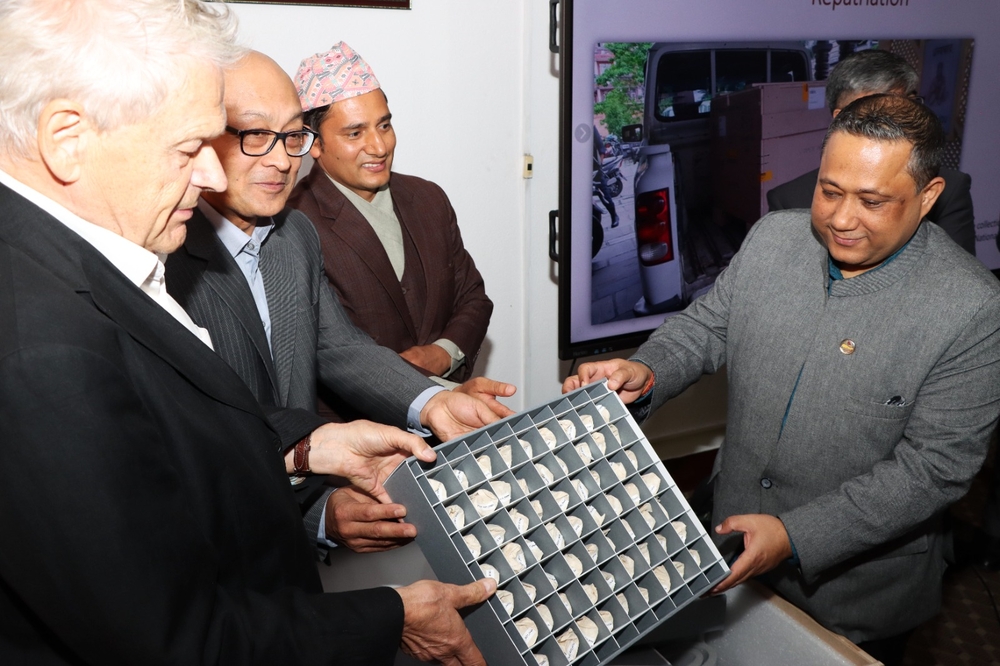
Heidelberg University professor Axel Michaels hands over the historical documents to Foreign Minister Shishir Khanal on Friday. Photo: Courtesy of Heidelberg University, Kathmandu Office
Rindfleisch died in 2002. His son, Walter Rindfleisch, and Heidelberg University were instrumental in preserving the documents and facilitating their repatriation.
Heidelberg University professor Axel Michaels was a friend of Walter Rindfleisch. Walter entrusted his father’s collection to Michaels to help arrange its return to Nepal. The collection was subsequently preserved, digitised, catalogued, and studied in Heidelberg.
At a function held at the Department of Archaeology in Kathmandu on Friday, Michaels formally handed over the documents to Foreign Minister Shisir Khanal. A formal agreement between the Nepal government and Heidelberg University on the transfer of the collection was signed in Heidelberg on April 24, 2026, by Nepal’s acting ambassador Sagar Phuyal and Michaels.
Under the agreement, the collection was brought to Nepal in August 2026 and was formally handed over on Friday. It will now remain permanently at the National Archives.
Rindfleisch’s private collection contains documents dating from the 13th to the 20th centuries. Collected from Nepal between 1780 and the 1990s, the collection includes tadpatra, or palm-leaf manuscripts, royal orders known as rukkas, lal mohars, or royal seals, and other state documents.
Rana Prime Minister Juddha Shumsher's speech. Photo: Upendra Raj Pandey/TKP
The collection was preserved and catalogued by the Heidelberg University Library and the Heidelberg Academy of Sciences and Humanities before being returned to Nepal in cooperation with the German government. How and through what channels the materials reached Germany remains a subject of research, said scholar Rajan Khatiwada.
Khanal said the repatriation of the historical documents helps restore Nepal’s cultural integrity and sovereign ownership of its civilisational heritage.
“Our art, literature, traditions, and sacred texts are not merely physical remains. They are the living soul of our civilisation,” Khanal said. “They carry centuries of philosophical thought, political governance, legal knowledge, and spiritual life.”
The minister added that the collection, which includes ancient palm-leaf manuscripts, royal grants and edicts, court orders, Sanskrit manuscripts, and historical travel accounts, would help researchers understand Nepal’s political, legal and intellectual development.
Among the repatriated materials are 465 Malla-period palm-leaf manuscripts dating to around 1241.
Palm-leaf manuscripts were made by drying and preparing leaves from palm trees as writing material. Before paper became widely used, religious texts, literature and other important documents were written on them.
A copy of the Muluki Ain, Nepal’s first comprehensive legal code, issued by Jung Bahadur Rana in 1854, has also been returned. The collection also contains 312 legal grants and royal documents from the Shah and Rana periods bearing clay seals, 18 handwritten books and travel diaries from the office of the Rana prime minister, and 11 other handwritten works on various subjects.
Nepal and Germany are both parties to the 1970 UNESCO Convention on the Means of Prohibiting and Preventing the Illicit Import, Export and Transfer of Ownership of Cultural Property.
“Today’s transfer is an important example of our shared international commitment,” Khanal said. “We greatly appreciate the active support extended by the German government, the German Embassy in Kathmandu and Heidelberg University in facilitating the smooth return of these documents.”
A copy of the Muluki Ain, Nepal’s first comprehensive legal code, issued by Jung Bahadur Rana in 1854, has also been returned. Photo: Courtesy of Rajan Khatiwada
Khatiwada, a researcher affiliated with Heidelberg University, added that the return of the ancient and historical documents was a matter of pride.
“Such medieval palm-leaf manuscripts are very useful for studying the economic and administrative history of the medieval period,” he told Kantipur. “The return of such ancient documents also creates a degree of moral pressure internationally to return similar objects that were taken out of Nepal.”
Speaking at the handover function, Ram Bahadur Kunwar, director general of the National Archives, said the return of historical and diplomatic documents would also support research.
“There are important documents relating to foreign affairs, some diaries and some royal seals,” Kunwar said. “They can provide information about Nepal’s foreign relations at the time, as well as its political, religious and cultural conditions, and other aspects of society.”
He said the authorities had also been unable to determine how the documents had left Nepal.
Historical document about World War. Photo: Courtesy of Rajan Khatiwada
Michaels said that in February 2018, a colleague brought two large boxes containing a collection of Nepali handwritten documents to his office at Heidelberg University.
“There were more than 800 documents,” he said. “Of these, 465 were extremely fragile birch-bark [bhojpatra] documents, some dating to around the 13th century. The collection also contained royal documents, court records and Sanskrit manuscripts. It was probably the largest collection of Nepali handwritten documents outside Nepal.”
He said he and his colleague felt at the time that the collection should eventually be returned to Nepal.
Michaels also announced the formal completion of the Nepal Heritage Documentation Project, or NHDP, which has documented Nepal’s cultural and historical heritage.
Over eight years, the project documented more than 2,000 heritage sites, 2,500 inscriptions and 8,000 historical objects in Nepal.
The project was carried out in collaboration with the Heidelberg Centre for Transcultural Studies, the Heidelberg Academy of Sciences and Humanities and the Saraf Foundation for Himalayan Traditions and Culture. It primarily documented and studied the architecture and cultural heritage of the Kathmandu Valley and culturally connected areas through photographs and detailed records. The project also documented intangible cultural heritage, including festivals and rituals.




 15.86°C Kathmandu