Voices of discontent continue to resonate at Maitighar
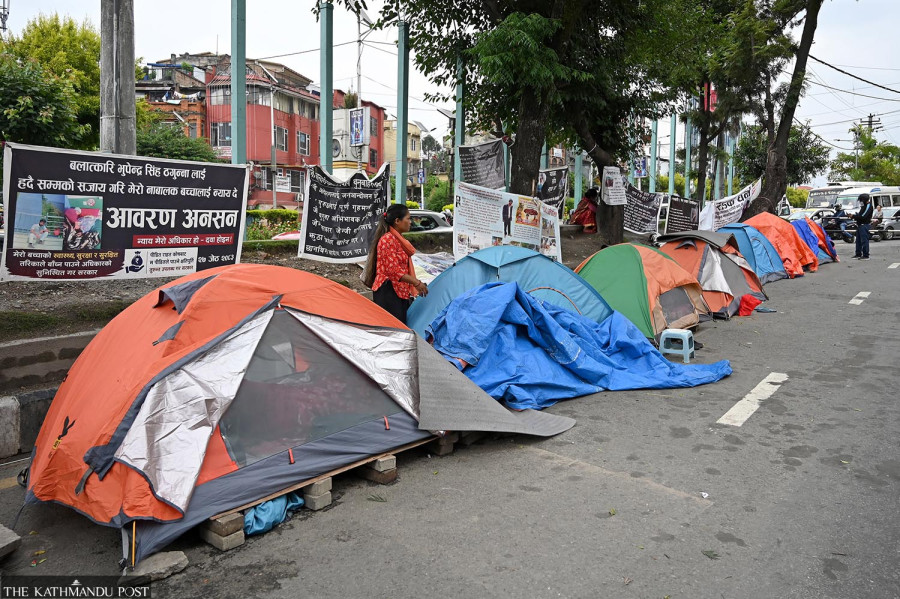
From exhausted doctors to victims of violence and loan sharking, people continue to gather at Maitighar seeking answers from a government that came to power promising change. Tents dot a street at the Maitighar roundabout in Kathmandu in this July 4 photo. The busy intersection has been a go-to site for various protesting groups. Post file photo
The faces at Kathmandu's Maitighar Mandala change every day, but the message remains much the same.
On Saturday afternoon, exhausted doctors joined rape survivors, families of jailed Gen Z protesters and victims of alleged loan-sharking at Nepal's most visible protest ground, underscoring the growing disconnect between the government's promises and the grievances of ordinary citizens.
“We heal others. But who heals us?” Beneath that mask was an illustration of a face covered by another mask, which was labeled 'Doctor in distress,' showing tears streaming from the doctor's eyes.
They were intern doctors, medical officers and resident doctors from hospitals across Nepal.
Dr Krishna Sedhari, one of the protesters, said trainee doctors and medical officers were routinely made to work far beyond the limits set by Nepal's Labour Act, 2017.
“The law allows a maximum of 12 working hours a day, or 72 hours a week, with at least one mandatory day off,” he said. "But we are forced to work much longer than that. Doctors barely get any rest. That's why we've come to the streets."
Nearby, another young doctor, Pragyan Basnet, held up a placard that read: "A doctor who hasn't slept all night is sick. The healthcare system is sick. The country is sick."
“This isn't just about us,” Basnet said. “Poor people depend on hospitals like Bir Hospital and Tribhuvan University Teaching Hospital. Why should doctors who have been awake for 26 straight hours be expected to treat patients? A doctor who has gone without sleep for 24 hours is no different from someone treating patients under the influence of alcohol.”
He said having a young prime minister, education minister and health minister meant little if the state remained unwilling to listen to young healthcare professionals.
“You cannot expect the country's healthcare system to improve while the doctors delivering those services continue to be overworked and exhausted,” he said. “The prime minister and ministers take weekends off. We don't even get a single day of rest.”
***
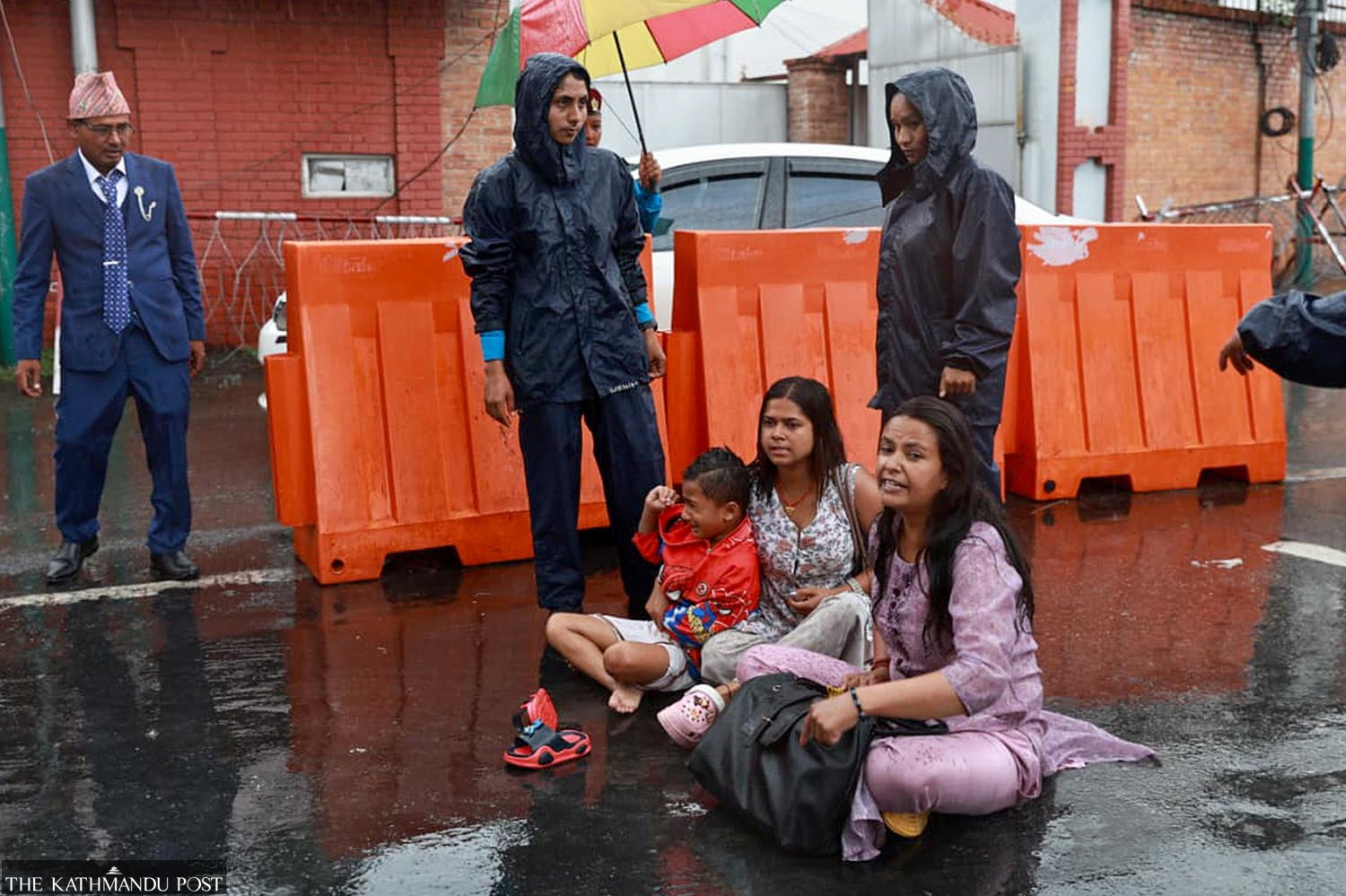
Only minutes earlier, at the gate of Singha Durbar, police had dragged away two women who had come hoping to meet Home Minister Sudan Gurung.
Binu Yadav and Niharika Rajput said they had spent the past five days trying to get the government to hear their grievances.
Standing outside the government complex, they rang handbells, the election symbol of the ruling Rastriya Swatantra Party (RSP).
“Maybe before they ignored us because they thought we belonged to another party,” Yadav said. "Now we're ringing the bell. Perhaps they’ll think we're RSP supporters. Will they listen now? During the election, they told us the bell symbol stood for justice and good governance. Today we're ringing that same bell to ask Rabi dai whether it will deliver justice for us.”
She said they had repeatedly been detained simply for demanding justice.
Rajput questioned whether citizens had to die before the state paid attention.
“Does everyone have to end up like Nirmala before they receive justice?” she asked, referring to the rape and murder of teenager Nirmala Panta, a case that remains unresolved years later. “Will they only wait outside our hospital beds after we’re dead, like they now say ‘Justice for Nirmala’ and ‘Justice for Ganesh’? If the government truly intends to deliver justice while we’re alive, then meet us now."
Niharika Rajput and Binu Yadav stage a sit-in outside the main entrance of Singha Durbar, demanding a meeting with the home minister to press for justice. Post photo
Rajput has spent years pursuing justice after alleging she was raped. Although a DNA test reportedly matched the accused, Shivraj Shrestha of Kshireshwornath Municipality-3 in Dhanusha district, she says she was later forced into a settlement after the District Court in Dhanusha acquitted him. She has since continued her battle for justice.
Yadav, too, says she is a survivor of violence.
While Yadav and Rajput rang bells outside Singha Durbar, another demonstration unfolded a short walk away at Maitighar.
Campaigners against caste discrimination held placards demanding an end to untouchability.
One asked simply: “Can't your conscience recognise another human being?”
Despite persistent monsoon rain, Maitighar Mandala hosted nine separate protests and sit-ins on Saturday alone.
Some protesters have lived there under makeshift tents for months.
Among them is 47-year-old Uma Khatri from Okhaldhunga.
For the past three months, she has slept under a plastic shelter demanding justice for her 23-year-old son, Milan Khatri.
He was shot twice by police during the Gen Z protests on September 8, 2025. Doctors initially said he was out of danger after emergency treatment.
As the number of gunshot victims at hospitals increased, doctors began asking some stable patients to return home to free up beds. Uma says her son Milan was discharged and was on his way towards Balkot on September 9 when he was seen in Maharajgunj amid the unrest.
She alleges that police later used a video showing him at the scene to file a murder case against him, even though he had only gone out while looking for a ride or vehicle. That day, Assistant Sub-Inspector Milan Rai and Police Constable Uttam Thapa were killed at the nearby Maharajgunj Police Circle.
“He was not even inside the police station. They watched a video and filed four or five cases against him,” Uma said.
Milan was arrested from Maitighar Mandala on October 26, 2025, and has remained in custody since then, according to Uma.
Uma, who survives by selling roasted corn on Kathmandu’s streets, has spent three months at Maitighar seeking justice from the Rastriya Swatantra Party-led government, which came to power on the back of the Gen Z protests in which her son was shot.
“The young people who took bullets helped bring these leaders to power,” she said. “But those same leaders haven’t even signed a single paper to help the youths who were injured.”
She said Milan had been the family's only hope.
“After he was jailed, our whole family fell apart.”
Uma says she has met Home Minister Sudan Gurung several times, including at Maitighar and Singha Durbar.
“He told us not to worry and said my son would be released,” she said.
“Nothing has happened. If my son had actually killed someone or committed a crime, we could accept that he was serving a sentence. But how can they keep an innocent person behind bars for so long?”
Amit Khanal “Urja” of the Gen Z Movement Alliance says the government appears more interested in addressing populist issues than confronting the everyday suffering of ordinary citizens.
He pointed to the government’s response to victims of loan-sharking as an example.
“The issue of loan-sharking victims was tied to the entire Madhes region. The government knew it could become politically difficult,” Khanaltold Kantipur. “That is why the home minister himself travelled to Bara and held talks. But this government has not taken any decision in favour of the Gen Z protesters who suffered in the very movement that brought it to power.”
He said families of people detained for participating in the uprisings have been staging sit-ins for months, but the government has failed to address their demands.
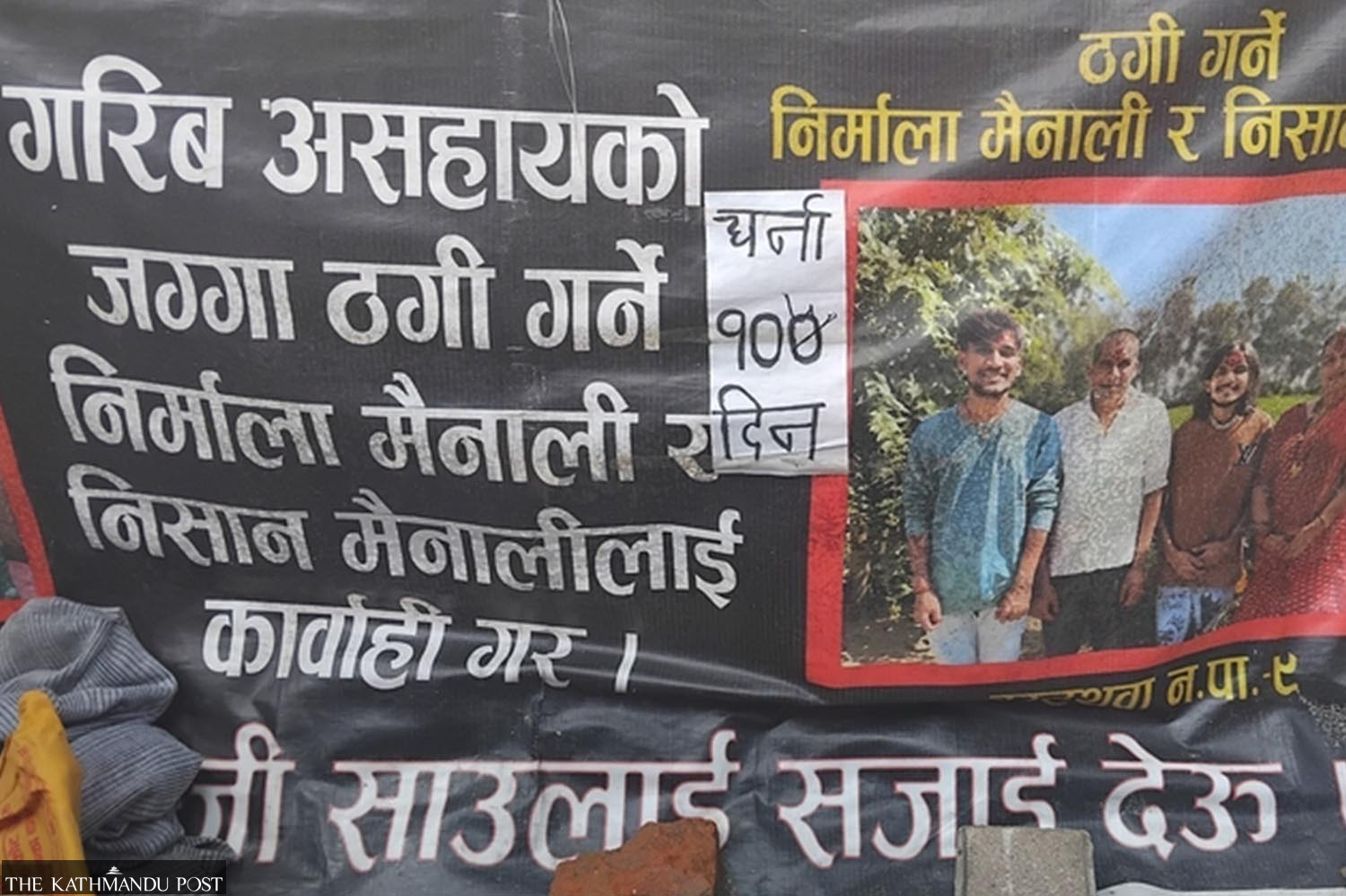
“The government travelled to Bara and reached an agreement with loan-shark victims, but it has not even promised to investigate allegations of fraud involving the family of Nishan Mainali, whose family has been protesting at Maitighar,” he said. “The home minister may have met some victims, but the real question is whether those meetings have produced any solution.”
Among those still waiting for justice at Maitighar Mandala is 48-year-old Bhag Narayan Mandal from Barahathawa, Sarlahi.
He says his family was trapped by a predatory loan arrangement while he was working in Bahrain.
In 2015, his wife, Uma Mahato, borrowed Rs150,000 from the family of Nirmala Mainali. Ten days later, she was made to sign a promissory document stating a debt of Rs1 million.
“They did not just take our money. Later, while I was still abroad, they took our 10 kattha of land (one kattha equals 0.03386 hectare) as well,” Mandal said. “We staged protests in the district first. When we heard that justice could be found at Maitighar, we came here. It has now been 105 days.”
According to Mandal, his brother-in-law transferred 10 kattha of land to his wife Uma’s name in 2017. He alleges that Nirmala repeatedly pressured her to mortgage the land.
“Uma did not know how mortgage arrangements worked,” he said. “She was told that her son Nishan would handle the paperwork.”
Post photo
Mandal says Nishan took her through the ward office and eventually to the land revenue office. As Uma could not read or write, she signed whatever documents she was instructed to sign.
“We kept paying money, but the loan never ended,” Mandal said. “It was only in 2022, when our daughter was getting married, that we discovered the mortgaged land had already been transferred to Nirmala Mainali’s name.”
He said he was working as a cleaner in Bahrain when his wife informed him of the transfer.
“I felt as if the ground had disappeared beneath my feet,” he said.
The family also filed a complaint at the chief district officer’s office, but Mandal says the decision went against them.
A decision document obtained by Kantipur from the District Administration Office states that Uma Kumari had voluntarily executed a land transfer agreement and received agricultural rights over the property.
“Therefore, as the transaction appears to be a transfer of land ownership rather than a case of predatory lending or a loan transaction, further investigation and action under the loan-sharking complaint process is not required,” the decision stated.
Mandal and his wife had been staying at Maitighar for the protest. But Uma has since fallen ill due to the cold weather and is recovering in a rented room.
“She developed fever, diarrhoea and vomiting. Our son took her to the hospital, and she is now resting in his rented room,” Mandal said.
***
Maitighar Mandala has become a gathering point for people with a wide range of grievances, from road accident victims to supporters of the former monarchy.
Victims of loan sharking from Madhes also marched to Kathmandu demanding justice. After beginning a Janakpur-Kathmandu foot march on June 29, they were met by Home Minister Sudan Gurung in Nijgadh, Bara. Talks followed, and the government reached a nine-point agreement with them.
But many others protesting with different demands are still waiting for relief.
Despite the Rastriya Swatantra Party-led government coming to power on the promise of change and holding a near two-thirds majority in Parliament, the number of people taking to the streets seeking justice has continued to rise.
According to data from the Kathmandu Valley Police Office, Ranipokhari, more than 800 protests and sit-ins were recorded in Kathmandu alone after Balendra Shah became prime minister.
The figures show 120 protests during the period between mid-March and mid-April, 222 between mid-April and mid-May, 240 between mid-May and mid-June and 282 between mid-June and mid-July. A total of 1,771 protests were recorded in the current fiscal year.
In comparison, Kathmandu Valley recorded 2,145 protests in the previous fiscal year and 2,252 in 2023/24, according to police data.
***
Among those protesting at Maitighar is Laxmi Singh from Jajarkot, who suffers from kidney disease.
“I am a single woman and both my kidneys are damaged,” she said. “I need support for treatment. The government must be responsible and accountable for ensuring healthcare for its citizens.”
She has been staying at Maitighar while collecting financial support and has demanded free treatment for patients like her.
Not every demand raised at Maitighar carries the same weight.
Ganesh Giri Yogi, another protester at the site, has been demanding that Nepal should have a yogi as prime minister, claiming he himself is the right candidate.
“From now on, the country should be run according to Sanatan values, and a yogi should become prime minister. People across the country need to awaken,” he said.
People protesting around Maitighar, and even some police officers deployed there for security, jokingly address him as “Prime Minister.”
For years, Maitighar has served as Nepal’s most visible protest ground. But the growing number of unresolved grievances there reflects a broader challenge for a government that came to power promising to address public anger and demands for change.




 15.34°C Kathmandu