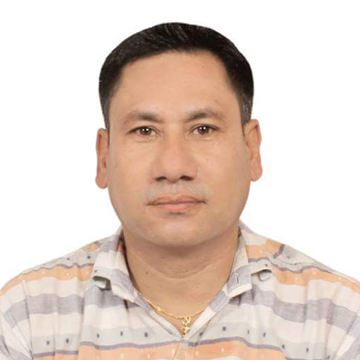
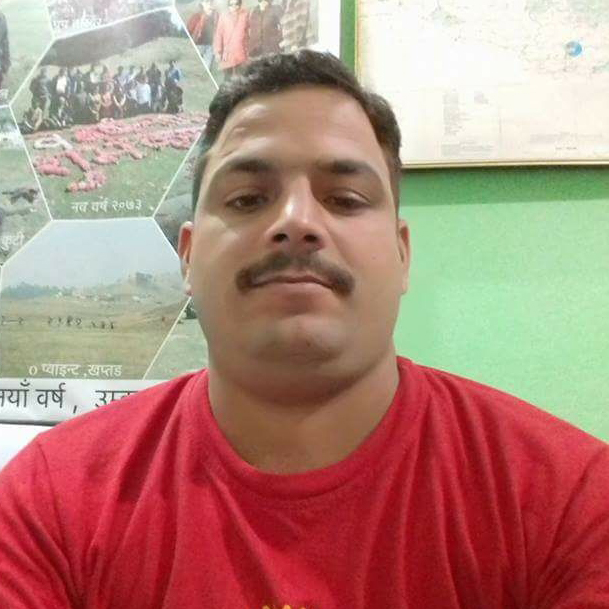
Farmers are searching across borders and cooperative depots for scarce chemical fertiliser, with some forced to transplant without it and others facing difficulties bringing supplies from India. Sarlahi residents Nagendra Prasad Singh and Suresh Prasad Singh, after they were arrested by India’s Sashastra Seema Bal (SSB) while returning with fertiliser from Sonbarsa in Bihar’s Sitamarhi district. Photo courtesy: Sitamarhi Live
Rautahat, Kapilvastu, Bardiya, Parasi, Biratnagar, Parsa, Kanchanpur And Kathmandu
Sarlahi farmer brothers Nagendra Prasad Singh, 60, and Suresh Prasad Singh, 55, were on their way back from India’s Sonbarsa market in Sitamarhi district on July 1after buying chemical fertiliser when they were stopped and arrested by a team from India’s Department of Agriculture and India’s Sashastra Seema Bal (SSB).
Their alleged offence: fertiliser smuggling.
The brothers were handed over to Sonbarsa police and are now being held at Dumra prison in Sitamarhi district. A court in Dumra has said their hearing will proceed only after it receives documents from the Sonbarsa police station.
“Officials had called us, saying they could be released on bail on Thursday. But we were told the hearing would only take place the day after tomorrow,” said Aditya Singh, Nagendra’s son.
The brothers, who have been living in Malangwa for the past seven years, had returned to their village for the rice transplanting season. Their family owns 2.5 bighas (1.69 hectares) of farmland, with each brother cultivating about 1.25 bigha (0.85 hectares).
Unable to find fertiliser in Nepal, they crossed the border into India and bought two sacks of urea and six sacks of diammonium phosphate (DAP).
Across Nepal, farmers are facing a severe shortage of chemical fertiliser. Although shortages have become a recurring problem during the transplanting season, farmers say this year’s crisis is far worse.
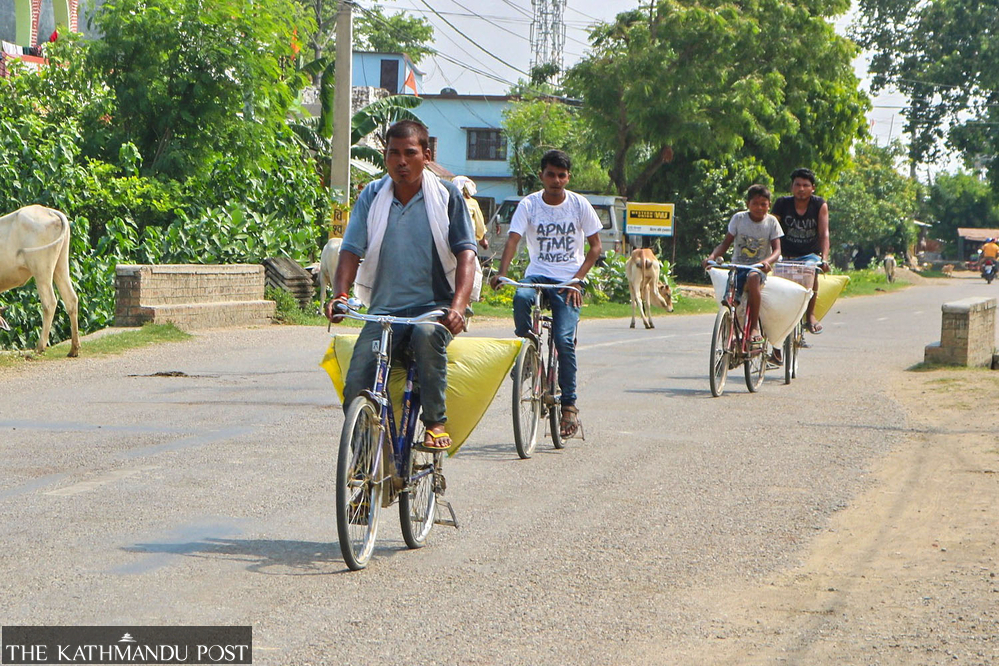
Instead of focusing on transplanting crops, farmers are spending their days searching for fertiliser, moving between cooperative depots and border markets in India. But even buying fertiliser across the border has become difficult, with Indian security forces tightening checks this year.
Farmers say people like the Singh brothers risk arrest simply for trying to secure fertiliser for their fields.
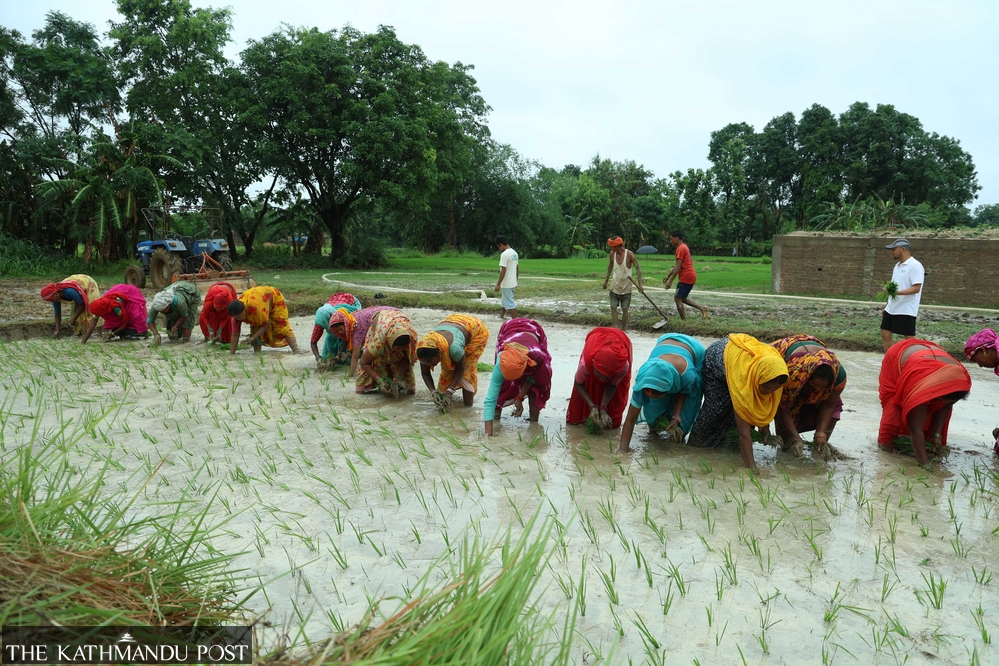
In some areas, farmers have completed transplanting without fertiliser, while in others, planting has stalled. Many fear that failing to apply fertiliser on time will reduce crop yields.
The government, meanwhile, continues to promise every year that farmers will not face fertiliser shortages.
Sushil Adhikari of ward 6 in Chandrapur Municipality in Rautahat says paddy seedlings cannot develop properly without fertiliser, and yields are likely to fall.
“Fertiliser is needed at the time of transplanting. But this year I searched in more than a dozen places and still could not find any. What are we supposed to do now?” he asked.
Adhikari needs DAP fertiliser for planting rice on six kathhas (0.20 hectares) of land. On Thursday, he called cooperatives asking for just five kilograms of fertiliser, but returned disappointed after being told none was available.
His paddy seedlings have matured, and his fields are ready for transplanting.
“This is not a problem limited to this year,” he said. “I have faced the same situation every year. If farmers with small plots are suffering like this, imagine the condition of those with larger farms.”
Farmers in Rautahat say cooperatives are blaming inadequate supplies, forcing them to visit distribution centres every day and return empty-handed. They fear that delayed fertiliser application will hurt production.
“Farmers cannot even get a single grain of fertiliser from cooperatives in our own country, and bringing it from India is also becoming impossible,” said Sahadev Chaudhary of Bijaypur. “Many farmers have stopped going to India after hearing that authorities have tightened fertiliser sales.”
Farmers say the SSB has restricted the movement of fertiliser across the border in recent days.
The Agriculture Inputs Company’s Chandranigahapur office said it plans to distribute 3,584 sacks of DAP from old stock. But farmers say the quantity is far below the district’s needs.
Rautahat requires more than 50,000 sacks of DAP every year.
“The problem exists because fertiliser has not been supplied from outside,” said Govinda Ghimire, information officer at the Agriculture Inputs Company. “More fertiliser may arrive around mid-July, but supplies are not enough to meet demand. We are distributing from existing stock. Additional supplies have not arrived due to the West Asia conflict.”
According to Ghimire, the district currently has 17,480 sacks of urea in stock.
Jitendra Chaudhary, ward 8 chair of Chandrapur, said the ward has 7,000 farmers but has received only 49 sacks of DAP so far.
“How can 49 sacks of DAP be distributed among so many farmers?” he questioned. “Ordinary people are suffering.”
Farmers in Koshi Province, including Jhapa, Morang and Sunsari districts, are also struggling with fertiliser shortages during the paddy transplanting season.
Many have been forced to transplant without fertiliser.
Khadka Narayan Sardar of ward 3 in Gramthan Rural Municipality in Morang said he has been unable to obtain fertiliser this year.
“Farming is continuing, but there is no fertiliser,” he said. “Those with connections are getting supplies, but farmers like us are facing one problem after another.”
Sitaram Koirala, a farmer from ward 1 of Budhiganga Rural Municipality in Morang, faces a similar situation.
“DAP should be applied before transplanting paddy,” he said. “We had to transplant without it after failing to find fertiliser.”
Kamala Pokharel, acting provincial manager of the Agriculture Inputs Company’s provincial office, said supplies have fallen short of demand.
“We have not been able to meet demand because deliveries have been lower than expected,” he said. “Only limited quantities are being distributed through cooperatives.”
According to Pokharel, DAP, which is essential during the transplanting season, is currently in short supply, while urea has already been distributed.
Urea is generally applied around 22 days after paddy transplanting.
The company said five consignments of DAP have arrived at Kolkata port. Around 150,000 metric tonnes of DAP are expected to enter Nepal, but transport, customs procedures and distribution will take time, meaning farmers will not receive immediate relief.
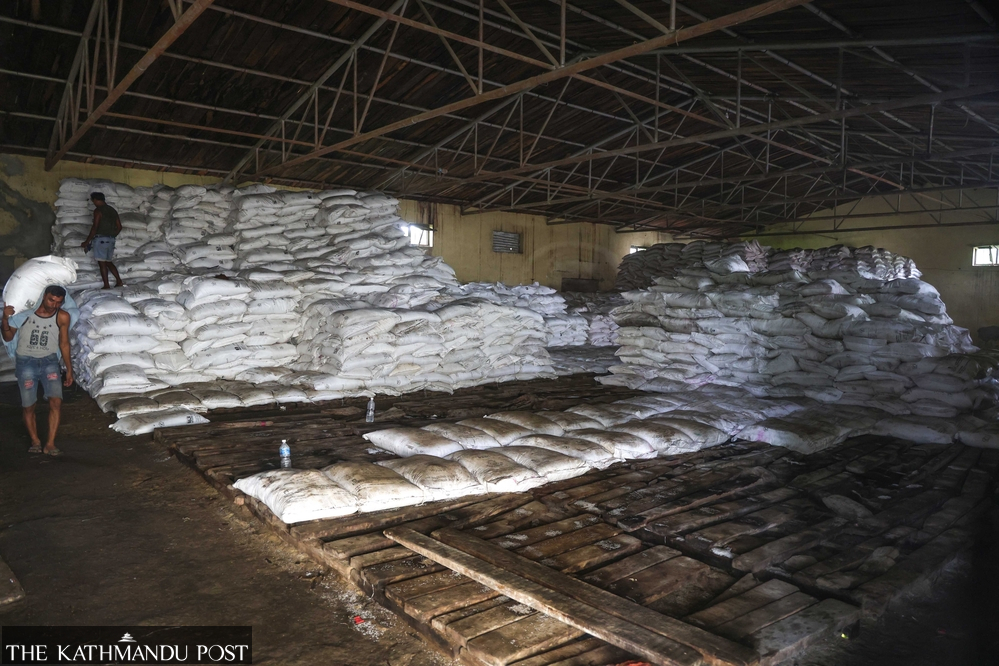
Post photo
Around 20.6 percent of available fertiliser is allocated to Koshi Province and to the Siraha and Saptari districts in Madhesh Province. Distribution is carried out through cooperatives and registered dealers after recommendations from local offices.
Morang alone requires about 5,500 metric tonnes of DAP during the paddy season. So far, only around 400 metric tonnes have been distributed, with another 60 tonnes in the sales process.
The supply remains far below demand, leaving many farmers without enough fertiliser.
Farmers turn to India as shortages worsen in western Nepal
In Nawalparasi West, fertiliser shortages during the farming season have become a familiar crisis for farmers.
Farmers had hoped fertiliser supplies would improve after a new political party-led government was formed. But farmers say they are facing the same problems as before.
Kamlesh Yadav of Pratappur said he spent two to three days visiting cooperatives in search of fertiliser for paddy transplanting.
“But I could not get any from the cooperatives,” he said. “I lost hope when I heard that Indian security forces had also tightened restrictions on bringing fertiliser from India. Fertiliser is unavailable inside the country, and bringing it from India is no longer easy.”
Until last year, Indian security personnel generally allowed Nepali farmers to buy and bring fertiliser across the border.
“They have become much stricter this time,” Yadav said. “Nepali security personnel have generally not stopped it even if fertiliser is secretly brought to the Nepal border from India.”
He said he tried to buy fertiliser from India but failed.
“It appears there is a shortage in India as well,” he said.
Farmers say a 45-kilogram sack of fertiliser costs between 700 and 1,000 Indian rupees in Indian markets.
The Agriculture Inputs Company distributes fertiliser in the district through 77 cooperatives. However, inadequate supply has made distribution difficult even for cooperatives.
According to branch manager Tara Prasad Khanal, the company recently supplied 500 metric tonnes of urea and 200 metric tonnes of DAP through cooperatives for the paddy transplanting season.
Post photo
Nawalparasi West has around 20,480 hectares under rice cultivation. Farmers require approximately 18,000 metric tonnes of urea and 12,000 metric tonnes of DAP annually.
Farmers in Kapilvastu are facing similar difficulties.
Shiva Ratan Kevat of Jalraiya in ward 9 in Kapilvastu Municipality could not obtain DAP fertiliser on time/
“Unable to wait any longer, I bought DAP from the market at double the price and sow the seeds,” he said. “But the seeds did not grow well because the fertiliser was of poor quality.”
Raju Pandey of Yashodhara also sowed 40 kilograms of seeds. The seeds failed to develop properly despite using fertiliser brought from the Indian market. “The fertiliser was substandard,” he said. “I am preparing to transplant paddy on 30 kathhas (1.02 hectares) of land, but I am under stress because I cannot find DAP and urea in Nepal.”
Farmers say they have no choice but to bring fertiliser from India because crop production suffers without chemical inputs.
“Bringing fertiliser from India is no longer as easy as before,” one farmer said. “Indian security forces have tightened restrictions, and prices there have also doubled.”
Farmers worry that even after paying high prices to bring fertiliser across the border, poor-quality products could leave them with losses.
In Kapilvastu, fertiliser is distributed from the Agriculture Inputs Company offices in Taulihawa and Bahadurganj, while the Salt Trading Corporation supplies fertiliser from Krishnanagar.
The district requires around 16,000 metric tonnes of urea and 14,000 metric tonnes of DAP every year.
However, no DAP has arrived since mid-November.
“We have not been able to supply sufficient quantities of urea and DAP. We have been forced to distribute fertiliser in tiny amounts,” said Bishnu Bhandari, manager of the Agriculture Inputs Company’s Taulihawa branch.
The Taulihawa office currently has 169 metric tonnes of DAP and 130 metric tonnes of urea in stock, while the Bahadurganj office has 418 metric tonnes of urea and 196 metric tonnes of DAP.
Kapilvastu has 83,000 hectares of cultivable land, of which 81,576 hectares are currently farmed. Rice is cultivated on 65,852 hectares, with an average productivity of 4.2 metric tonnes per hectare.
Bardiya farmers pay higher prices across the border
Farmers in Bardiya are also struggling as paddy transplanting season approaches its end without adequate fertiliser supplies.
Unable to obtain fertiliser even as mid-July draws to a close, many farmers have started buying it from Indian border markets at significantly higher prices.
Although the Agriculture Inputs Company and Salt Trading Corporation are distributing fertiliser through cooperatives, supplies remain below demand.
Dhiraj Raidas of ward 9 in Gulariya Municipality said he has still been unable to transplant paddy.
“I waited for fertiliser through cooperatives but could not get any,” he said. “Now I have had to bring fertiliser from Indian markets.”
Manoj Lodh of ward 8 said even carrying one sack of fertiliser from India has become difficult because Indian security personnel often create problems.
Assistant Chief District Officer Ashok Kumar Bhandari said there is no restriction on farmers bringing small quantities of fertiliser for personal use.
He said the Armed Police Force deployed along the border also does not stop farmers carrying fertiliser.
Post photo
Superintendent of Armed Police Dinesh Kumar Mahat said genuine farmers carrying one sack of fertiliser do not face problems.
Bardiya requires around 10,000 metric tonnes of urea and 5,000 metric tonnes of DAP annually.
Dinesh Khanal, chief of Agriculture Inputs Company Bardiya, said the district has not received enough supplies to meet demand.
Paddy is cultivated on around 50,200 hectares in Bardiya. Although around half of the planting work has been completed, fertiliser shortages continue.
According to Khanal, many farmers have planted crops without fertiliser.
Planting without fertiliser
In Kanchanpur, farmer Asar Badayek of ward 6 in Belauri Municipality needed five sacks of DAP for paddy transplanting. But after failing to obtain fertiliser this year, he transplanted without it. The time to apply urea is approaching, but he has little hope of finding supplies.
Although some DAP was sold through village cooperatives, one sack was divided among two or three farmers.
“There is a lot of farmland. What can we do with only 15 to 20 kilograms of fertiliser?” Badayek said. “Even that was distributed only after transplanting was already completed.”
Farmers in Kanchanpur also say they have been unable to bring fertiliser from India this year.
They say India has introduced quotas, limiting sales to fixed quantities.
“Fertiliser shortages are severe right now. They are not even allowing us to bring it from India,” said Revati Raman Ghimire, a farmer from ward 4 of Punarbas Municipality. “We planted rice without DAP. Now urea is also unavailable.”
Ghimire said 25 sacks of urea arrived in Punarbas Municipality on Wednesday. Farmers had lined up from 4am, but police had to be deployed after officials were unable to manage the crowd.
“This year, fertiliser is not easily available in India either,” Ghimire said. “There would not be such shortages here if Indian markets were supplying fertiliser as easily as before. But reports suggest India itself is facing shortages.”
The Agriculture Inputs Company has sold only half as much fertiliser in Kanchanpur this season compared with last year.
“We simply did not receive enough fertiliser this time,” said Hem Raj Joshi, chief of the Agriculture Inputs Company office in Mahendranagar. “We have heard that supplies from India were also lower.”
Since April, the company has sold 600 metric tonnes of DAP and 1,500 metric tonnes of urea.
During the same period last year, it sold 1,200 metric tonnes of DAP and 2,000 metric tonnes of urea.
Panchakaji Shrestha, chair of the National Farmers’ Group Federation, said the government had been warned about the looming fertiliser shortage, but the crisis has repeated itself yet again.
“We had hoped that the new government led by young leaders, with fresh energy and commitment, would listen to farmers this time. But they have also disappointed us,” he told Kantipur.
Shrestha said the federation had urged the government in May to take immediate measures to prevent shortages during the planting season.
“We need fertiliser in mid-June, but the government says it will arrive in mid-July,” he said. “The government has not taken farmers’ problems seriously.”
However, Ram Krishna Shrestha, joint secretary and head of the Agriculture Development Division at the Ministry of Agriculture, said the government had already supplied 558,900 metric tonnes of fertiliser as of June 30.
According to him, 512,500 metric tonnes have already been distributed to farmers.
He said around 98,000 metric tonnes of fertiliser is currently stored at the warehouses of the Agriculture Inputs Company Limited and Salt Trading Corporation.
Post photo
When asked why farmers were struggling if government warehouses still had fertiliser stocks, Shrestha said the available stock had already been allocated to the local level but had not yet been collected by cooperatives.
“This is fertiliser that has already been allocated to local levels. The stock is shown because cooperatives assigned quotas have not yet collected it,” he said. “The cooperatives were slightly late in lifting the fertiliser, but they are now collecting it.”
Shrestha said cooperatives have recently been taking around 60,000 to 70,000 sacks of fertiliser daily from company warehouses.
Government data shows Nepal requires around 1.1 to 1.2 million tonnes of chemical fertiliser annually for all crops.
In previous years, the government has provided around 500,000 metric tonnes of subsidised fertiliser.
The agriculture ministry estimates that more than 550,000 metric tonnes of subsidised fertiliser will be distributed by mid-July this year.
Apart from subsidised urea, DAP and potash, additional fertilisers are also imported and sold by the private sector.
For the rice planting season, around 80,000 metric tonnes of DAP and 60,000 metric tonnes of urea are currently being imported and are expected to enter Nepal from mid-July, according to Shrestha.
“Thirty thousand metric tonnes of DAP have already reached Visakhapatnam. Another 130,000 metric tonnes from Oman, Qatar and Vietnam is also being transported,” he said.
He added that officials are also pressing suppliers to deliver another 95,000 metric tonnes of fertiliser under previously signed agreements.
The government has allocated Rs28.8214 billion for purchasing subsidised fertiliser for the current fiscal year 2025-26.
The agriculture ministry said tenders have so far been issued for importing 491,000 metric tonnes of fertiliser.
Government introduces tracking system, but farmers remain frustrated
The agriculture ministry says it has introduced an integrated information system to make fertiliser distribution more transparent.
Under the new system, cooperatives must record details of fertiliser received and the farmers to whom it is sold.
The government has also made arrangements for the public to view stock information of subsidised fertiliser sold through dealers and details of farmers receiving supplies.
The ministry has appointed grievance officers at the federal level and focal persons at provincial ministries to address complaints related to fertiliser distribution.
According to the Subsidised Fertiliser Distribution Management Procedure, 2025, fertiliser reaches farmers through several stages.
The agriculture ministry determines annual provincial quotas by mid-June based on recommendations from provincial ministries.
Based on provincial recommendations and requirements, quotas are then allocated to local governments.
Municipalities and rural municipalities distribute quotas among cooperatives, which then supply fertiliser to farmers.
Around 14,000 cooperatives across Nepal are involved in distributing fertiliser to farmers.
Fertiliser available in warehouses, but farmers cannot access it
In Parsa, farmer Chandrika Prasad Sah of ward1 in Bahudarmai Municipality travelled to the Agriculture Inputs Company’s provincial office in Birgunj on Thursday searching for urea.
He has already transplanted paddy on three of his six bighas (4.06 hectares) of land. With the time approaching to apply urea to the transplanted fields, he fears his crops will suffer without fertiliser.
Like Sah, many farmers have been visiting provincial offices of the Agriculture Inputs Company and Salt Trading Corporation in search of supplies.
According to Durga Prasad Pandey, provincial chief of the Agriculture Inputs Company, most cooperatives in Madhesh Province have not collected their allocated fertiliser despite receiving quotas.
As a result, the company currently has large stocks of urea, DAP and potash.
For the eight districts of Madhesh Province, the company has 19,228 tonnes of urea, 9,688 tonnes of DAP and 4,953 tonnes of potash in stock.
“We are calling cooperatives and asking them to collect fertiliser,” Pandey said. “But they are showing no interest.”
He said many cooperatives in Parsa have refused to collect fertiliser allocated to them.
Because the company distributes fertiliser only through cooperatives, supplies cannot reach farmers unless cooperatives collect them.
Cooperative operators, however, say they are reluctant to collect fertiliser because their quotas are too small to meet farmers’ demand.
They fear that distributing tiny quantities among large numbers of farmers will create conflict and dissatisfaction.
A cooperative chairman from Bahudarmai said delayed quota allocation had worsened the problem.
“On top of that, the limited quantity cannot meet farmers’ demand,” he said. “In such a difficult situation, how can we take the risk of collecting such a small amount of fertiliser?”
According to Amoj Lamichane, chief of the Salt Trading Corporation’s provincial office, the office has 1,568 tonnes of urea in stock but no DAP.




 16.46°C Kathmandu