Govt unveils ambitious national commitment paper outlining governance reform agenda
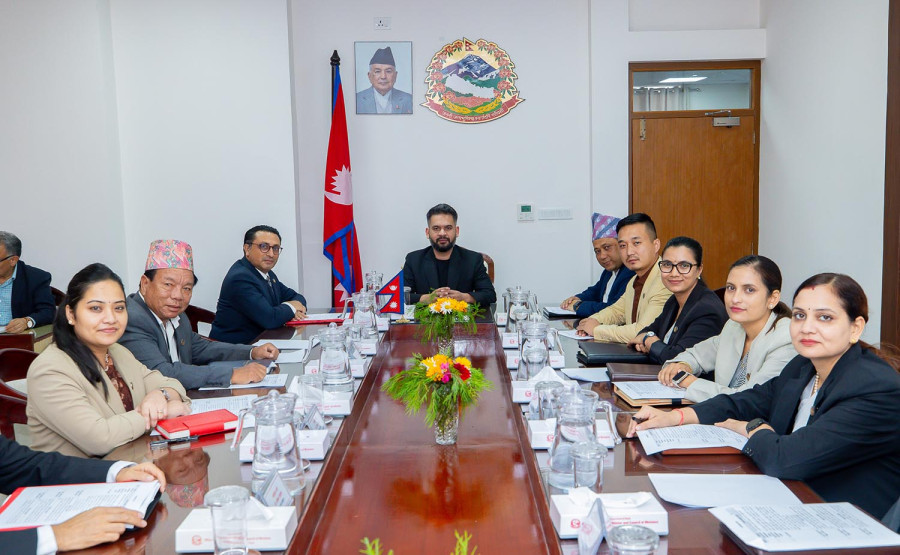
The Cabinet-endorsed document sets ambitious targets, including 7 percent annual economic growth, 1.5 million new jobs and wide-ranging reforms in governance, digitalisation and public service delivery.Photo: Courtesy of PM’s secretariat
The government on Thursday unveiled a sweeping national commitment paper outlining its governance reform agenda, promising wide-ranging changes from economic restructuring and civil service reform to digital governance, infrastructure development and foreign policy.
The 14-page document, prepared under the third point of the government's 100-point governance reform agenda and endorsed by the Cabinet last week, says its implementation will be incorporated into annual plans and budgets of ministries and monitored by a Prime Minister's Delivery Unit to be established under the Office of the Prime Minister.
According to the Prime Minister's Office, the commitment paper draws on the principles of the Constitution, democratic values established through political movements since 1950, and recent public demands for good governance and corruption control, including those raised during the Gen Z protests.
"The commitment incorporates the manifestos and commitments of the six nationally recognised political parties," the document states.
On the economy, the government says it aims to harness Nepal's demographic dividend to graduate the country to middle-income status by promoting private sector-led investment and employment while limiting the state's role to that of regulator and facilitator.
The paper pledges to curb rent-seeking, policy corruption, cartels and artificial shortages, while targeting an average annual economic growth of 7 percent over the next five years. It also aims to raise per capita income to $3,000, expand the economy to $100 billion and reduce multidimensional poverty to 10 percent.
It also promises to digitise industrial services through paperless systems covering everything from business registration to renewal.
To reduce import dependence, the government plans to pursue new trade arrangements with India and promote self-reliance in agricultural products that can be produced domestically. It also promises expanded irrigation, farmer credit cards, insurance schemes, subsidies and a contributory pension system for farmers, while prioritising high-value cash crops in the hills and Himalayan regions.
In tourism, the government says it will lay the groundwork for high-value tourism to double average spending per visitor within five years. It has proposed declaring 2027 as National Wellness Year and promoting major religious and cultural circuits across the country. It has also reiterated its commitment to split the Civil Aviation Authority of Nepal into separate regulator and service provider entities to improve aviation safety.
In the energy sector, the paper sets a target of generating 30,000 megawatts of electricity over the next decade through projects including Budhigandaki and Dudhkoshi. It also proposes expanding electricity trade with India and Bangladesh, promoting green hydrogen production and exploring rare earth elements.
The government also promises investor-friendly mining policies through public-private partnerships while regulating the extraction of stone, sand and gravel in an environmentally sustainable manner.
For infrastructure, it proposes implementing major projects in "mission mode", preventing project chiefs from being transferred before project completion and developing an integrated transport network linking roads, railways and inland waterways. It also reiterates plans to secure access to international sea routes through India's inland waterways.
The paper says the government aims to create 1.5 million jobs within five years by promoting remote work, digital employment and cross-border services, while strengthening protections for Nepali migrant workers through more transparent recruitment systems.
In education, the government proposes introducing coding, artificial intelligence, cybersecurity and STEM education from the school level under an "Earn While You Learn" model developed in partnership with the private sector. It also plans to make digital literacy compulsory for students from Grades 1 to 12.
In healthcare, it aims to increase health spending to 8 percent of the national budget by 2088 BS, introduce digital health profiles for all citizens and provide free basic healthcare to senior citizens and marginalised communities.
The commitment paper also proposes using drones and satellites to monitor forests, investigating the assets of public office holders dating back to 2046 BS and strengthening protections for whistleblowers reporting corruption.
It further pledges to abolish politically affiliated trade unions in the civil service, introduce merit-based appointments—including for judges—and streamline public administration by reducing federal ministries to 17, eliminating the traditional tippani system and introducing time-bound public service delivery.
The government also plans to recognise information technology as a strategic national industry, develop a sovereign large language model and position Nepal as a regional centre for peace studies, yoga, Ayurveda, mental health and Eastern philosophy.
On social inclusion, the paper promises an inclusive audit of representation in state institutions and measures to eliminate discrimination based on caste, religion and gender.
In foreign policy, it reiterates the "Nepal First, Nepali First" approach, pledging to maintain non-alignment, avoid military alliances and pursue balanced relations with neighbouring countries while promoting economic diplomacy through forums such as the Sagarmatha Sambad.
The document also promises to mobilise the knowledge, skills and investment of the Nepali diaspora, ensure continuity of citizenship and ancestral property rights for non-resident Nepalis, and issue $1 billion worth of diaspora bonds for infrastructure development.
It also identifies sports, disaster management and cooperative sector reform as additional priority areas, including plans to promote "cricket diplomacy" to enhance Nepal's international profile.
Anil Giri is a Chief Sub Editor covering diplomacy, international relations and national politics for The Kathmandu Post. Giri has been working as a journalist for more than two decades, contributing to numerous national and international media outlets.




 13.68°C Kathmandu