



 17.86°C Kathmandu
Thu, Oct 22, 2026
National
Hetauda textile factory’s looms whir again after 24 years
A Nepal Army-led test run has revived the state-owned factory, but restarting commercial production will require major investment and modern machinery.
bookmark![]()
Pratap Bista/TKP ![]()
Pratap Bista/TKP
Pratap Bista
Published at : August 8, 2026
Updated at : August 8, 2026 20:11
Hetauda
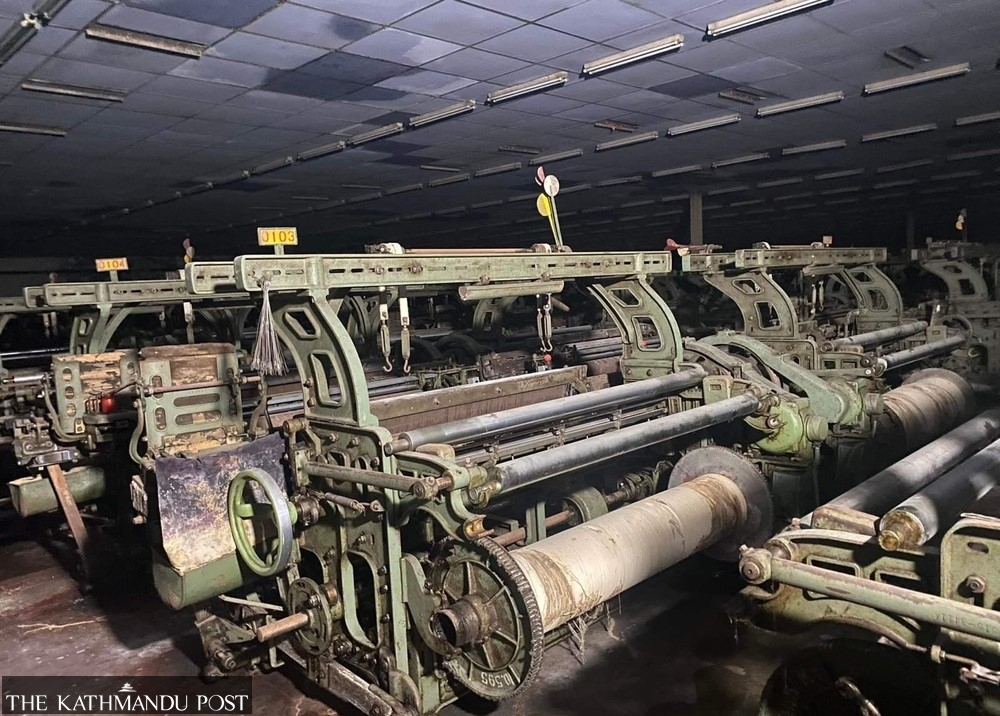
The clatter of weaving looms returned to the grounds of Hetauda Textile Industry on Saturday morning, as the historic state-owned factory conducted its first preliminary test production after nearly two and a half decades of closure.
The trial followed the government’s decision to task the Nepali Army with repairing the dilapidated factory and restoring its production capacity.
A technical team from the army’s Directorate of Military Materiel Production in Kathmandu has spent the past 40 days at the industrial complex. About 40 technicians and soldiers of various ranks were deployed to clear the neglected premises, overhaul the ageing power supply system and service mechanical looms that had remained idle for years.
“The initial test run was successful, although significant work remains before full-scale commercial operations can resume,” said a senior military officer involved in the operation. “The successful trial confirms that the factory can indeed be brought back to life.”
The Ministry of Industry, Commerce and Supplies had given the military team two months to carry out initial maintenance and conduct test production.
Ram Bandhu Subedi, joint secretary at the ministry, said the army completed the work ahead of schedule.
“The successful preliminary test run provides a strong signal that full commercial production is viable,” Subedi said.
Pradeep Pariyar, personal secretary to Prime Minister Balendra Shah, also confirmed that the restored machinery produced cloth during Saturday’s trial. Pariyar posted a video of the operating looms on social media, saying the sound of textile production had returned to the factory after 24 years.
“The clicking sound of the looms has been echoing across the premises since early morning,” said a female officer from the Armed Police Force stationed at the facility for security.
The test production is in line with recommendations from a government task force formed to study the revival of sick state-owned enterprises. The task force recommended an immediate trial production run, with longer-term plans to be determined based on its outcome.
Industry Minister Gauri Kumari Yadav has put Hetauda Textile Industry at the top of the government’s industrial revival priorities, alongside the Butwal Dhago Karkhana and initiatives to promote domestic cotton farming.
Addressing the House of Representatives on June 17 during discussions on the national budget, Yadav pledged to resume the factory’s operations within the current fiscal year as part of the government’s 100-day action plan.
The Cabinet formally endorsed the revival plan on July 2, setting the restoration process in motion.
The Ministry of Industry released Rs3 million from an emergency budget of Rs3.3 million requested for immediate repairs.
“The ministry has established a strategic partnership with the army’s production directorate to reactivate the enterprise,” Subedi said. “A fully operational textile factory will significantly advance Nepal’s path towards self-reliance in garment production.”
Long-term feasibility and investment
The successful test run is only an initial step. Military engineers say a sustainable restart will require substantial capital investment, structural improvements and modern machinery.
A detailed feasibility study conducted by the Nepal Army under state policies for the 2023-24 fiscal year estimated that fully reviving the factory would require an initial capital investment of Rs1.93 billion. Annual operating costs were projected at Rs780 million.
The study concluded that the factory could reach break-even and become profitable within nine years of continuous operation.
The factory owns 166 ropanis of land and retains basic infrastructure that could be used for the revived operation. The feasibility study also identified steady demand for uniforms from the Nepali Army, Nepal Police, Armed Police Force and civil service, while key raw materials are available domestically.
These factors, according to the study, mean the factory faces minimal market risk. The broader revival project could be financed through the Army Welfare Fund.
The military had originally proposed a three-year implementation plan beginning in the 2023-24 fiscal year. The plan envisaged transferring management of the factory to the army, preparing a Detailed Project Report (DPR), procuring modern machinery in 2024-25 and expanding production capacity alongside the Butwal Yarn Factory in 2025-26.
Political changes, however, delayed the plan.
From industrial success to closure
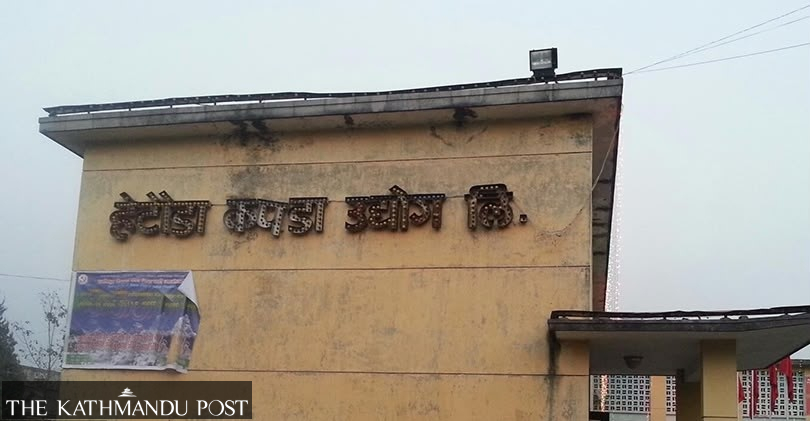
Hetauda Textile Industry was established in 1975 with financial and technical assistance from the Chinese government and capital investment from the Nepal government. It began commercial production in 1978.
For two decades, the factory was a major pillar of Nepal’s manufacturing sector. But persistent political interference, weak management, load-shedding, overstaffing and failure to modernise its technology gradually undermined its financial viability.
Production stopped completely in 1999, and the factory was formally closed in 2000.
The government decided to liquidate the enterprise in 2002, leaving the factory and its machinery abandoned for years.
Now, after 24 years of silence, the return of the looms has provided the first tangible sign that one of Nepal’s most prominent state-owned industrial enterprises could once again become a functioning factory.
But the successful trial has also exposed the scale of the challenge ahead: bringing the machines back to life is one thing; making the factory commercially sustainable is another.
Pratap Bista
Pratap Bista is the Bagmati Province Bureau Chief for Kantipur Publications.

Most Read from National

Flood sweeps away houses, bridges in Gorkha

What to know about the US trial over Mamta Kafle’s disappearance

Torrent of black mud and rocks engulfs settlements along Budhigandaki

From blankets to handmade dolls, two foreign women bring comfort to flood survivors

Budhi Gandaki flood washes away three bridges in Gorkha
Editor's Picks




E-PAPER | October 22, 2026

×