Adverse weather forced Indian helicopter into Nepali airspace, says Foreign Minister Khanal
The aircraft, reportedly carrying India’s ITBP Director General, entered Darchula district without prior clearance but showed no malicious intent, the government said.
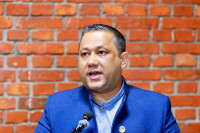
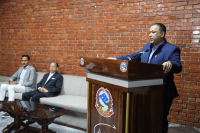
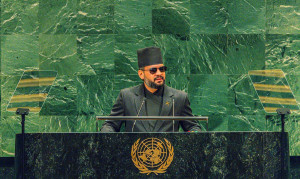
Foreign Minister Shishir Khanal has said that an Indian helicopter entered Nepali airspace due to adverse weather conditions.
Responding to the lawmakers in the National Assembly on Wednesday, he said the aircraft crossed into Darchula district because of poor visibility and deteriorating weather.
“There is no indication that the Indian helicopter entered Darchula with any premeditated or malicious intent. It was purely due to geographical terrain and weather conditions. Relevant Nepali authorities are in contact and coordination with the Indian side on the matter,” Khanal said.
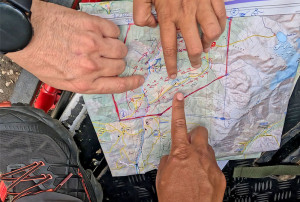
Minister Khanal’s explanation is related to the incident that took place on the morning of June 10, when an Indian Army helicopter entered Nepali airspace without prior government clearance. Security sources said Shatrujeet Singh Kapoor, Director General of India’s Indo-Tibetan Border Police (ITBP), was on board. The aircraft was seen flying over Chhangru in Vyas Rural Municipality-1, Darchula, en route to Kalapani.
Khanal said border disputes with neighbouring countries were natural but stressed they must be resolved through diplomatic channels. He reiterated the government’s commitment to addressing border issues with India based on historical treaties, maps and factual evidence.
He also said technical mapping remains incomplete in the Susta, Limpiyadhura, Lipulekh and Kalapani areas, which are guided by the 1816 Treaty of Sugauli.
Responding to lawmakers, Khanal said a joint team of Nepal’s Armed Police Force (APF) and India’s Sashastra Seema Bal (SSB) recently inspected the border between Susta Rural Municipality-5 in West Nawalparasi and Rampurwa in West Champaran, India.
During the inspection, the Indian side reportedly raised no objection to the ongoing construction of a roughly one-kilometre embankment within Nepali territory. However, Khanal said coordination was needed for an additional 132-metre extension towards the east. Indian authorities have requested further discussions before work proceeds on that section.
He said bilateral mechanisms such as the Boundary Working Group are continuing regular meetings, while APF and SSB units are cooperating on the ground.
According to Khanal, most border areas have already been demarcated by technical committees, but Susta and Kalapani remain unresolved. The government, he said, maintains its claim over these areas based on historical records and documentation.
“It is a reality that formal border mapping in Kalapani, Limpiyadhura, Lipulekh and Susta has not been concluded. However, we are clear that these are Nepali territories, and we are working to resolve differences through diplomatic negotiations based on historical evidence,” he said.
He added that technical teams are continuing border measurements in other areas and that infrastructure projects, including embankments, will proceed through mutual understanding with India.




 21.69°C Kathmandu