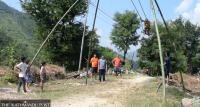
Baglung is emerging as a popular stop for Indian pilgrims travelling to Muktinath, with visitors increasingly exploring the district’s temples, museums and cultural attractions.
Visitors travelling via the Kaligandaki corridor from Bhairahawa to Muktinath are now spending additional time in Baglung, visiting sites such as Baglung Kalika Temple, the Shaligram Museum and Panchkot. Many pilgrims are also exploring other religious destinations along the corridor before continuing their journey to Muktinath.
Local businessperson Arjun Chokhal said most visitors travelling to Muktinath now make a point of stopping at the Shaligram Museum and Baglung Kalika Temple.
Indian pilgrim Ashutosh Namad, who was on a religious tour, recorded videos of Baglung Kalika Temple, the Shaligram Museum, Panchkot and the long suspension bridge over the Kaligandaki river and shared them on TikTok and other social media platforms. He described the route as a “religious circuit” linking Muktinath with several important sites in Baglung.
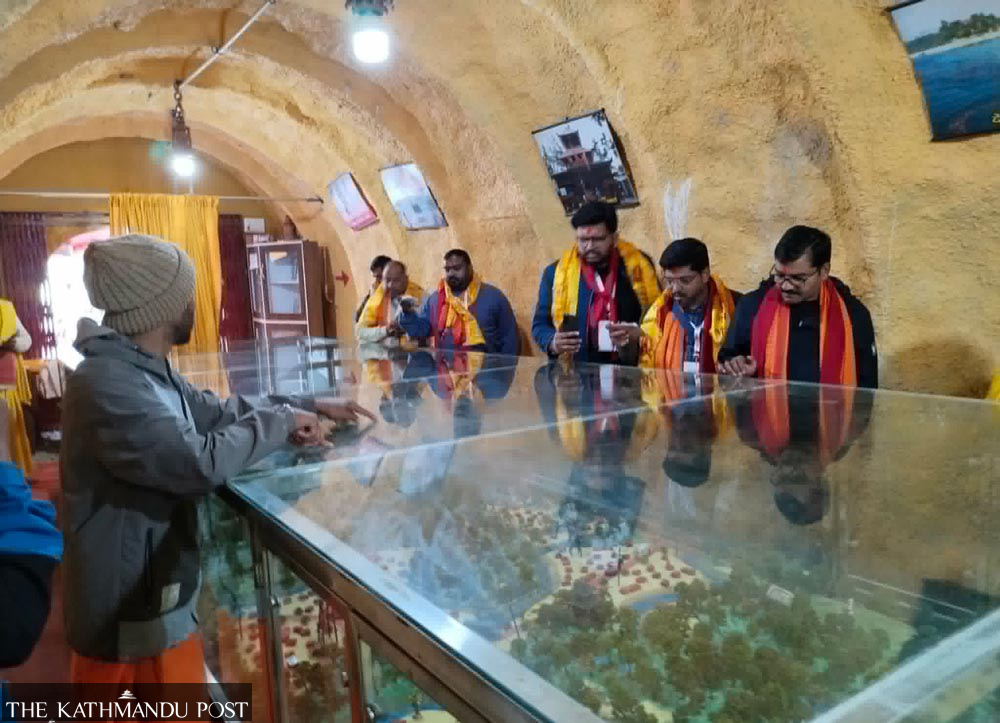
Balkrishna Acharya from Ayodhya, India, said the Shaligram Museum left a lasting impression on him.
“I was amazed. We used to worship one or two Shaligrams at home. Here we got to see an entire museum,” he said. “We will promote this place so more pilgrims can come.”
Acharya said the area is well-suited for pilgrims seeking a peaceful environment and spiritual retreat.
The museum houses around 115,000 Shaligram fossils collected inside a 150-metre-long tunnel. Shaligrams, sacred ammonite fossils found only in the Kaligandaki river, hold special significance in Hindu tradition. Although the extraction of Shaligrams from the river has declined in recent years, the museum preserves them for public viewing and has become a major attraction for both domestic and foreign visitors.
Museum curator Rishi Prapannacharya said exact visitor records are not maintained, but the museum is estimated to receive around 150,000 visitors annually, including more than 30,000 from India.
Most pilgrims returning from Muktinath also visit Baglung’s religious sites, further boosting local tourism. Established seven years ago, the museum has become an important stop on the pilgrimage route.
Pilgrims seeking pure vegetarian meals are accommodated in local hotels, while some stay at the Muktinath Ved Vidyashram hostel. According to local tourism stakeholders, visitors travelling on Muktinath pilgrimage packages generally spend seven to 10 days on the route, with around one and a half days allocated to Baglung.
Madhav Haridas from Mayapur, India, said his visit to the Shaligram Museum brought him a sense of peace.
“I have travelled widely but never seen such a large collection of Shaligrams in one place,” he said.
According to Prapannacharya, pilgrims from Kerala, Andhra Pradesh and Gujarat are among the most frequent Indian visitors. The area has also hosted Indian film personalities and business figures.
Tourists visiting Pokhara under Nepal-India tourism promotion programmes are increasingly including Baglung in their itineraries, reflecting the district’s growing appeal among Indian travellers.
Jeevan Raj Sapkota, general secretary of the Pokhara Tourism Council, said Indian tourists are showing increasing interest in Baglung’s destinations.
Baglung Kalika Temple, which has a history spanning around 500 years, and Panchkot have emerged as major attractions. Raju Khadka, deputy mayor of Baglung Municipality, said many visitors are also interested in learning about the cultural and religious significance of the Kaligandaki civilisation.
Indian pilgrims travelling through Janakpur, Lumbini, Pashupatinath and Muktinath are now treating the Shaligram Museum as a priority stop on their pilgrimage route.
Bhaktapur resident Barun Gopal Shrestha, who visited the museum for the first time, said he was impressed by the collection and would encourage others to visit.
Beyond religious tourism, construction-linked destinations such as Panchkot, Sansarkot and Karikot are also witnessing a rise in visitor numbers.
To strengthen tourism promotion, Baglung Municipality has introduced a tourism slogan, logo and QR-code-based information system covering major attractions. Launched during Tourism Day celebrations, the initiative allows visitors to access information about key destinations by scanning QR codes with their mobile phones.
The municipality is also preparing a tourism master plan and developing a tourism booklet and documentary to promote the district more effectively.
Eleven major destinations have already been digitised through the QR-code system, including Baglung Kalika, the Shaligram Museum, Panchkot, Bhairabsthan, the long suspension bridge, Malika, Bhakunde, the Kaligandaki river, the bungee jump site and ISKCON Baglung.
Jit Bahadur Sherchan, Minister for Economic Affairs in Gandaki Province, has proposed developing a religious circuit linking Muktinath, Baglung Kalika and Panchkot. Local stakeholders say the proposal has generated optimism about the future of religious tourism in the district.
Rajan Kumar Shakya, president of Baglung Chamber of Commerce and Industry, said tourism remains central to the district’s economic prospects.
“We are looking for prosperity through tourism,” he said. “As visitor numbers grow, local production and farmers’ income will also increase.”
Shakya said efforts are underway to improve cleanliness and expand visitor-friendly food, hospitality and tourism services to support the growing number of domestic and international travellers.




 22.41°C Kathmandu
.jpg)