New driving licence system leaves services stalled for nearly three weeks
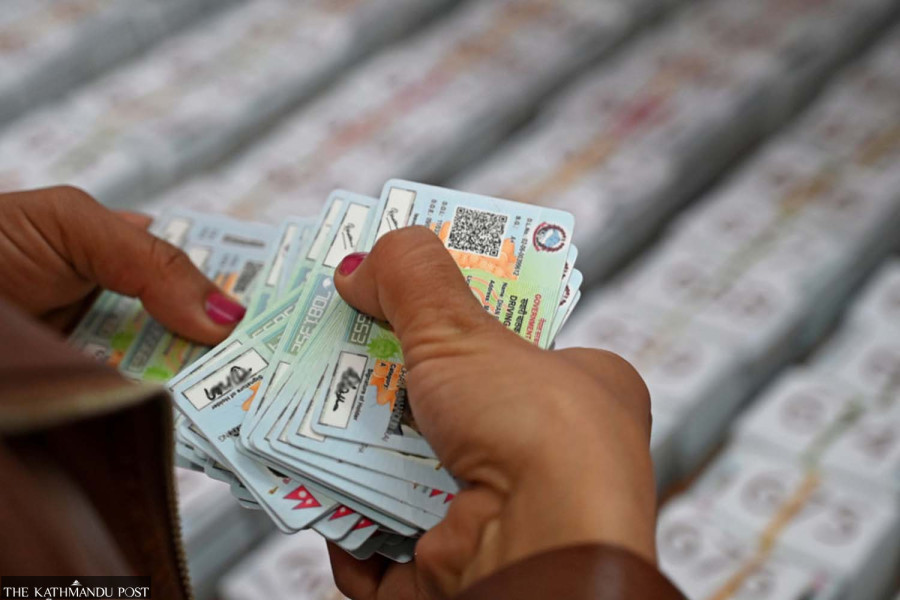
Transport offices across Nepal struggle with the transition to a new online platform, leaving applicants unable to renew licences, sit for trials or process new applications despite government claims that the system is operational. Post file photo
A new online system introduced by the Department of Transport Management has brought most driving licence services across Nepal to a standstill for nearly three weeks, leaving applicants unable to obtain new licences or renew.
While some transport offices have resumed limited services, such as distributing licences, most offices remain unable to process new applications, conduct trials or complete renewals.
The government has highlighted the printing of long-delayed licences as an achievement, but critics say it has remained silent as licence services have remained largely dysfunctional for 19 days.
Nepal has 42 transport management and service offices across the country. Most of them have reported severe disruptions after the department shifted to the new online system. In some offices, only limited functions have resumed.
Although the department issued a public notice announcing the launch of online services, applicants arriving at transport offices say they are being turned away because the system is not functioning as expected.
At the Transport Management Office in Ekantakuna, Lalitpur, which handles one of the highest volumes of applicants, officials are only distributing licences.
“Licence renewals and distribution have been halted since July 17,” said office chief Keshav Kumar GM. “The department says the online system is in its final stage, but the system is not working. We have also not received any official notice about the full launch of online services.”
Before the disruption, Ekantakuna processed around 250 to 300 renewals daily and handled trial examinations for 400 to 500 new applicants. Both services are now suspended.
“Except for distributing printed licences, all other services have stopped,” GM said. “People coming for renewals and trials have to be sent back. We have been facing the anger of frustrated service users every day.”
A similar situation exists at the Transport Management Office in Chabahil, another high-volume centre in Kathmandu. Information officer Meghnath Gautam said the office was only handing out printed licences and handling some verification requests for people travelling abroad.
“The transition from the old system to the new one has not been completed smoothly. We are facing problems at different stages,” he said.
Gautam said payments made online for renewals sometimes fail to appear in the system the following day. Health examination details, which are also supposed to be uploaded online, have also created difficulties.
“Trial examinations and renewal services have not been possible since the new system was introduced,” he said. “Only licence distribution and verification for people travelling abroad are continuing.”
Previously, the Chabahil office handled around 250 renewal applications, 700 trial applicants and 300 to 400 written examination candidates daily. The total number of visitors often reached about 2,500 a day.
Officials said the purpose of the new system was to allow citizens to complete forms, renew licences and apply for trials online without visiting transport offices repeatedly. However, the failure of the system to operate fully has created additional hardship.
The disruption comes shortly after the government completed a major backlog-clearing exercise. After years of complaints from people who had passed trials or completed renewals but had not received their licences, the government printed and distributed old pending licences in two phases.
A total of 2.74 million licences were printed and sent to transport offices, covering applications up to April 25, 2026, in the first phase and up to mid-July in the second phase. The Department of Transport Management and the Security Printing Centre had reached an agreement under which the centre printed all pending licences.
Some offices say the new system is operating partially rather than being completely shut down.
“Some problems exist in the new system, but it has not stopped completely,” said Subash Karki, information officer at the Transport Management Office in Itahari. “Trial examinations have not started because of the transition, but renewal services are continuing. Medical verification is still facing occasional problems.”
Karki said the system was not operating at the speed required.
“Under the old system, 500 to 600 people used to visit daily for new licences, renewals and category additions,” he said. “Now applicants report problems while filling out online forms because the system does not run smoothly.”
Previously, around 4,000 to 5,000 people across the country applied for new licences every day. Applicants now complain that even after submitting online forms, their applications are not moving forward.
At the Transport Management Office in Lahan, the new system is also functioning only partially.
“We ourselves have not received enough information about the online system. No training has been provided,” said information officer Binit Kumar Jha. “There were also problems because we did not know where medical examinations for renewals and new licences should be conducted. The medical process has been settled only since Tuesday.”
In Dadeldhura, renewal services have resumed through the new system, but officials say health examination procedures remain problematic.
“Data is not being transferred from the Nagarik App,” said information officer Kamal Prasad Ojha. “Trial examinations for new licence applicants through the new system have not started.”
However, the Transport Management Office in Dang reported no major problems.
“There is still uncertainty about what to do with applicants who had already submitted forms before the new system was introduced,” said senior officer Tara Prasad Sharma. “But the new system itself has not created problems so far. Renewals and trials for new licences are continuing.”
The Department of Transport Management said the problems were expected during the nationwide transition.
“Some offices may be facing issues because of internal preparation,” said department director and information officer Keshav Khatiwada. “As this is a new system, some difficulties may occur initially.”
Khatiwada said applicants can now begin the process through the department’s website by selecting their province and filling out the required forms.
“The system has been linked with the Nagarik App, which is why a National Identity Card is mandatory for licence services,” he said. “Details are retrieved from the national identity system while filling out the form. Without it, the licence issuance process cannot move forward.”
Under the new system, applicants are required to fill out forms online, complete biometric registration, undergo health checks from listed medical practitioners, pass written examinations and trials, and pay revenue online after passing the trial.
“The system is functioning, but applicants and offices are still becoming familiar with it,” Khatiwada said. “Renewal services have not stopped and are being carried out online.”
Infrastructure Development Ministry Secretary Gopal Sigdel also rejected claims that licence services had completely collapsed.
“When a new system was introduced, there were problems for a few days,” he said. “Health examination procedures also created difficulties. Except for Bagmati Province, online health verification has now started in all provinces, and the problems should be resolved.”
However, transport offices across the country continue to struggle with the transition, leaving thousands of applicants waiting for services that were promised to become faster and easier through digitisation.




 15.26°C Kathmandu