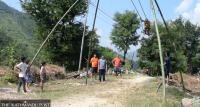
In Baglung village, Mukhiya endures as keeper of customs and harmony
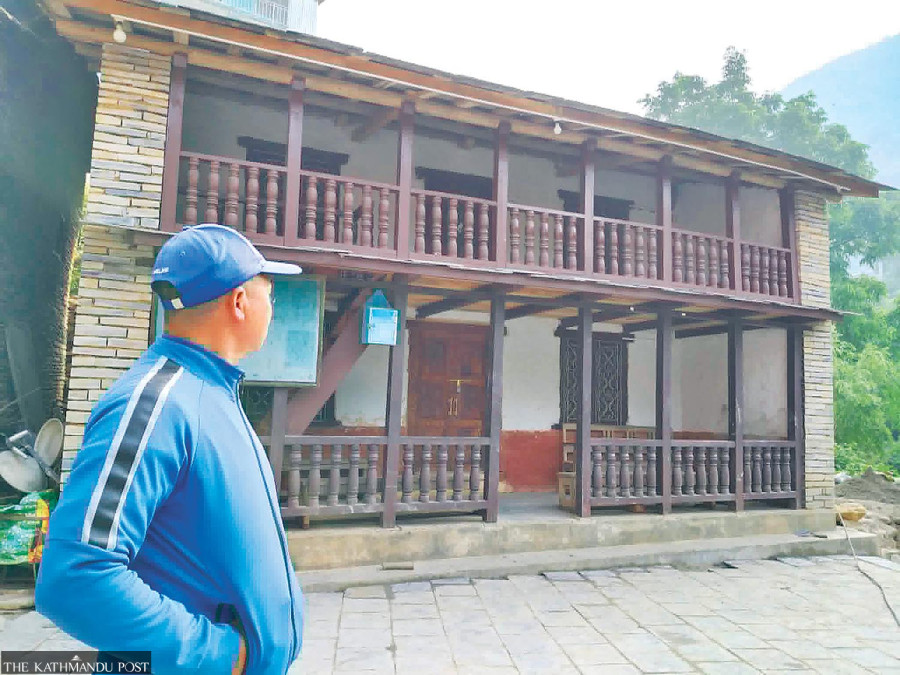
In Taman village, a traditional village chief continues to regulate customs, seasonal livestock movement and community work.Mukhiya House in Taman village in Taman Khola Rural Municipality built in 1958 and renovated last year. Post photo
In most parts of Nepal, the Mukhiya system faded with the end of the Rana regime about 75 years ago and the rise of modern local governance. But in Taman village in ward 3 of Tamankhola Rural Municipality, Baglung, the tradition still survives—not as an administrative authority but as a respected institution that helps preserve community rules, culture and social order.
The role of the Mukhiya, or village chief, today differs significantly from the past. The position no longer carries state authority to collect taxes or exercise formal administrative powers. Instead, the Mukhiya acts as a custodian of local customs, coordinating festivals, managing seasonal livestock migration and ensuring villagers follow long-established community practices.
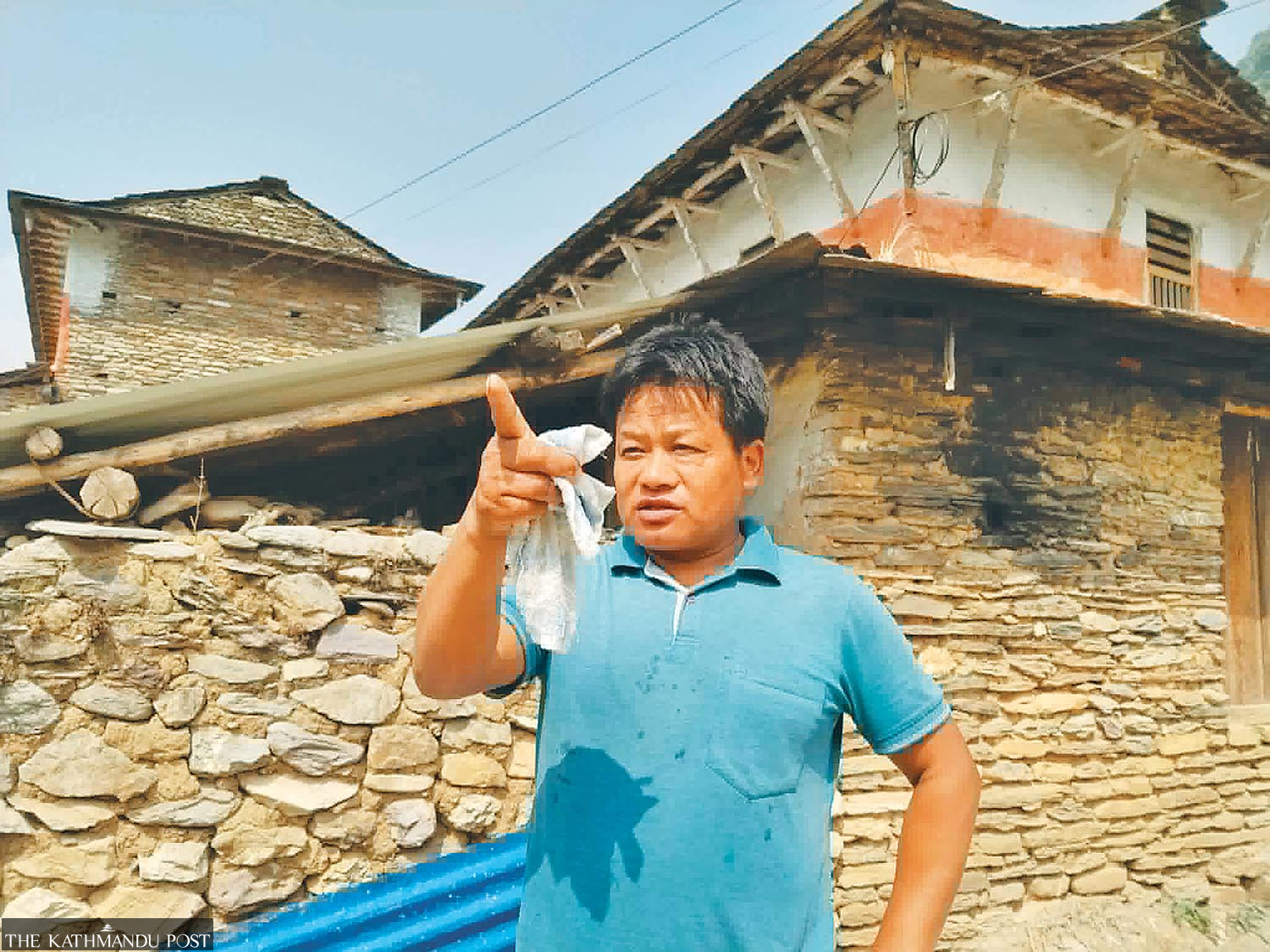
Forty-six-year-old Govinda Bahadur Budha is the current Mukhiya of Taman. He was elected by a village assembly in January for a three-year term, following a tradition that continues despite the presence of elected local governments.
If residents ignore grazing rules, violate community decisions or disrupt established customs, the Mukhiya has the authority to impose sanctions endorsed by the village assembly.
“The responsibility is not about power,” said Govinda. “It is about protecting traditions that have guided this village for generations. People still respect decisions made collectively through the Mukhiya.”
His responsibilities extend beyond cultural matters. He also coordinates village clean-up campaigns, collective labour programmes and seasonal agricultural activities. When community work is required, Katuwal (village crier) Ruplal Budha makes public announcements, and residents are expected to participate.
The Mukhiya's influence is particularly visible during the seasonal movement of livestock, known locally as ‘chan’. Taman follows a unique grazing system in which cattle, buffaloes, sheep and goats are moved between different pastures throughout the year according to the season.
The current BaishakheChan season runs until mid-July. Livestock that left the village during the first week of April are now grazing in Jhare, Kafaldanda and Bisphal areas. More than 900 animals are currently spread across these highland pastures.
The next phase, known as Saune Chan, begins during the monsoon, when herds are taken to grazing grounds in Amilban and Tamanghati until October. During Kartike Chan, animals return to pastures around the village. In winter, during Puse Chan, herders move livestock to lower valleys, with some travelling as far as Bongadobhan.
Sheep flocks are usually taken furthest downhill, where animals are fed millet stalks, hay and straw during the colder months. The cycle allows residents to adapt livestock management to changing weather and pasture conditions throughout the year.
Village leaders say these seasonal movements are organised according to traditions maintained by the Mukhiya system. Ward chair Jhak Bahadur Budha says the arrangement complements rather than conflicts with modern governance.
“Elected representatives are needed to implement laws and development plans,” he said. “But when it comes to preserving social order and customs, the Mukhiya's leadership remains effective and widely respected.” According to him, most important village decisions are still taken in consultation with the Mukhiya, who is elected through the community assembly.
Govinda Bahadur Budha was elected Mukhiya for three years, in January. Post photo
The continuing relevance of the institution is symbolised by the historical Mukhiya House in Taman. The building, which had fallen into disrepair, was renovated last year at a cost of Rs1.5 million. The rural municipality contributed Rs1 million while local residents raised the remaining amount.
The restored structure stands as a reminder of a time when one Mukhiya governed six villages across western Baglung, including Taman, Lamela, Khunga, Khunkhani, Narjakhani and Lukurban.
Man Bahadur Budhathoki, a retired teacher, said historical records show that Tham Bahadur Sherchan of Khunga was the first Mukhiya he remembers. According to Budhathoki, Sherchan was succeeded by Dirgha Narayan Bhattachan, who played a significant role in connecting the region with the central government.
“After Nepal's first general election in 1959, Bhattachan travelled to Kathmandu and met then prime minister, BP Koirala,” Budhathoki said. “Using his political connections, he helped secure funding for the construction of the Mukhiya House.”
The building was completed in 1959 through a combination of central government support and community labour contributions. At the time, it served as the administrative centre from which the Mukhiya oversaw local affairs.
Local historians note that Mukhiyas once exercised substantial authority. They collected land and household taxes, resolved disputes and boundary issues involving households and farmland.
Professor Ram Prasad Upadhyaya, former chief of Dhaulagiri Multiple Campus and a historian, said similar systems existed elsewhere in western Nepal. “The state used to appoint Mukhiyas over designated areas and entrust them with tax collection and local dispute resolution,” he said. “Remnants of that institution still survive in a few places.”
While those official powers have disappeared, Mukhiya continues to hold cultural significance in Taman. Rituals such as Siddha Puja, Bhumi Puja, Baraha Puja, Sorathi Puja and Devsthan Puja are still organised under his guidance.
Local shepherd Bhim Bahadur Rokaya said villagers continue to seek the Mukhiya's advice before moving livestock. “There is a belief that misfortune may strike if grazing schedules are ignored. People still consult the Mukhiya and perform rituals for the wellbeing of their animals,” he said.
The Mukhiya also plays a leading role in organising fairs and gatherings held during Chaite Dashain, Buddha Purnima and other important festivals.
For residents of Taman, the institution survives not out of legal necessity but because it continues to provide a sense of identity, continuity and collective responsibility in a rapidly changing world.




 22.41°C Kathmandu
.jpg)