Experts blame Nepal measles spread on immunisation gap
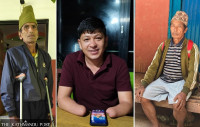
With two more districts under its grip, the number of districts witnessing the deadly disease has reached 9 in the past five months. Experts blame immunisation gap for the surge in measles infections. Post File Photo
Jajarkot and Surkhet in Karnali Province have reported an outbreak of Measles. With the two additional districts reporting the spread of the deadly viral disease, the number of districts witnessing the outbreak has reached nine in the past five months.
Earlier, Sarlahi, Baglung, Mahottari, Kalikot, Dailekh, Achham and Siraha districts reported spread of the measles virus.
“As many as 18 children and youths have been infected with the measles virus in ward 11 of our municipality,” said Dip Bahadur Oli, a public health inspector based in Bheri Municipality of Jajarkot.
“Of the seven samples sent for laboratory tests, measles infection has been confirmed in four. Two samples have yet to be confirmed and one came back negative.”
Jajarkot witnessed a major cholera outbreak in 2009, which killed several people and infected hundreds. Since then, the district has been witnessing multiple outbreaks—including diarrheal disease and viral fever.
In 2023, the district was struck by a magnitude 6.4 earthquake that killed at least 157, injured hundreds and displaced thousands of people. Some of those displaced in the earthquake and still taking refuge in makeshift shelters are highly vulnerable to the measles infection, according to public health experts.
“We were alerted to the rumours of the death of a six-month-old child from measles,” said Oli. “We had collected samples of the deceased’s mother and sent for a lab test, which showed a negative result. The child had died of severe pneumonia instead.”
Health officials at Gurbakot Municipality said that measles spread was confirmed in ward-9 in Chamargaun of the municipality a week ago.
“Of the five samples collected from children having measles-like symptoms, three came back positive,” said Purna Gharti, health section chief of the municipality. “We have administered vitamin A supplements to children of the disease-hit areas and have distributed foodstuffs to the affected families so that they will remain in their villages.”
Measles is a highly contagious disease that spreads through respiratory droplets from the nose and mouth of an infected person. It can be fatal, especially for unvaccinated people. Neighbouring Bangladesh has been struggling to contain an ongoing measles outbreak that began in mid-March and has killed over 500 children.
Nepal has reported one after another outbreak of the deadly disease since the start of 2026. Over 300 children and youths have been infected with the viral disease, officials say. They say that the number of teenagers and youths infected with measles are significant, and their measles vaccination status is unknown.
Health agencies have carried out ring vaccination in Malangawa of Sarhali and Dhorpatan Municipality of Baglung but not in other areas, due to vaccine shortages.
“We are planning to launch ring vaccination in the disease-hit areas of Jajarkot and Surkhet,” said Dr Abihan Gautam, chief of the Immunisation Section at the Family Welfare Division of the Department of Health Services. “We will use the 200,000 doses of measles vaccine provided to us by Measles & Rubella Partnership.”
The Measles & Rubella Partnership is a global alliance of major international organisations working to eliminate measles and rubella to which Nepal had requested for a vaccine.
Immunisation experts say that one after another outbreaks from east to west indicate immunisation gaps.
‘This is a serious setback in our efforts for years to eliminate measles from the country,” said Dr Bikash Lamichhane, a child health expert. “We have been working to eliminate measles since 2003-2004 and still we are nowhere close to elimination.”
Health officials say Nepal currently has neither vaccine buffer stocks for outbreak response nor a dedicated budget for emergencies. They added that assistance from aid agencies has also dwindled of late.
Low vaccination coverage, a floating population, lack of public awareness of the importance of vaccines, and apathy among government agencies in plugging loopholes are some reasons behind the regular outbreaks of measles in various parts of the country.
Experts urge a stronger focus on pockets of poor and marginalised communities, where immunisation coverage is very low. They also urge authorities to allocate dedicated funds for outbreak response and maintain buffer stocks of life-saving vaccines.
Nepal had aimed to eliminate measles by 2026, as there had been no outbreak since June 2023. However, subsequent outbreaks have hindered the country’s progress towards that goal.
The country earlier missed the 2023 and 2019 deadlines. A massive measles outbreak occurred in 2022 and 2023.
To declare measles eliminated, the number of cases should be fewer than five per 1,000,000 people per year. The country must verify progress through foreign, independent verification. For independent verification, there should be no new outbreaks for three consecutive years, officials say.
Doctors say people in all age groups are vulnerable to the disease. Underage children, pregnant women, elderly people and those with weak immunity, such as HIV-infected people, are at higher risk.
Early symptoms, which usually appear 10–12 days after infection, include high fever, runny nose, bloodshot eyes and white, tiny spots inside the mouth. Several days later, rashes develop on the face, upper neck and other parts of the body.
Some patients develop severe complications such as pneumonia and encephalitis, which can be fatal.
Measles was once endemic in Nepal, and an average of 90,000 cases were recorded every year between 1994 and 2004. Routine measles vaccination began in the country in 1979, starting with three districts. The campaign was made nationwide after 10 years.
Arjun Poudel is a health reporter for The Kathmandu Post. Before joining the Post, he worked for Sagarmatha Television, Naya Patrika, Republica and The Himalayan Times.




 17.29°C Kathmandu