Economic Survey shows falling enrollment in community schools and rapid growth in public health facilities
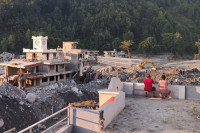
Nepal currently has 35,951 schools. Of these, 25,623 are community schools, 8,941 are institutional institutions, and 1,387 operate under traditional or religious frameworks. No students enrolled at Saraswati Basic School in ward 4 of Kapurkot Rural Municipality in Salyan for the 2026 academic session. Post photo
The country’s socio-economic landscape is undergoing a structural shift, with community schools steadily declining while state-run healthcare infrastructure expands across the country.
According to the Economic Survey for fiscal year 2025-2026, a five-year statistical analysis reveals a sharp contraction in both the number of community schools and their student enrollment, juxtaposed with a robust expansion of the private education market and state-funded medical facilities.
Nepal currently has 35,951 schools. Of these, 25,623 are community schools, 8,941 are institutional institutions, and 1,387 operate under traditional or religious frameworks. Five years ago, community schools accounted for 78 percent (27,813) of the national total, while private schools held a 19 percent share (7,221), and religious institutions stood at 3 percent. By 2026, the share of community schools has fallen to 71 percent, whereas private and religious schools have grown to capture 25 percent and 4 percent shares, respectively.
"The share of private academic institutions is on a consistent upward trajectory. Conversely, the total volume of community schools has depreciated primarily due to the ongoing execution of institutional mergers,” reads the Economic Survey report released on Wednesday.
For over a decade, the state has actively enforced a policy to merge under-enrolled community schools, an administrative strategy that critics argue inadvertently accelerates the commercialisation and privatisation of basic education. This structural shift has deeply alarmed local educationists, policy analysts, and stakeholders who view the shrinking footprint of the state in primary education as a direct threat to constitutional guarantees of equitable access.
Shifting enrollment and merger crisis
Currently, 7.04 million children are enrolled across classes 1 to 12 nationwide. Of them, 4,383,655 students (62 percent) attend community schools, while 2,657,170 students (38 percent) are enrolled in private schools. This represents a drastic shift from ten years ago, when community institutions educated nearly 80 percent of all students.
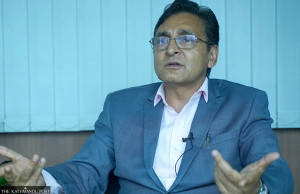
Prof Peshal Dahal, a senior professor at Tribhuvan University’s Central Department of Education, argues that the state's structural framework is actively dismantling public education while reinforcing private capital.
"Basic level public schools are shutting down rapidly across the districts. The local governments have turned school mergers into aggressive bureaucratic campaigns,” said Dahal. When the state explicitly dictates the closure of schools with low student counts, it directly disrupts access for vulnerable communities."
Dahal explained that demographic shifts, including declining birth rates and massive out-migration from hilly rural regions to urban plains, have emptied out small village schools. "In town areas, authorities are pushing the concept of mega-schools based strictly on density. This will inevitably result in the mass closure of smaller neighborhood schools. Unfortunately, the long-term impact of this policy on educational inequality and class divides remains completely unresearched," said Dahal, warning that public closures systematically hand a monopoly to private operators.
Conversely, the survey highlights an increase in Early Childhood Development (ECD) centres. The number of pre-primary facilities grew from 41,284 in 2024 to 42,619 in 2025—an addition of 1,335 centres in a single year. Public entities manage 81 percent of these early childhood hubs, while private operators control 19 percent, catering to a collective total of 1,220,538 toddlers.
Despite the physical expansion of these centres, actual student attendance fell by 80,890 children compared to the previous academic calendar, which had recorded 1,301,428 enrollments. On a positive note, the proportion of grade one entrants possessing prior ECD experience climbed to 77.5 percent, up from 75 percent recorded five years ago, with girls comprising 55 percent of early childhood enrollment against 45 percent for boys.
Enrollment surges in higher education
The Economic Survey reveals a 10.9 percent surge in higher education enrollment between the last two fiscal years. Total university enrollment climbed from 672,489 students in 2023-24 to 745,770 in 2024-25.
However, choice of study remains highly lopsided. Approximately 50.5 percent of all university-level students are enrolled exclusively within management faculties. Overall, general streams such as management, education, and humanities attract 80 percent of the student population, leaving technical disciplines—including medicine, engineering, science, technology, and agriculture—with a minor 20 percent share. This persistent deficit occurs despite sustained rhetoric from consecutive administrations pledging to prioritise technical education to stem the tide of youth out-migration.
Structurally, Nepal’s higher education landscape comprises 21 universities and eight health science academies. This expansion includes six provincial universities and two provincial health institutes established in recent years. Despite the decentralisation of higher education, Tribhuvan University continues to carry the domestic academic burden, absorbing 75.3 percent of all enrolled. Academic experts note that while the central university's overwhelming load is marginalising slightly, newly founded regional academies outside Kathmandu continue to struggle to attract students.
Public health institutions surge, health indices improved
In contrast to the educational contractions, the public healthcare sector demonstrates substantial growth. Over the last five years, the state added 1,755 public health institutions, pushing the national total to 8,976 medical facilities by early 2026, up from 7,221 in 2020. Between February 2025 and February 2026 alone, 230 new public medical centres were added.
The current healthcare grid comprises 420 hospitals, 181 primary health centres, 3,603 health posts, 426 Ayurvedic dispensaries, and 4,346 auxiliary medical units. This is a dramatic shift from 2020, when the country possessed just 125 hospitals, 205 primary health units, and 3,870 health posts.
This systematic expansion aligns directly with the state's decentralisation policy, which mandates the construction of a functioning hospital in every local unit and a healthcare touchpoint in every administrative ward. To realise this, the government initiated the construction of basic 5-, 10-, and 15-bed municipal hospitals; the survey reports that 121 such local hospitals are fully operational, while 313 remain under construction.
This infrastructure push has led to measurable improvements in crucial national health metrics, particularly maternal and infant survival rates. "Maternal mortality rates have demonstrated remarkable declines. Concurrently, neonatal, infant, and under-five mortality rates have decreased significantly, directly correlating with a higher proportion of institutional deliveries and comprehensive child immunisation,” reads the survey report.
Prior to the year 2000, Nepal's maternal mortality ratio stood at a steep 539 deaths per 100,000 live births; that figure has dropped to 151. Similarly, the neonatal mortality rate fell from 33 per 1,000 live births in 2011 to 17 now. Complete childhood immunisation coverage has reached 92 percent nationwide.
Furthermore, institutional deliveries have risen to 90 percent compared to just 35 percent in 2011. Similarly, the infant mortality rate dropped from 46 per 1,000 live births in 2011 to 27 in 2025, while the under-five child mortality rate dropped from 54 to 31 per 1,000 live births over the same period.




 26.02°C Kathmandu