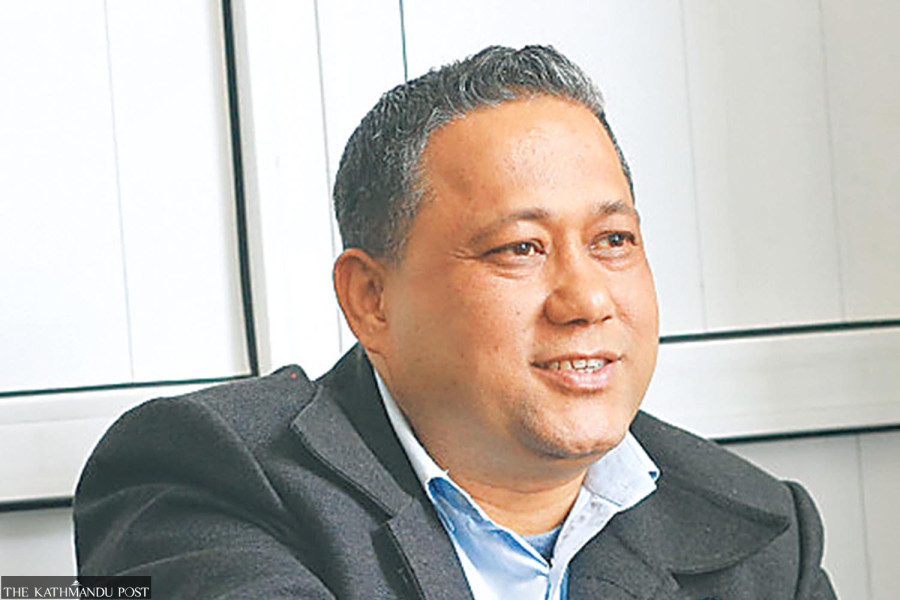
The scheduled visit of Foreign Minister Shisir Khanal to India has been postponed.
The visit was seen as an opportunity to engage with senior Indian leaders in order to discuss some key bilateral issues between Nepal and India that have faced strains in recent months.
Khanal had already met his Indian counterpart, S Jaishankar, in Mauritius on April 10 and discussed ways to prioritise bilateral relations in the changed political context in Nepal following the installation of a powerful government led by Rastriya Swatantra Party leader Balendra Shah.
At the invitation of the government, Khanal was invited to participate at the First International Big Cat Alliance (IBCA) Summit scheduled to be held in New Delhi on June 1.
The Indian government postponed the summit, which was to be attended by representatives from several African nations, though it did not mention the Ebola outbreak in some parts of Africa.
“It was being organised in conjunction with the Fourth India–Africa Forum Summit (IAFS IV), as several African countries host big cats and are important partners in global efforts towards conservation, ecological sustainability and biodiversity protection. Following the decision taken in consultation with the Chairperson of the African Union and the African Union Commission to convene the Fourth India-Africa Forum Summit at a later date, it has been decided that, in order to ensure broad and active participation from all Range countries, including African countries, the First IBCA Summit too will be convened at a later date,” reads the statement issued by Ministry of Environment, Forest and Climate Change on Friday.
New dates for the Summit will be announced after consultations with participating countries and stakeholders, the statement said.
According to officials privy to the preparations for Minister Khanal’s visit, the Nepali side had requested meetings with Indian Prime Minister Narendra Modi, External Affairs Minister S Jaishankar, Commerce and Industry Minister Piyush Goel, and others.
A request was also sent to meet some heads of state, heads of government, and ministers taking part in the summit. “Had the visit happened, it would have been a continuation of the Mauritius meeting,” said the official, but that could not happen immediately.
In Mauritius, both ministers agreed to prioritise bilateral relations by activating bilateral mechanisms. Jaishankar informed that he was planning to send his foreign secretary Misri to Kathmandu. Both sides had exchanged dates for the visit, and preparations were taking place in full swing in both Kathmandu and New Delhi.
But Misri’s visit was postponed after Nepal sent diplomatic notes to both India and China over the Lipulekh boundary dispute, expressing reservations over their decision to resume the Kailash Manasarovar pilgrimage.
But informal talks and communication between Kathmandu and New Delhi at different levels are very much ongoing, Nepali officials in Kathmandu and New Delhi told the Post.
Had the visit taken place, according to knowledgeable sources, Khanal would have invited Jaishnkar to visit Nepal. The agenda would have included construction of a railway between Janakpur and Ayodhya, construction of the East-West railway under Indian assistance, and resolving Nepal’s longstanding request for additional air entry routes to operationalise the Pokahara and Bhairawaha international airports, among others, they told the Post.
With Minister Goyal, Khanal was expected to discuss petroleum pipeline expansion, lifting the Indian ban on sugar exports to Nepal, and the implementation of cross-border QR payments, which, despite an agreement, are not yet functional for Nepalis in India.
“It looks like the initial enthusiasm on the Indian side following the election victory of Rastriya Swatantra Party in Nepal is gradually fading, but relations have not soured as much as some suggest,” said former ambassador Vijay Kant Karna.
"To dispel these misconceptions in our bilateral ties and remove existing irritants, the two prime ministers need to engage in direct talks. Without such a meeting, I don’t foresee any significant breakthrough in the relationship. With the postponement of the visit, we have lost a valuable opportunity. However, the ball is now in Prime Minister Shah’s court. He should take the initiative and not always rely on foreign and finance ministers to handle matters with foreign counterparts," said Karna.
Anil Giri is a Chief Sub Editor covering diplomacy, international relations and national politics for The Kathmandu Post. Giri has been working as a journalist for more than two decades, contributing to numerous national and international media outlets.




 14.7°C Kathmandu