Sharma sworn-in as chief justice amid backlash over seniority bypass
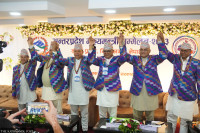
He must navigate internal judicial rifts and uneasy relations with the legal community. Manoj Kumar Sharma takes charge as chief justice, in Kathmandu on Tuesday. RSS
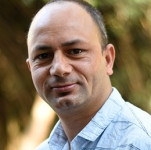
Manoj Kumar Sharma took charge as chief justice of the Supreme Court on Tuesday with unopposed endorsement from the Parliamentary Hearing Committee, even as the judiciary remains divided over the bypassing of seniority in the selection process.
In the evening, he was sworn in by President Ram Chandra Paudel at Sheetal Niwas.
The Prime Minister Balendra Shah-led Constitutional Council, on May 7, recommended Sharma, who was fourth on the seniority list, by a majority vote, despite reservations from two of the six members. Twelve days later, he was unanimously endorsed by the parliamentary hearing committee, although representatives from the Nepali Congress in the House of Representatives abstained.
Not only was the long-standing tradition of seniority bypassed in Sharma’s selection, but the parliamentary hearing process was also concluded in an unusually swift manner. The committee, chaired by the ruling Rastriya Swatantra Party lawmaker Bodh Narayan Shrestha, held discussions with the complainants on Tuesday morning, during which only seven of the 16 who had lodged the complaints appeared.
Ignoring the request from the CPN-UML and Nepali Communist Party lawmakers to allow them to review the complaints, Shrestha, with support from his party’s lawmakers, pushed through the hearing in the afternoon. Earlier practice allowed a day to review complaints after opening them, but this time, complaints were presented and discussed immediately.
In the hours-long question-and-answer sessions, Sharma faced pointed questions about his decisions regarding Ncell, his academic qualifications, and whether he met constitutional eligibility requirements.
Sharma defended his decision regarding tax exemption to the telecom company, saying it was decided through legal process and appeal. Some asked for his answers regarding the differences within the Supreme Court and the objections from the Nepal Bar Association to his alleged role in blocking in registering a writ petition against his nomination.
While he answered some queries hesitantly, he skipped several others. He presented a 19-point work plan to be implemented during his six-year tenure. Sharma has submitted a 19-page action plan during the parliamentary hearing. It includes proposals ranging from forming committees to study problems within the judiciary to establishing a digital court system.
He pledged to reduce the backlog of cases. Similar promises have been made by previous Chief Justices during hearings.
However, Sharma’s commitment to present progress reports to the parliamentary committee every four months suggests he will be under pressure to deliver reforms.
The Supreme Court’s workload has been continuously increasing.
Sharma said there is no major dispute with the Bar and that issues related to case registration are administrative matters. However, the Nepal Bar Association staged symbolic protests with lanterns at its Ramshahpath office while the hearing was underway at Singha Durbar.
Sharma proposed forming a high-level study committee within one month, even as a report on judicial reform prepared by former chief justice Hari Krishna Karki has not been fully implemented.
He also stated that judges should only be involved in judicial work as per the constitution and should not be assigned administrative roles.
He proposed transforming the Supreme Court into an IT-friendly court by integrating digital systems into case filing, judgment writing, and enforcement within a year.
He plans to implement digital platforms for case registration, summons delivery, case management, witness examination, hearings, and judgment writing.
He also proposed live broadcasting of court hearings, the development of biometric systems linked to national identity cards, and the remote participation of litigants online.
He mentioned exploring the use of AI in the judiciary and enforcing strict judicial governance. He proposed a system for the timely resolution of complaints against judges and regular monitoring of code of conduct compliance, with disciplinary action in case of violations.
He emphasised a zero-tolerance policy against corruption and irregularities, and electronic tracking of case files from registration to verdict.
He also proposed a merit-based, transparent, and objective system for judicial appointments under the Judicial Council, based on qualifications, experience, and judicial integrity. He said appointments would be made within constitutional timelines, with a structured schedule for Judicial Council meetings.
His recommendation was eventually endorsed. Immediately after being endorsed unopposed by the parliamentary hearing committee appointed by President Ramchandra Paudel, Sharma assumed the office. Seeking support from all sides, he claimed that the core objective of his tenure would be to build and protect an independent, impartial, competent, and publicly trusted judiciary.
“No interference of any kind will be accepted in the institutional independence of the judiciary, the professional impartiality of judges, and the dignity of judicial proceedings. There should be no reason for anyone to doubt this. I want to fully assure that no such act that creates doubt will be done by me, nor will it be allowed,” he said after assuming the office.
Who is Chief Justice Sharma?
Now 56, Sharma will serve a full six-year term, longer than many recent chief justices who retired early after reaching the constitutional age limit of 65. He is set to retire in May 2032 at the age of 62.
Born in June 1970 in Birgunj, Parsa, Sharma holds a Bachelor of Law from Nepal Law Campus, a master’s degree in Commercial and Constitutional Law from Pune University in India, and a PhD in Labour Law from Tribhuvan University.
He began his legal career in 1995 as an advocate. Early in his practice, he worked at Pioneer Law Firm before setting up his own practice. He later co-founded the ShreeMaRa (Sreemara) Law Firm with Ramesh Badal, who later served as attorney general under the KP Sharma Oli government, and lawyer Shreekanta Baral. The firm’s name was formed from the Nepali initials of the three partners.
Alongside litigation work, Sharma was involved in corporate legal consultancy and later engaged in teaching. However, his career remained largely focused on advisory work rather than regular courtroom advocacy before the Supreme Court.
Sharma is the nephew of former chief justice Damodar Prasad Sharma. During Damodar Sharma’s tenure as chief justice and chair of the Judicial Council, Manoj Sharma was appointed as an additional judge of the then Appellate Court in Butwal in June 2013.
Challenges for Sharma—from colleagues to the Bar to controlling intermediaries
Sharma’s first challenge is maintaining harmonious relations with fellow justices. Immediately after his nomination, dissatisfaction and disagreement emerged within the Supreme Court.
Events such as disputes over case registration and refusal to register petitions indicate early institutional tensions. Though he assumed office on Tuesday, judicial leadership will effectively begin functioning from Wednesday.
He will need to carry along senior justices such as Sapana Pradhan Malla, Kumar Regmi, and Hari Prasad Phuyal, along with other justices, to ensure smooth functioning and deliver reforms promised during the hearing.
Past precedents show that Supreme Court justices have sometimes boycotted benches or refused participation during conflicts, as seen during the tenures of the then chief justices Gopal Parajuli and Cholendra Shumsher Rana.
Another challenge is coordination with the Nepal Bar Association. The coordination mechanism between the Bar and Bench is currently inactive, and the Bar itself appears divided over his appointment.
The Bar signaled that difficult days lie ahead. Cooperation between the Bar and Bench will be essential for reforms such as reducing case backlog, curbing corruption, and ensuring speedy justice.
Reducing case backlog and curbing intermediaries
Court caseloads have been rising steadily. In 2004, when the first strategic plan was introduced, there were 107,641 pending cases. By the end of the previous fiscal year the number had reached 375,284, according to Sharma’s own presentation.
Courts now receive more than 700 new cases daily. Public interest litigation often dominates court schedules, while ordinary citizens wait years for justice.
Former Supreme Court judges and legal experts suggest Sharma must address public concerns and improve institutional performance.
Former Chief Justice Om Prakash Mishra noted that Sharma’s calm nature could help him manage colleagues and resist executive pressure.
He said Sharma should focus on clearing old cases first and strengthening public trust in the judiciary.
“He is calm by nature. He has time,” Mishra said. “He has the opportunity to eliminate existing distortions and lay the foundation for a new judicial system.”




 14.4°C Kathmandu