Draft guidelines propose tech overhaul of public transport
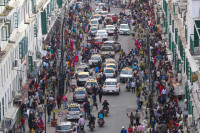
New rules call for GPS tracking, AI-based monitoring, panic buttons and digital chit to improve safety, accountability and passenger experience. Post File Photo
The Department of Transport Management (DoTM) has prepared a draft guideline aimed at making public transport safer, more organised and passenger-friendly through the use of modern technology.
The “guidelines on making public transport technology-equipped, healthy, safe, dignified and passenger-friendly, 2026” has been finalised and sent to the Ministry of Physical Infrastructure and Transport for approval.
The proposal comes amid longstanding complaints from passengers over safety, overcrowding, harassment and poor service in public vehicles. It seeks to make the installation of systems such as GPS and CCTV mandatory.
Under the draft, all public vehicles must install GPS tracking devices. The department will provide technical support and develop a central control system to monitor operations. Drivers, co-drivers, assistants and vehicle owners will be responsible for keeping the devices functional, while the department will oversee inspections.
The draft also requires public vehicles to install at least two CCTV cameras, except for taxis. Owners requesting CCTV installation in taxis will receive technical assistance from the department. Operators must store CCTV footage for at least three months.
The guideline proposes the use of artificial intelligence-based systems capable of facial recognition to monitor activity inside vehicles and count passengers. Vehicles must display clear notices informing passengers that monitoring systems are in place.
The draft also introduces electronic ticketing and payment systems. Public vehicle operators will be required to adopt online ticketing and provide digital payment options through government-recognised gateways or QR codes.
Digital chits must include QR codes or payment links and display details such as the digital chit number, date, time, nature of the offence, service details, amount due and payment status. The system must clearly state the legal provisions violated, covering offences such as jumping red lights, not wearing helmets or seatbelts, using mobile phones while driving, illegal parking, lane violations and speeding.
According to the department, the draft aims to reduce accidents, improve service quality and address issues such as irregularities and harassment in public and freight transport.
Ganeshman Singh Rai, information officer at the DoTM, said the draft has been forwarded to the ministry for discussion. “Consultations with stakeholders are ongoing at the ministry,” he said. “It may take some time before a final decision is made and implemented.”
The draft also requires authorities, including the department and Nepal Police, to issue time cards for public vehicles, detailing routes, checkpoints and minimum travel times. Vehicles must be equipped with fire extinguishers based on seating capacity and carry first-aid kits.
An emergency assistance button will be mandatory in all public vehicles. In case of accidents, assaults or health emergencies, the system will send alerts with location data to a central control unit.
For long-distance routes exceeding 250 kilometres, operators must deploy at least two drivers. Drivers are barred from using mobile phones while driving and must follow prescribed fares, which should be clearly displayed inside vehicles.
The draft also calls for drivers and conductors to wear uniforms as specified by relevant authorities and undergo health check-ups at least once every six months. Legal action has also been proposed against individuals who harass on-duty transport staff.
Ramhari Pokharel, spokesperson for the Ministry of Physical Infrastructure and Transport, said the draft is under review. “The guideline will be finalised after incorporating feedback and necessary revisions,” he said.




 15.26°C Kathmandu