



 14.81°C Kathmandu
Sat, Oct 24, 2026
Money
Policy instability, weak implementation continue to deter foreign investment in Nepal
Multinational companies cite policy inconsistency, centralised decision-making and weak infrastructure as major barriers to investment.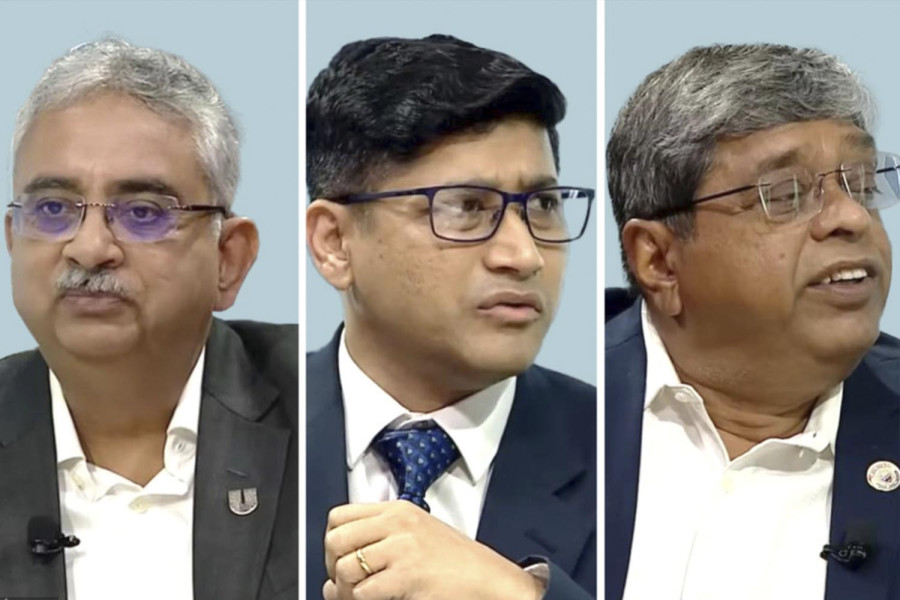
bookmark
Seema Tamang
Published at : May 24, 2026
Updated at : May 24, 2026 10:10
Kathmandu
Even as Nepal formally opened its doors to foreign direct investment (FDI) more than three decades ago, the country has never managed to attract FDI worth even 1 percent of its gross domestic product (GDP).
In the past three years, the figure has hovered around just 0.2 percent.
While least developed countries such as Cambodia, Bangladesh and Rwanda have drawn significant foreign investment, Nepal has struggled to attract global investors.
Although many foreign companies continue to do well in Nepal, some have already exited the market. With businesses facing persistent operational and policy-related challenges, multinational companies here have been unable to confidently recommend Nepal as a favourable destination for foreign investment.
There are calls for multinational companies already operating here to be used as goodwill ambassadors for Nepal.
Amlan Mukherjee, CEO of Unilever Nepal, speaking at a roundtable organised by Kantipur ahead of the national budget, said that there might be some progress if the government can bring clarity and uniformity in policy and its implementation.
If the upcoming budget creates an environment in which companies operating here can flourish, Mukherjee said, the companies will themselves commit to promoting Nepal.
Mukherjee wants decentralisation of decision-making related to FDI. If all decision-making remains concentrated in Kathmandu or ministries only, “the result will only be delays”, he said.
“Once there is faceless government and a decentralised policy is decided by the local authorities, there will be speed and also consistency,” he said, about foreign direct investment policy implementation.
However, the confusion regarding policy among chief district officers (CDO) needs to be cleared, he said.
The clarity, uniformity, and decentralisation in policy implementation will automatically bring results, said Mukherjee.
Mukherjee also called for a balance in the upcoming fiscal budget, considering the impact on Nepal from the ongoing conflict in West Asia and the instability it has triggered around the world.
“The government is stable and clear in its principles. We expect a progressive budget from the government,” he said.
While it would be unrealistic to expect one budget to solve all problems, the upcoming budget should create pathways to keep local industries, consumption cycles, banks, and financial institutions that have seen money stagnate moving.
Mukherjee said that investment in infrastructure would also move other sectors under its leadership.
Citing that the contribution of manufacturing industries to GDP is only around 5 percent, he said the extremely low ratio is due to Nepal's decision to remain as an import-based economy.
“The moment Nepal begins producing within the country, the benefits will be multidimensional,” he said. With a favourable investment environment and revenue growth, both domestic and international companies will increasingly look towards Nepal.
Rajib Roy, country manager for Berger Paints Nepal, said that his company has been operating in Nepal for more than 30 years, despite policy instability and fluctuations, as a successful business model.
Nepal’s tax structure is inverted, and it is necessary to address it, Roy said. “The tax on raw materials cannot be equal to or higher than the tax on finished goods. This is a major policy issue.”
Without employment generation in the country, both educated and uneducated youths will continue to migrate abroad, he warned.
Roy said that people engaged in business and entrepreneurship expect long-term and stable policies.
In Nepal, each time the government changes the policy also changes.
The taxes must be predictable, he said.
Stressing the need to remove retrospective laws and similar arrangements, Roy said such policies negatively affect business and people who drive the economy forward.
To become an export-oriented economy, Nepal must offer Special Economic Zones (SEZs), incentives, and subsidies, Roy said.
He said infrastructure development is critically important for any type of investment. Nepal has sufficient hydropower and the country can harness other forms of renewable energy too.
“We have vast barren lands suitable for setting up solar panels,” he suggested.
Other possibilities include linking the hospitality industry with tourism, as well as in Information Technology (IT) and Business Process Outsourcing (BPO) but the government must embark on a journey of digital transformation.
The government should consider introducing 5G and building high-speed internet highways, Roy suggested.
As Bangladesh and India are facing energy shortages, Nepal can establish large hydropower projects and construct cross-border transmission lines for energy exports, he said.
He emphasized the need to move from low cost tourism towards high-end tourism by investing in infrastructure. Although Nepal has manpower, skill development is necessary.
The government’s corporate social responsibility (CSR) policy needs reconsideration. The current policy has made it difficult for industries to directly support people within their own operational areas, he said.
Saibal Ghosh, coordinator of multinational companies at the Nepal-India Chamber of Commerce and Industry (NICCI), observed that any foreign investor or local entrepreneur willing to invest in an industry first examines the financial parameters.
Investors look at the amount of tax to be paid, customs duty on raw materials imported from India or another third country, value addition and the potential earnings, Ghosh said. “Changes in these policies completely disrupt the investor’s entire financial calculations.”
So right policy and stable policy is important.
“Any investor wants assurance beforehand of how much return can be generated from the investment within a certain period,” said Ghosh. “Policy stability is the first and minimum condition required for any investor.”
Ghosh said that quality education can stop youth migration. He noted that remittance income equals a quarter of GDP, but the country should look beyond that.
“We are losing the skilled manpower of the future. The possibility of skilled workers returning to Nepal is very low,” he said.
Continuous youth migration is also affecting the country’s consumption. Unless consumption increases, even companies already established in Nepal may struggle to survive in the future.
Seema Tamang
Seema covers business and economy for Kantipur Publications.



Most Read from Money

Why does an hour long flight to Dhangadhi cost more than a flight to New Delhi?
Nepal travel agents threaten to stop selling Thailand trips over visa rules
Malaysia rejects Nepal’s demand to open recruitment to all manpower agencies

No school, but a graduation cap for women dairy farmers
Nepal arrests four medical service providers as Malaysia recruitment row deepens
Editor's Picks




E-PAPER | October 24, 2026

×