Sisneri, Kogate streams planned as alternative water source for Kathmandu Valley
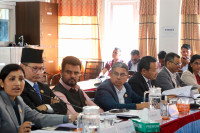
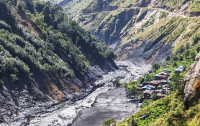
The Rs 33 billion project aims to ease water shortage in the valley amid frequent disruption of the Melamchi water project during the monsoon. File Photo: Elite Joshi
As Kathmandu Valley’s water supply continues to fall short of demand and the Melamchi Water Supply Project struggles with recurring disruptions, authorities are preparing to tap new sources in Makwanpur to meet the capital’s growing drinking water needs.
Water from the Sisneri and Kogate streams in Makwanpur district has been identified as a long-term alternative to support the Valley’s existing supply, which remains inadequate despite the operation of the Melamchi Project. The Melamchi system, the Valley’s primary source, provides around 170 million litres per day in the dry season but frequently faces disturbance during the monsoon due to flooding.
Authorities say the proposed project could help reduce Kathmandu’s heavy dependence on a single and climate-vulnerable source and address the increasing gap between supply and demand driven by rapid urban expansion.
Preparations are underway to divert water from the Sisneri and Kogate streams to the Valley, following the completion of a detailed project report after five years of study.
The plan involves collecting water at the confluence of the two streams at Paiyudamar, located in Bhimphedi Rural Municipality-8 and Sisneri Rural Municipality-3 in northern Makwanpur. The water will then be transported to a distribution tank in Bhaisepati, Lalitpur, from where it will be supplied to different parts of the Valley.
According to project details, a dam measuring 50 metres in length and 65 metres in height will be constructed at Paiyudamar to collect water from the streams. The collected water will be pumped and conveyed to the Valley through a pipeline system.
Dol Prasad Chapagain, executive director of the Kathmandu Valley Water Supply Management Board, said the project is aimed at addressing the persistent drinking water shortage in the Valley by diversifying supply sources.
Water stored at Paiyudamar will first be pumped to Dabarang Danda in Sisneri Rural Municipality-3. From there, it will flow by gravity for about 9 kilometres to Makhkhu Bensi in Lalitpur, where a water treatment plant will be built to purify the supply.
Following treatment, the water will be pumped again to a reservoir in Bhaisepati. Paiyudamar is located approximately 20 kilometres from Bhaisepati.
“Water will be distributed across the Kathmandu Valley through a 20-kilometre pipeline,” Chapagain said.
The project is estimated to cost around Rs 33 billion and is expected to supply 140 million litres of water per day during the monsoon season and 80 million litres per day in the dry season.
Officials said the project will be implemented through joint investment by international donor agencies, the Government of Nepal, and the Kathmandu Valley Water Supply Management Board. Construction is targeted to begin within the next two years.
Local authorities in Makwanpur have expressed support for the project while also preparing to assess its potential impacts.
Hidam Lama, chair of Bhimphedi Rural Municipality, said the local government has been coordinating with project authorities and has agreed in principle to the plan.
He said the municipality will soon organise a public hearing to evaluate the project’s economic, social, physical and cultural impacts on affected communities.
Lama added that the Sisneri and Kogate streams are currently not being utilised for any major purpose, suggesting limited immediate disruption to existing water use in the area.




 15.26°C Kathmandu