Riverbeds turn lifeline for freed Kamaiyas in Kanchanpur
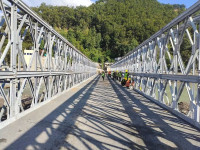
Farmers turn sandy riverbeds into productive fields. They earn a living from growing vegetables, but rely on risky roadside trade without market. Local farmers selling vegetables near the Banhara bridge in Bani in Krishnapur Municipality–2, Kanchanpur. Bhawani Bhatta/ TKP
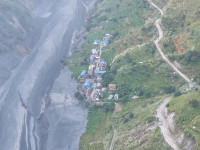
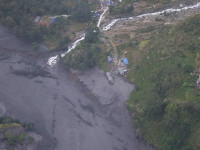
Once fertile farmland along the Banhara river has turned into sandy riverbeds after years of erosion and flooding. These barren stretches have now found new life as farmers grow vegetables, creating a source of livelihood and income for freed Kamaiya families.
More than 200 freed Kamaiya families live in settlements provided by the government in the Bani area of Krishnapur Municipality. After floods and erosion turned their fertile land into sandbanks, many have taken to riverbed farming. Over 100 families grow seasonal vegetables, particularly spring crops.
Vegetables such as cucumber, bottle gourd, pumpkin and watermelon are cultivated on the riverbed.
Nanda Lal Rana of Krishnapur Municipality–2 is especially busy these days. He tends the creeping vegetables planted on the riverbed while also harvesting and selling them along the roadside.
He travels from village to village selling cucumbers, bottle gourd, pumpkin and watermelon grown on the riverbed. He has also built a shed near the Banhara bridge, where he sells his produce.
“This used to be our fertile farmland. The Banhara river washed it all away and later deposited sand over it. Now we survive by growing vegetables on that sand,” said Rana.
In addition, he grows creeping vegetables at home. He has been engaged in this work for the past 10 to 12 years and expects to earn at least Rs 400,000 this season. “I have been doing this for 10–12 years. I even called my sons, who used to work as security guards in India, to join me,” he said. “I grow seasonal vegetables year-round, and this is my main source of income.” He currently sells watermelon, bottle gourd and pumpkin at Rs 50 per kg, cucumbers at Rs 30, and bitter gourd at Rs 100.
Riverbed farming in the area—located along the border of Krishnapur and Shuklaphanta municipalities—begins in winter. On sandy stretches left behind after the monsoon, farmers grow creeping vegetables and fruits such as watermelon, cucumber, pumpkin and bottle gourd.
Seasonal streams flowing from the Chure hills dry up in winter. Some farmers cultivate on riverbeds formed on their own land, while others farm on unclaimed sandy stretches. Along the Banhara river, hundreds of farmers earn a living through riverbed vegetable farming.
Mandu Chaudhary pointed to the riverbed and said, “That used to be our land. The river turned it into sand. Now we make a living from it.”
Another farmer, Bimal Rana, shared a similar story. “After losing our land to floods, we had no option. In winter, we grow cucumbers and watermelons on the riverbed. We also rent some land for vegetable farming,” he said.
Theft of crops has become a problem, forcing farmers to guard their fields. Nanda Lal now sleeps on the riverbed at night to protect his produce.
Under the scorching April–May sun, farmers sell their produce from makeshift sheds along the Mahendra Highway. Travellers stop their vehicles to buy vegetables, and farmers earn between Rs 5,000 and Rs 7,000 a day.
Rajendra Rana of Bani in Krishnapur–3, who has been farming for five years, expects production to increase. “Then we will have to go from village to village to sell,” he said.
Lack of a proper market remains a major challenge. Unable to secure fair prices, farmers are forced to set up roadside stalls along the highway, risking their safety.
Local resident Janaki Bista said riverbed farming and roadside trading have made it difficult to breathe due to dust and smoke. “There is no land elsewhere for farming. If we don’t sell here, cucumbers and bottle gourds that fetch Rs 50 per kg here hardly get Rs 10 in the market,” she said.
The narrow highway and fast-moving vehicles make roadside trading dangerous, said local farmer Rabindra Rana.
In recent years, local governments and the Agriculture Knowledge Centre have been providing seeds and technical support to riverbed farmers. Krishnapur Municipality has also initiated plans to build a safer, more organised market for them.
According to Mayor Hemraj Ojha, land north of the current sheds will be filled to develop a marketplace. “We understand that farmers are taking risks to trade,” he said. “The budget has been allocated, and work will begin soon to provide a safer trading space.”
Despite the challenges, their struggle to rebuild livelihoods from land taken by the river continues along the roadside.




 15.78°C Kathmandu