US Assistant Secretary of State Samir Paul Kapur visiting Nepal Monday
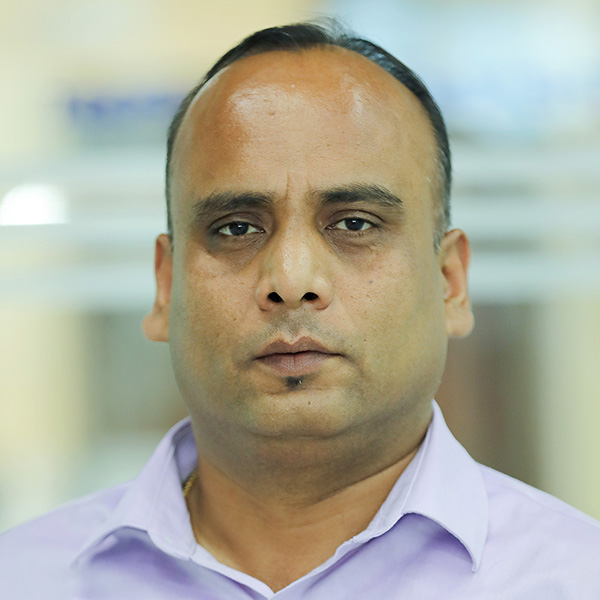
Washington’s decision to send a top diplomat soon after the formation of Shah government is loaded with meaning, say officials.US diplomat Samir Paul Kapur Photo: Courtesy of US Department of State
In a bid to engage the new Balendra Shah administration, a top US diplomat, Samir Paul Kapur, the assistant secretary of state for South and Central Asia, is arriving in Kathmandu on Monday on a three-day visit.
Kapur will be the senior-most foreign diplomat and official to visit Kathmandu after Shah assumed office on March 27.
A Nepali diplomat from the Nepali Embassy in Washington, DC, and an official at the Ministry of Foreign Affairs confirmed to the Post that Paul is arriving in Kathmandu on Monday to congratulate the new government. He will listen to the priorities of the new government in Kathmandu and convey how Washington wants to engage with it, according to officials.
However, neither side has formally announced the visit. Kapur will be accompanied by two other officials of the State Department. His other engagements with political party leaders (if any) is also not known. In this connection, the US Embassy in Kathmandu did not respond to an email query by the Post.
Kapur is scheduled to meet Finance Minister Swarnim Wagle, Foreign Minister Shisir Khanal, and office-bearers and members of the Nepal-USA Chamber of Commerce, among others, during his stay. He will also visit Patan Durbar Square.
However, as of Friday evening, the US side has not requested a meeting between Kapur and Shah, according to officials privy to the development.
In October last year,US President Donald Trump appointed Kapur, an expert on South Asian security, as assistant secretary of state for South Asian Affairs, replacing Donald Lu. After a new government was installed in Bangladesh in February, Kapur visited Dhaka and met senior Bangladeshi leaders, including Bangladeshi foreign minister Khalilur Rahman and State Minister for Foreign Affairs Shama Obaid Islam, but he did not meet Bangladeshi Prime Minister Tarique Rahman.
Even though Kapur had intended to come to Kathmandu earlier, the visit was deferred due to last month’s parliamentary elections and other domestic factors in Nepal.
“The US side has not shared details about the visit, but its eagerness to engage with the new government in Kathmandu is not hidden,” said a Nepali diplomat based in Washington. “Sending a top diplomat to Kathmandu soon after the formation of a new government in Nepal is a significant development.”
In various conversations with officials, Kathmandu-based US diplomats have spoken of the need for speedy and smooth execution of the Millennium Challenge Corporation Nepal Compact, a hassle-free US investment by American companies in Nepal, and the resolution of tax issues involving Cotiviti Nepal [an IT company] and Coca-Cola. Safeguarding the rights of Tibetan refugees in Nepal has also been a priority for him. Likewise, foreign direct investment from the US, expansion of US Starlink Internet services in Nepal, extension of the US-Nepal Trade and Investment Framework Agreement (TIFA) with other exportable items, possible Fitch Ratings visit to Nepal, and the issue of MetLife's reinsurance have been among the US concerns in Nepal.
For the first time, a US assistant secretary of state is travelling to Kathmandu on a standalone visit. Previously, top US officials often combined Nepal visits with trips to countries such as India, Bangladesh, and Sri Lanka. This time, Kapur is travelling direct from Washington to Kathmandu via Turkish Airlines and will return by the same airline on Wednesday.
Ahead of the March elections in Nepal, it was Kapur who first announced that the Trump administration was confident Nepal would vote peacefully and was prepared to work with the next government.
While briefing the House Foreign Affairs Committee in the second week of February, Kapur had stated, “With Nepal, we also trust that we’ll have a secure and peaceful electoral process, and we’re prepared to work with whoever wins.”
In his testimony, he briefed US lawmakers on the US position in the region, including Nepal and Bangladesh, where youth-led protests had overthrown governments. In early March, after the formation of the new government, Kapur visited Dhaka and held talks with senior Bangladeshi officials.
During the hearing, the US House subcommittee emphasised bipartisan recognition that Nepal—strategically located between India and China—occupies a sensitive geopolitical position. Kapur had stated that preventing domination by any single power in South Asia is a core US objective.
“A hostile power dominating South Asia could exert coercive leverage over the world economy,” he said, adding the US must prevent this from happening and keep the region free and open.
Washington views Nepal’s political reset not only as a domestic democratic development but also as part of the larger strategic contest shaping South Asia, he said. Countries including Bangladesh, Nepal, the Maldives, Sri Lanka, and Bhutan hold outsized strategic importance due to their locations but are also vulnerable to coercive pressures, according to Kapur. He warned of the risks posed by ‘debt-driven influence strategies’ in the region, an apparent reference to US concerns about China’s lending practices.
According to Kapur, key US priorities in the region include expanding trade relations with South Asian nations, increasing defence co-operation, and targeted investment. He also emphasised the need for diplomacy and support to help regional partners build strategic capacity.
Anil Giri is a Chief Sub Editor covering diplomacy, international relations and national politics for The Kathmandu Post. Giri has been working as a journalist for more than two decades, contributing to numerous national and international media outlets.




 22.39°C Kathmandu