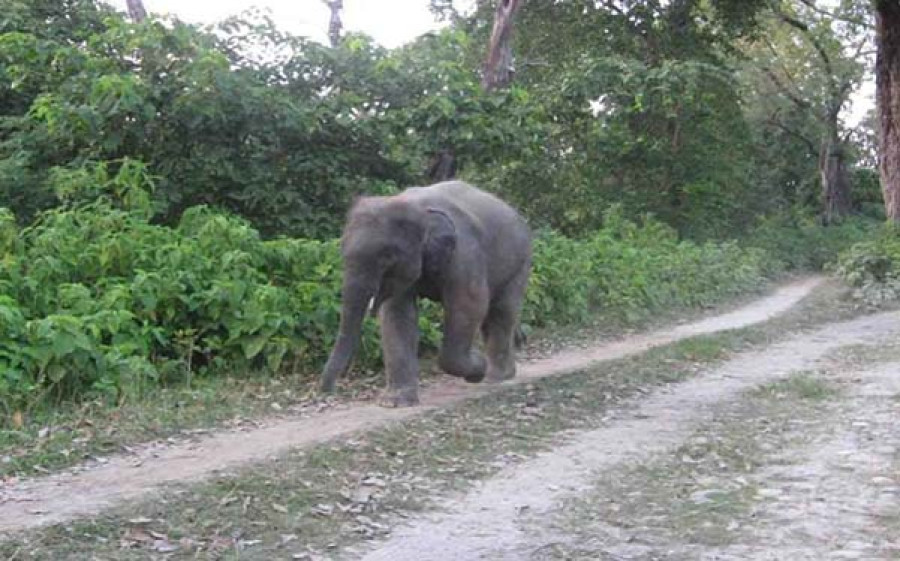
The bond between elephants and their caretakers in Bardiya National Park has taken a tragic turn, as two experienced handlers have lost their lives to domesticated park elephants within the last four years.
The most recent fatality occurred on March 28, when a 43-year-old handler Gangaram Tharu was crushed to death by an elephant named Kumar Gaj. Gangaram, who had served as a phanait (a senior handler) on a contract basis for a decade, was attacked while bathing the animal by a river.
"He (Gangaram) was responsible for feeding, grazing, and bathing the elephant, yet the animal turned on him," said Sarojmani Paudel, information officer at Bardiya National Park. This follows a similar tragedy in April 2021, when 35-year-old Chhotki Tharu was killed by an elephant named Yatrakali while cutting grass for the very animal he had raised.
According to the park, Chhotki had trained more than a dozen elephants and was actively involved in rescuing problem wildlife, conducting regular patrols, and participating in sweep operations. His colleague, Phonidra Tharu, a fellow phanait (senior handler) who was with him at the time, narrowly escaped by fleeing as the elephant began its attack.
Ashok Ram, chief conservation officer of the park, said that while wild elephant attacks remain a much larger threat—claiming 357 lives in Nepal over the last 25 years—domesticated elephants have killed seven handlers in that same period. “A captive elephant remembers if it is mistreated or if its food is delayed,” said Ram. “They can hold a grudge for years.”
The management of the park’s 11 domesticated elephants relies on a three-tier system: the mahout (driver/cleaner), the pachhuwa (feeder/grazer), and the phanait (safari lead). Despite this structured care, experts warn that the animals' wild instincts are never fully suppressed.
According to Ramesh Kumar Thapa, former chief conservation officer, risks escalate when elephants are taken out to graze. "Even a domesticated elephant is fundamentally a wild animal. Their core nature remains active and can surface under specific conditions, especially when they feel a sense of freedom while grazing,” said Thapa.
Bardiya has seen a rise in human-wildlife conflict due to habitat fragmentation. While the park’s 32 staff members work to manage the captive herd for anti-poaching patrols and rescues, the presence of an estimated 120 wild elephants in the region continues to complicate conservation efforts and safety protocols for those on the front lines.




 14.01°C Kathmandu