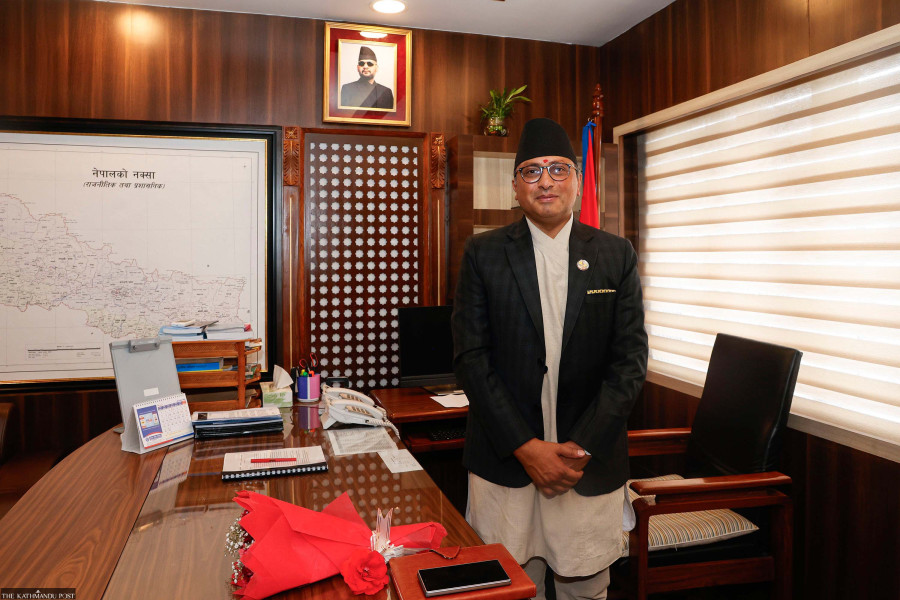
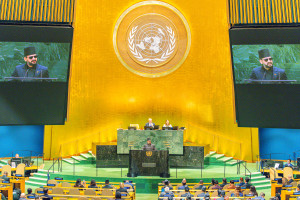
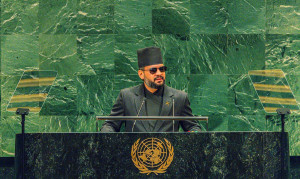
Following a strong electoral mandate, Balendra Shah was sworn in as prime minister on Friday, with economist Swarnim Wagle appointed as finance minister in the majority government.
The ruling party has set ambitious economic targets in its election manifesto, aiming for an average annual growth of 7 percent (at constant prices) over five years, raising per capita income above $3,000 and expanding the economy close to Rs10 trillion. The finance ministry will play a central role in achieving these goals.
The manifesto also promises tax relief, a ban on retroactive taxation and income tax thresholds based on family burden. However, experts say implementing these commitments will not be easy.
Wagle, aligning with the manifesto, has pledged to pursue a second phase of economic reforms. Taking charge, he initiated the implementation of recommendations from the High-Level Economic Reform Advisory Commission, 2024. His first decision includes plans to dissolve the Revenue Investigation Department and begin amendments or repeal of 15 existing laws.
The finance minister said an economic status report will be prepared within five days, followed by 100-day, half-yearly and annual action plans to implement the party’s manifesto. The government, he added, will focus on strengthening private sector confidence, easing large-scale development projects and removing procedural hurdles through new legislation and legal reforms.
Wagle said economic issues will be addressed holistically, with a shift towards systemic reform and the removal of discretionary powers. Priorities include implementing recommendations of the Public Expenditure Review Commission, boosting domestic production, creating jobs and preparing a transformative budget.
He also said efforts will be made to advance digital governance and move towards paperless and cashless systems, starting from the finance ministry.
Despite relatively strong foreign exchange reserves and balance of payments, revenue collection, capital expenditure and foreign aid utilisation remain weak. Experts say Wagle faces the challenge of improving revenue mobilisation, increasing capital spending and controlling recurrent expenditure to stabilise the economy.
Former vice-chairperson of the National Planning Commission Prakash Kumar Shrestha said the economic targets set by the ruling party are ambitious and require significant effort. He stressed the need to improve the investment climate, boost effective demand and increase capital expenditure.
He added that external factors, including conflicts in West Asia, are affecting Nepal’s tourism sector, making it necessary to strengthen domestic production, demand and exports.
With a new budget due in about a month and a half, the finance ministry must also prioritise budget preparation. Shrestha said lessons from the past should guide better project selection and effective budget execution, supported by a motivated bureaucracy.
The ministry will also need to address public finance management issues. Shrestha noted a mismatch between federal revenue and expenditure, with a deficit of around Rs150 billion at the federal level, while provincial and local governments collectively hold surplus funds of nearly Rs400 billion. He said improving the spending capacity of provincial and local governments is essential.
Other priorities outlined in the manifesto include reviewing the Nepali currency exchange rate with the Indian rupee, introducing a one-stop investment service, and completing long-stalled national pride projects within two years.
The plan also proposes bringing all non-financial sectors under central regulation, strengthening oversight of cooperatives and microfinance institutions, and restructuring regulatory bodies such as the Securities Board and the Nepal Stock Exchange.
Former finance minister Prakash Sharan Mahat said the government must work to reduce the gap between revenue and expenditure while managing expectations on job creation and growth. “Government must take a realistic approach given uncertain global conditions,” he said. “It should identify core problems and focus on delivering results rather than making populist promises.”
The manifesto also includes a pledge to release cooperative fraud suspects from custody under certain conditions, to ensure recovery of depositors’ funds. It states that if operators can present credible plans and sources to return money, legal provisions will allow for settlement.
The ruling party has promised to return deposits of small savers within 100 days of forming the government, though details on the definition of small savers and funding sources remain unclear.
The government now faces the challenge of balancing limited resources with growing public demands, while managing social security obligations and infrastructure needs through efficient financial management.




 23.02°C Kathmandu