The Election Commission has dispatched ballot papers and all necessary materials to all 165 constituencies for the House of Representatives elections slated for March 5.
Narayan Prasad Bhattarai, spokesperson for the commission, said election officials have been deployed to polling centres, and all staff are required to reach their stations by March 2.
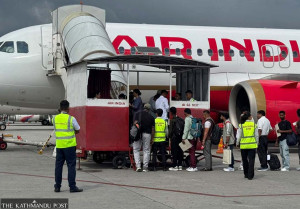
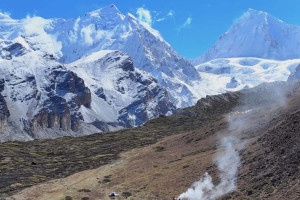
Proportional ballot papers, printed in black on white, cover 58 parties and total 20.8 million copies. First-past-the-post ballot papers, tailored to constituency candidate lists, total 20.3 million for 3,406 contenders nationwide. Ballot papers’ size varies with the number of candidates, with larger ballot papers in constituencies fielding more contenders. Remote districts such as Manang, Mustang, Humla, Dolpa and Mugu received ballot papers by helicopter, while deliveries to other areas were made by road.
The commission has set up 23,112 polling centres and 10,967 polling stations, up from 22,227 centres and 10,892 stations in the 2022 election.
Security for the election will be provided by the Nepali Army, Nepal Police, the Armed Police Force, and the election police, with 339,000 personnel deployed nationwide. Around 222,000 election staff have been assigned, with eight stationed at centres serving fewer than 1,000 voters and nine at larger centres. An additional 6,700 volunteers have been mobilised across the country to carry out voter education.
Temporary voter lists include 186,142 people, well below the expected 500,000. Eligible temporary voters comprise government employees at federal, provincial and local levels, military and police personnel in barracks, prisoners, residents of elderly homes, and officials of constitutional bodies. Those registered as temporary voters can cast their proportional ballot papers at the centres where they are deployed.
A 48-hour silent period will begin at midnight on March 3, during which all campaigning is prohibited. The commission has instructed the government to fully enforce the election code of conduct and to ban the sale and distribution of alcohol from seven days before voting until the results are announced.
All vehicles will be prohibited from operating from midnight on March 4 until the close of voting on March 5, except those with special permits. Voters must present a valid voter ID; if unavailable, a citizenship certificate, national ID, passport, driving licence, or land ownership certificate will be accepted.
The commission has invited election commissioners from SAARC countries—India, Pakistan, Sri Lanka, Bangladesh, the Maldives and Bhutan—as well as from Australia, South Korea, Russia, Indonesia, Malaysia and Japan to observe the elections. UN and diplomatic missions in Kathmandu have also been asked to monitor the election. Spokesperson Bhattarai said confirmations from foreign observers are still pending. The commission will cover all travel, accommodation and related expenses for visiting observers.




 25.4°C Kathmandu