World’s top lenders join hands to build 670MW Dudhkoshi
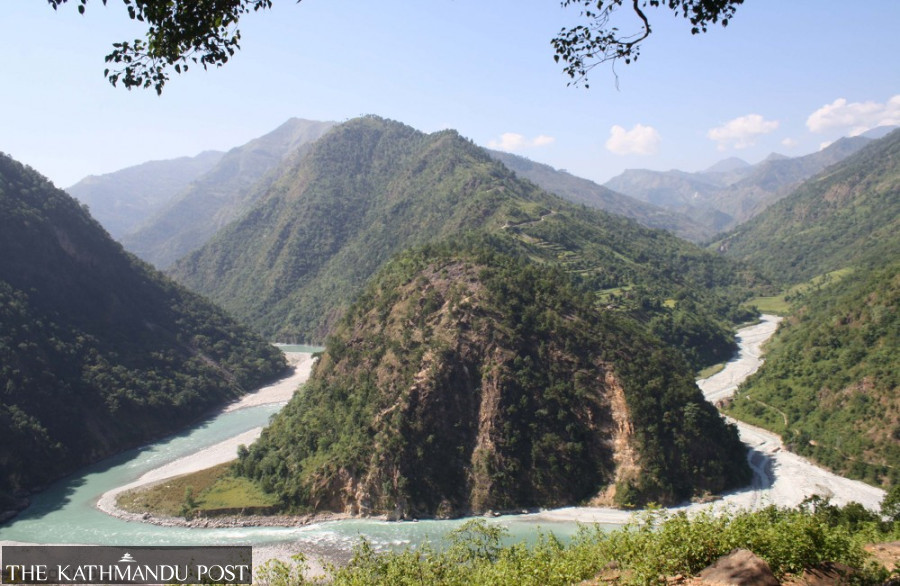
ADB, World Bank, AIIB, EIB, OFID, SFD and NEA will develop the $2.32 billion reservoir-based hydropower project. Project site in fragile Himalayan terrain brings high environmental and safety risks. Post file photo
For the first time in Nepal's history, the world’s top multilateral and bilateral lenders are partnering with the government and the Nepal Electricity Authority (NEA) to develop the 670-megawatt Dudhkoshi Storage Hydroelectric Project.
The World Bank, the Asian Development Bank (ADB), the Asian Infrastructure Investment Bank (AIIB), the European Investment Bank (EIB), the OPEC Fund for International Development (OFID), and the Saudi Fund for Development (SFD) have all expressed willingness to collaborate with the government and the NEA to build the reservoir-based project.
The ADB leads efforts to secure investment for the project, which is expected to complete financial approval by September.
Two major lenders, the ADB and the Beijing-based AIIB have recently released updates on the project, stating they aim to close financial approval by September.
According to the AIIB, the institution had reviewed the project concept on February 11, and an appraisal decision is expected by July. Both loan closing and financing approval are estimated to conclude by September.
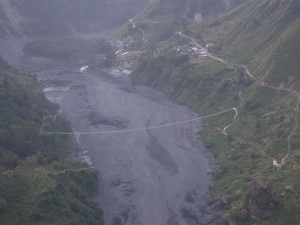
The estimated cost of the project is $2.32 billion. Located on the Dudhkoshi River across Khotang, Okhaldhunga, and Solukhumbu districts, the project will feature a 220-metre-high dam, a 13.3 km tunnel, and two powerhouses.
The AIIB stated that the project consists of two powerhouses where the main powerhouse with an installed capacity of 600 MW will be underground, and an ecological flow power station of 70 MW will be built at the toe of the dam.
According to the AIIB, out of total estimated $2.32 billion investment, it will inject $200 million, the ADB $580 million, the World Bank $200 million, the EIB $500 million, the OFID $100 million, the SFD $100 million, while the government of Nepal and the NEA will jointly invest $670 million. Out of the ADB’s $580 million investment, $30 million will be a grant.
Separately, the World Bank is the lead investor for the 1,061MW Upper Arun Project, though its financial arrangements are still being finalised.
Earlier the ADB, the World Bank and the AIIB had committed funding for the Dudhkoshi project. To cover the remaining gap, the ADB has brought in investors including the EIB, the OFID, and the SFD.
The finance ministry has provided a sovereign guarantee for loans totalling $1.3 billion.
“These are indicative investment proposals,” said Dhani Ram Sharma, head of the international cooperation division at the Ministry of Finance. “The ADB is leading efforts at loan arrangement. We are hopeful the project will move ahead as planned.”
The ADB has also called for a consultation meeting with potential contractors and consultants on February 23 at the Albert Borschette Congress Centre in Brussels, according to a notice posted on LinkedIn by Marie L’Hostis, water resources specialist at the ADB.
“Dudhkoshi Jalvidhyut Company Limited, a fully owned subsidiary of Nepal Electricity Authority, with support from the Asian Development Bank and the European Union, invites prospective contractors and consulting firms with extensive experience in large hydropower development to attend an in-person consultation meeting for the upcoming Dudhkoshi Storage Hydropower Project (670MW) in Nepal,” the ADB said in a recent notice.
The project aims to increase Nepal’s supply of climate-resilient renewable electricity. The estimated date for loan closing is September 2034, stated the AIIB’s in its latest update on the project.
Basanta Shrestha, director of the Dudhkoshi Storage Hydroelectric Project, said all lenders have been asked to conclude financial closures by September.
The ADB, the co-financier, has categorised the project as high risk, which is equivalent to Category A risk under the AIIB’s Environment and Social Policies (ESP). This categorisation reflects the significant potential environmental and social risks and impacts associated with large dam construction, land acquisition and involuntary resettlement, impacts on indigenous peoples, and biodiversity alteration, said the AIIB.
Dudhkoshi Jalvidyut Company Limited (DKJVCL) has prepared a draft environmental impact assessment (EIA), resettlement plan (RP), and indigenous people’s plan (IPP) in compliance with national regulations.
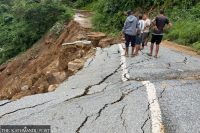
The project site is in a geologically fragile Himalayan region, prone to seismic activity, landslides, and glacial lake outburst floodings (GLOFs).
The AIIB has stated that the project may inundate forests and agricultural land, potentially affecting terrestrial, aquatic, and avian biodiversity, although the Sagarmatha National Park lies more than 25 km away.
Likely mitigation measures may include maintaining minimum e-flows, implementing sediment and waste management plans, stabilizing slopes, and establishing an appropriate biodiversity management and monitoring program, the AIIB said.
Regarding the project’s social aspect, the AIIB stated that, according to a preliminary assessment for the hydropower component, land acquisition will permanently affect 2,405 hectares of land, out of which 1,155 hectares is privately owned, 517 hectares is government land, even as 694 hectares is covered by forest areas.
“Approximately 3,300 households will be affected, of which 290 households will be physically and economically displaced. The total project-affected Indigenous Peoples (IP) households is 1,245 of which 171 will be physically displaced. Land acquisition and involuntary resettlement (IR) impact associated with the transmission line(s) and access roads are being assessed with land acquisition and resettlement frameworks being prepared.”
Out of the approximately 3,300 affected households, an estimated 245 are Indigenous Peoples households, of which 171 households are expected to be physically displaced. Construction activities, including tunneling, dam work, and operations on steep mountain slopes, present high occupational health and safety (OHS) risks, as per the assessment
Anil Giri is a Chief Sub Editor covering diplomacy, international relations and national politics for The Kathmandu Post. Giri has been working as a journalist for more than two decades, contributing to numerous national and international media outlets.




 14.4°C Kathmandu