Despite appearing quiet in public, the CPN-UML is aggressively reaching out to its cadres ahead of the March 5 parliamentary elections, using phone calls and letters to rally support for party chair KP Sharma Oli.
On Monday afternoon, when Post visited the UML central office in Chyasal, the office seemed unusually quiet. Most senior leaders had left for various districts for campaign work. However, a small group of youths—mostly of college-going age—was busy moving about the premises lists in hand, calling party workers across the country.
According to a leader present at the party office, the youths have been assigned to personally relay party chair Oli’s message to cadres across the country. They were contacting party cadres individually by phone, telling them that the party chair was thinking of them. The leader said the initiative aimed to energise and mobilise party workers ahead of the election.
While other political parties are campaigning across the country, the UML appears to be focussed on persuading its committed supporters and long-time party workers to ensure votes are cast in the party’s election symbol.
“It is important for the party to stay connected with its members spread across the country. That is why we have deployed volunteers to reach out to them by phone,” the party leader, on the condition of anonymity, told the Post.
Left-leaning analyst Gopi Upadhyaya says the initiative should be seen as part of the party’s election-time strategy. He believes a party should stay in touch with its workers not only during elections but at other times as well. According to him, it would be positive if the party engaged with its cadres and heeded their feedback.
“With the election approaching, and amid widespread analysis that the UML may face difficulties, the party may have reached out to its committed workers expecting their support,” Upadhyay said.
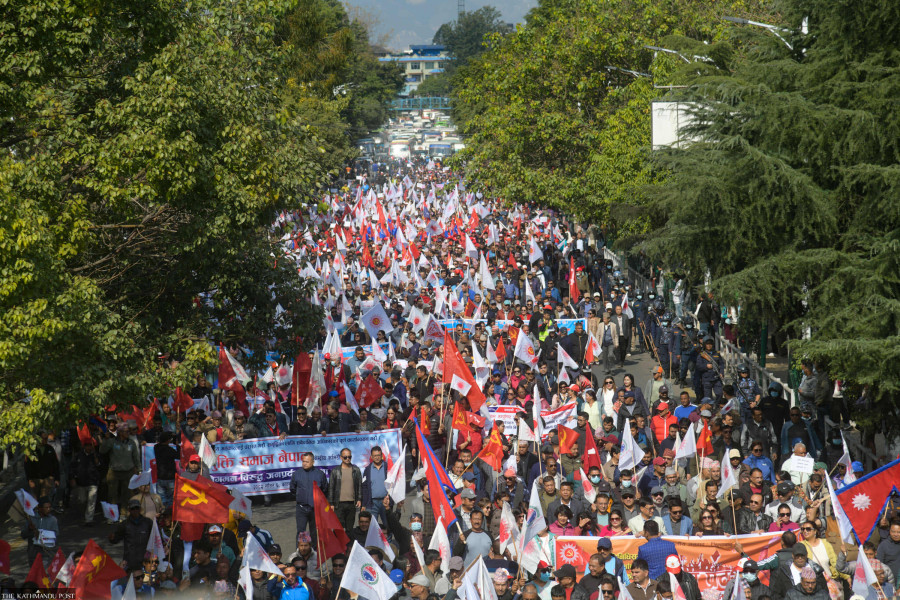
The regular election—originally due to be held in about two years—was brought forward following the Gen Z movement in September that toppled the powerful UML-Congress coalition government led by Oli.
The Oli government used excessive force against protesters during the movement, which had demanded an end to corruption, good governance, improved service delivery, and generational leadership change in political parties. Nineteen unarmed people were killed on the very first day, September 8, and the death toll from two days of protest and violence reached 77. Several domestic and foreign human rights organisations criticised the use of force and have demanded investigation.
Another party leader said that, amid accusations that Oli was the central to the state crackdown, efforts are being made to build a broader narrative against the old political parties—including the Congress and the UML, which were partners in the government at the time—in the run-up to the election.
“At a time when attempts are being made across the country to shape public opinion against the UML in particular, we have been trying to keep our cadres intact by reconnecting with both active members and long-time party workers who have not renewed their party membership,” the leader said.
Meanwhile, party central office secretary Bhishma Adhikari said the responsibility of calling party workers was not limited to the central office, as other responsible party committees had also taken part in the outreach.
He explained that the phone conversations mainly focused on understanding which party events and functions the cadres had attended recently, how those events went, how district-level leaders were performing, and what strategies the party should adopt in the days ahead.
He added that the process would continue until the election is over.
“However, modality may change in the coming days, particularly after the party’s manifesto is made public and once the period officially designated by the Election Commission for campaigning begins,” Adhikari said.
In the last week of January, the UML also sent a letter to all its organised members, bearing the signature of party chair KP Sharma Oli. According to party leaders, the same message was delivered to more than 667,000 individuals through letters signed by the chair.
After receiving the letter, some recipients shared photographs and excerpts of the letter on social media.
The letter focused on the upcoming election. It described the March 5 parliamentary election as a decisive turning point, stating that the vote would determine “whether the country moves towards destruction or advances in the direction of nation-building.”
Through the letter, Oli conveyed to party workers that a UML majority was essential to successfully carry forward the campaign of national development. According to the party, a similar letter—also signed by Oli—had previously been sent to central committee members.




 20.85°C Kathmandu