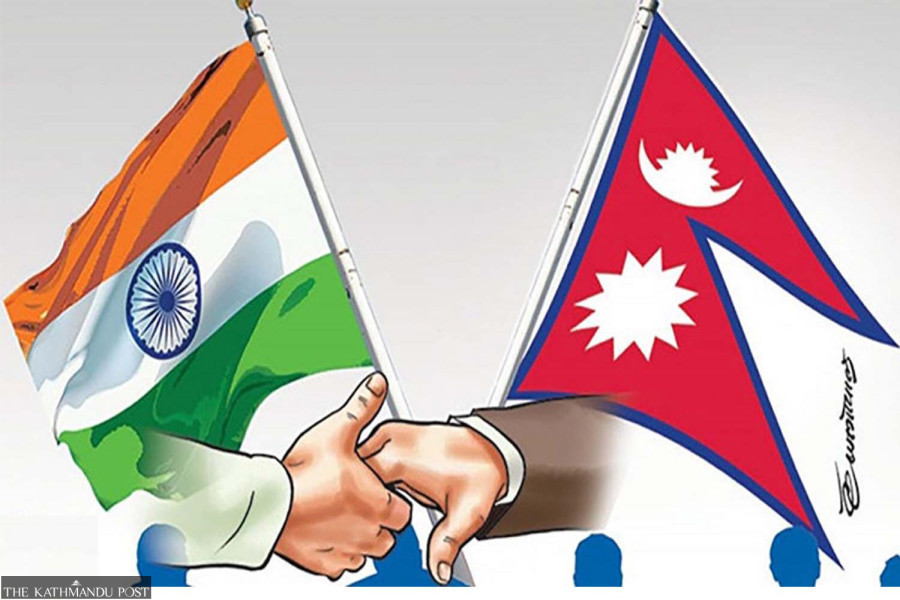
Officials from Nepal and India are setting a date to sign an Agreement on Mutual Legal Assistance on Criminal Matters, which was initially agreed at the home secretary level meeting in New Delhi in July last year.
After years of negotiations, both sides had agreed to move ahead with the signing of the MLA on criminal matters to address transnational crime, and facilitate information exchange, sharing of investigative evidence, cooperation in prosecution, and coordination in criminal investigations between the two countries’ legal bodies. The pact provides a legal framework for both sides to investigate transnational crimes.
In the absence of dedicated mutual legal assistance and extradition treaty, security officials have long faced legal and administrative hurdles in handing over criminals to each other.
MLA involves an agreement that enables faster, structured cooperation to counter transnational crimes like terrorism, trafficking, smuggling, cybercrime, and financial frauds, said an official privy to the negotiations during the home secretary level meeting in Delhi.
Once an MLA is signed with India or any other country, it allows for cooperation in criminal investigations, prosecutions, and legal proceedings of transnational nature and helps locate criminals, collect evidence, and seize their property, while the investigative agencies of the second country record statements from suspects.
The Sushila Karki-led government decided to sign an agreement on MLA on criminal matters with India in October but the two sides had been unable to find a mutual date to do so.
Now discussions are going on for its signing, multiple officials at the Prime Minister’s Office and the Ministry of Foreign Affairs told the Post.
“There is renewed interest on both sides to sign the agreement on MLA on criminal matters as agreed back in October at the home secretary level. There are no hurdles to its formalisation,” an official at the prime minister’s office said. “The signing of the MLA on criminal matters will also pave the way to sign a similar pact with other countries. As Nepal is struggling to come out from the grey list on money laundering, this pact reflects our commitment to doing so.”
Some rounds of discussion among government agencies were also held last month where officials suggested that the government could go ahead and sign the agreement. But the date to do so is yet to be fixed with the Ministry of Foreign Affairs not giving its final concurrence, the official added.
After Nepal’s Cabinet decided to sign an agreement on MLA on criminal matters, the Indian side also notified the Nepali side that its internal procedure is over and sent a note verbale to the foreign ministry to see it through.
The only debate is whether to formalise the agreement before the March election or after that, the two officials from the Prime Minister’s Office and foreign ministry said. “We are discussing it,” one of them said.
Earlier, there was a discussion to sign the agreement during the February first week visit of Foreign Minister Balananda Sharma to India. But the visit was postponed. Now, law minister Anil Sinha could sign the agreement on behalf of the Nepal government—if the pact is signed prior to the March 5 election.
The PMO awaits the final recommendation from the foreign ministry, said one of its officials, adding that the ball is in the foreign ministry’s court.
The foreign ministry is also consulting other line ministries and government agencies on signing the MLA with India and weighing its possible political repercussions.
A senior foreign ministry official said that as both sides are ready to sign it, “we are only looking for a conducive date. We have received feedback from our agencies that this agreement on MLA is necessary for us. They are saying that it is important to us.”
The only issue is the political messaging of signing it prior to the March elections, the official said. “Otherwise there is no other issue.”
As the validity of the old extradition treaty expired long ago, security officials from Nepal and India have been extraditing individuals with criminal backgrounds on mutual understanding.
With China, Nepal signed the Mutual Legal Assistance deal during Chinese President Xi Jinping’s Nepal visit in October, 2019.
Nepal and India initially signed the draft extradition treaty in 2005 at the home secretary level, but due to differences on several provisions, negotiations had been deferred.
The extradition treaty that the two countries signed in 1953 expired long ago. Amid the preparations to update it, Nepal and India still differ on extradition of third-country nationals, which is a major obstacle to a new treaty.
Anil Giri is a Chief Sub Editor covering diplomacy, international relations and national politics for The Kathmandu Post. Giri has been working as a journalist for more than two decades, contributing to numerous national and international media outlets.




 24.79°C Kathmandu