Kalpana, a resident of Siraha, was not seeking to abort the child. She was seeking medical care.
After a miscarriage, Kalpana, who the Post is identifying with a pseudonym to protect her privacy, was taken to a hospital for treatment. Instead, she was accused of having undergone an illegal abortion. The police were informed and she was arrested.
Months later, Siraha District Court cleared her of the charges by declaring that what had actually occurred was a natural miscarriage.
When the verdict was delivered, Kalpana had already spent months in police custody and dealing with court procedures. She was also ostracised by society.
Her experience is not unique.
Sarita has faced something similar. In 2017, she had undergone an abortion within the legal gestational limit, performed by a certified medical practitioner with her consent. Yet, Sarita (also a pseudonym) was arrested and charged. The court ruled that the abortion was lawful and cleared her of all charges.
In both instances, the law ultimately protected the women but the damage had already been done.
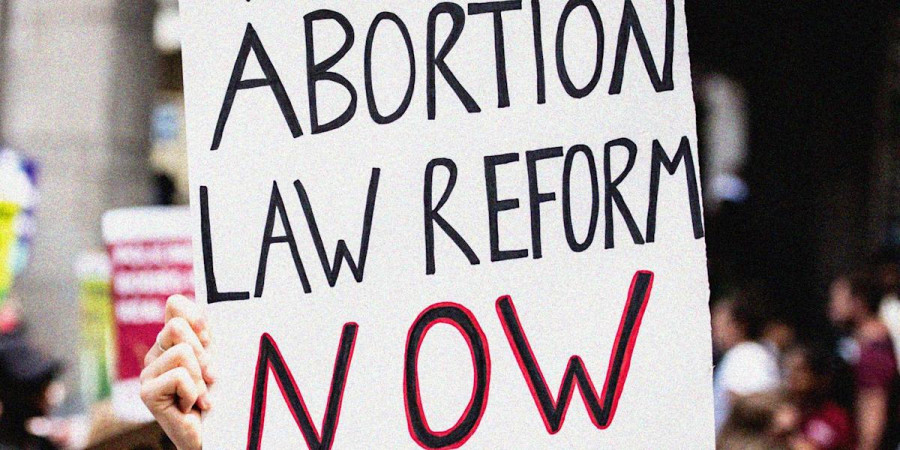
Such incidents raise a fundamental question: if abortion is a legal right in Nepal, then why are women being considered criminals for exercising that right?
Nepal is frequently described as having one of the most progressive abortion frameworks in South Asia. Under the Safe Motherhood and Reproductive Health Rights Act (2018), abortion is permitted up to 12 weeks on request, and up to 28 weeks in cases of rape or incest, threats to a woman’s physical or mental health, or severe fetal impairment.
Yet, as the cases of Kalpana and Sarita show, legal permission does not necessarily entail access. Women are interrogated and arrested, even if a court later determines that no crime has been committed.
This pattern mirrors concerns raised by the World Health Organisation (WHO), which has repeatedly warned that criminalising abortion or involving law enforcement in abortion-related care delays treatment and puts women’s health in danger. According to WHO’s abortion care guidelines, abortion should be treated strictly as healthcare, not as a matter of police investigation.
At the Maternity Hospital’s One-Stop Crisis Management Centre (OCMC), officials maintain that the consent and choice of women are respected.
According to Ranu Thapa, information officer at the hospital, in cases not related to sexual violence, adults need not involve the police in the process.
“Many people come on their own and specifically say they do not want to file a police complaint,” she said. “We respect that.”
Thapa explained that OCMC primarily handles cases of sexual and gender-based violence and follows the ‘Clinical Protocol for Gender-Based Violence’ issued by the Ministry of Health and Population. Abortion services for personal or clinical reasons, she said, are provided through the hospital’s Safe Abortion Unit, which operates separately from OCMC.
Health rights activist Aruna Upreti agrees that Nepal’s abortion law is fundamentally liberal but says implementation remains uneven.
“There is no such thing as registering with the police under current Nepali law for abortion,” she said. “Up to 12 weeks, it can be done freely.”
Upreti added that police reporting may be required in cases of rape but not in all circumstances.
She also acknowledged that procedural delays still occur.
These delays often involve documentation, referrals, or informal pressure to involve police, which can push women beyond gestational limits, effectively denying them access to abortion altogether.
From the police perspective, abortion remains subject to scrutiny when complaints are filed.
Inspector CP Bhandari of the Baneshwar Police Office said that police intervention is necessary to ensure no wrongdoing has occurred.
“Even if the law allows termination,” he said, “if we receive a complaint, we step in to ensure that nothing wrong is done.”
In cases of rape or incest, Bhandari insisted that registration of a First Information Report (FIR) is necessary.
“If it is not registered, how can we know if it is rape or incest?” he said. “There must be evidence of the crime. A hospital report alone is not enough.”
He added that doctors cannot perform abortions in cases where the pregnancy exceeds 18 weeks, and that even abortions carried out within 18 weeks must be preceded by police registration. Otherwise, he said, ‘‘Both the woman and the service provider could face legal action under Section 188 of the National Penal (Code) Act, 2017.’’
This approach reflects deeper legal contradictions.
According to Nabin Shrestha, a lawyer who works on legal issues relating to abortion, Nepal is governed by two sets of laws relating to abortion: one rights-based, the other criminal.
“When dealing with abortion cases, the police do not look at the SMRHR Act,” Shrestha said. “They look at the Criminal Code.” This, he explained, is why cases continue to be registered even when the SMRHR Act allows abortion up to 28 weeks in cases of rape or incest.
Studies by the Forum for Women, Law and Development (FWLD) and Center for Reproductive Rights (CRR) show that even when abortions are legally performed after 18 weeks for rape or incest, cases are filed against the girl or the service provider because the 28-week provision is ignored.
“The SMRHR Act approaches abortion as a right,” Shrestha said. “The Criminal Code approaches it as a crime. And the moment ‘abortion’ is mentioned, the criminal mindset takes over.’’
This approach contradicts Nepal’s international obligations. Under the Convention on the Elimination of All Forms of Discrimination Against Women (CEDAW), Nepal is required to ensure that women are not charged or punished for accessing reproductive healthcare. The CEDAW Committee has consistently held that criminal investigations related to abortion amount to discrimination and can cause cruel and inhuman treatment. In its 2018 Concluding Observations, it specifically urged Nepal to decriminalise abortion.
One of the most persistent misconceptions women face is the belief that women must file a police complaint before accessing abortion services in rape or incest cases.
Shrestha stressed that nowhere in the SMRHR Act is such a requirement mentioned. ‘‘The confusion often stems from institutional guidelines, not the law,’’ he said.
‘‘Guidelines were meant to make access easier so survivors wouldn’t have to move between multiple institutions,” he said. “But in practice, it’s being used to force women to go to the police first.”
He rejected the argument that rape cannot be verified without an FIR.
“In rape cases, police rely on hospital reports for forensic evidence,” he said. “But when it comes to abortion, suddenly hospital reports are considered insufficient. That's a stigma, not a legal requirement.”
Forcing police involvement pushes survivors toward unsafe options, he warned. “If a woman cannot access safe abortion because she is forced to go to the police, she may seek an unsafe abortion,” Shrestha said. “That further criminalises her.’’
Nepal has acknowledged these risks at the international level. During its Universal Periodic Review (UPR) at the United Nations, the government accepted recommendations to ensure full access to reproductive health services and prevent the criminalisation of women seeking abortion. Yet the gap between commitment and practice remains wide.
The consequences of the current system are very clear in Sita’s case as well.
In Ilam district, Sita, a 15-year-old girl, became pregnant after being raped. She could not get safe abortion services without a police case. So, thinking of protecting her family’s image, Sita (identified with a pseudonym) took abortion pills her father got from a local pharmacist. Later, her father asked her not to take it, even though she had bought it.
And as a result, the court cleared the charges of her father and the pharmacist. But she was punished by the law, instead of being treated as a survivor in need of care.
Her case shows how criminal law, complicated procedures, and fear in institutions come together, and women and girls often suffer as a result. WHO has warned that adolescents face the highest risks when abortion access is restricted, as fear and dependency leave them with few safe options.
Nepal worked hard to legalise abortion, mainly to reduce maternal mortality. That effort succeeded.
But cases like those of Kalpana, Sarita, and Sita reveal a hard truth: just making abortion legal is not enough.
As long as abortion is still treated as a criminal offence, women will continue to experience it not as healthcare, but as suspicion through police stations, courtrooms, and even jail.
Advocates say that decriminalisation is not about removing protection. It is about aligning Nepal’s practice with its laws, its public health goals, and its international obligations. It is about ensuring abortion is treated as what it already is under law: a reproductive health right, not a crime.
Aarya Chand is a reporter at The Kathmandu Post covering social issues. Before moving to the social beat, Chand was an intern covering culture and lifestyle for the Post.




 17.6°C Kathmandu