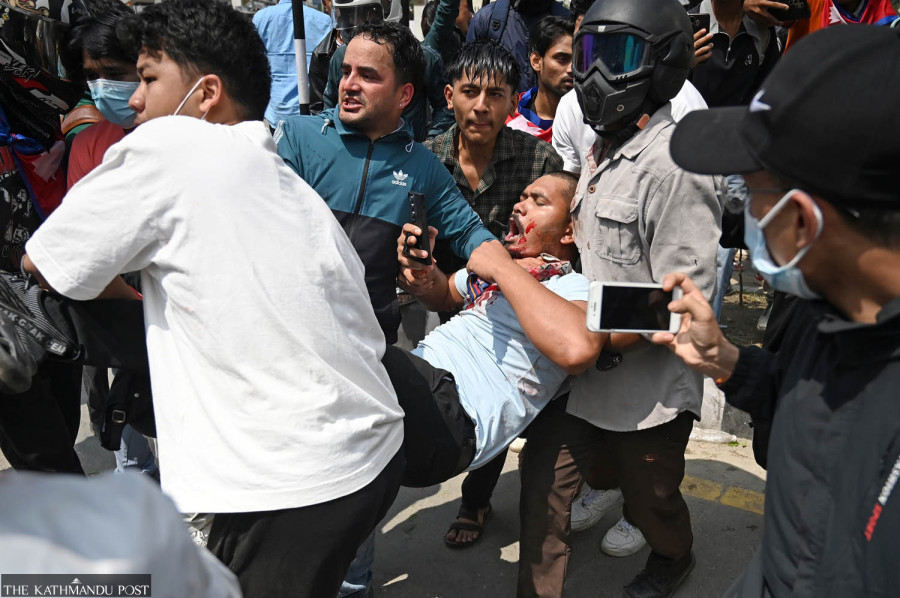
As the commission investigating the government’s deadly crackdown on the anti-corruption protests on September 8 and the widespread destruction of public and private property on September 9 enters the final stage of report preparation, questions mount over whether its findings will be made public before the March 5 elections.
The findings and recommendations of the Gauri Bahadur Karki-led commission are considered crucial. Leaders from the old parties warn that if the report is released before the elections and implicates leaders who are contesting, it could influence the electoral process. As the election code of conduct is already in effect, the Election Commission also has the authority to advise the government on the matter.
Two ministers told the Post that there has been no discussion so far on receiving the report. They said that even if the Karki commission is ready to submit it, the government would first consult the Election Commission and other stakeholders.
With only a week remaining before the deadline, the commission has accelerated its report-writing process.
“We are writing the report, which is in the final stage,” said Bigyan Raj Sharma, spokesperson for the commission. “It is up to the government whether to receive the report or not.”
The Karki-led commission recently completed recording statements of key officials who were in office during the crackdown: former prime minister KP Sharma Oli; former home minister Ramesh Lekhak; former chief secretary Eknarayan Aryal; then home secretary Gokarna Mani Dawadi; and then chief district officer of Kathmandu, Chhabi Rijal.
Statements were also recorded from other leaders, including former Nepali Congress president Sher Bahadur Deuba; Nepali Communist Party’s Pushpa Kamal Dahal; and former Kathmandu Metropolitan City mayor Balendra Shah.
From the security agencies, statements were recorded from then inspector general of Nepal Police, Chandrakuber Khapung; current inspector general Dan Bahadur Karki; Armed Police Force Inspector General Raju Aryal; Nepali Army chief Ashok Raj Sigdel; and then head of the National Investigation Department, Hutaraj Thapa.
The two ministers, talking to the Post, said that although the issue has not been formally discussed, the government is not inclined to receive the report ahead of the March elections. “We are aware of the sensitivity of the report and its potential impact on the elections,” a minister told the Post on condition of anonymity. “If the term of the Karki commission is not extended beyond February 11, we will consider other options.”
There is big public interest in the commission’s findings, as the two-day crackdown and violence eventually claimed 77 lives, as many of the injured succumbed to their wounds, and caused property damage worth billions of rupees. The Cabinet on January 22 had extended the commission’s term by 20 days.
“We are still considering whether to receive the report,” said the minister. “Even if the report is received, the government could keep it confidential. However, pressure from various stakeholders could create complications. No decision has been taken yet.”
Although the commission is working under a tight deadline, it has not indicated whether it will seek additional time. An official at the commission said there has been no discussion about extending its term, nor is there any intention to do so.
An official at the Prime Minister’s Office said several leaders, particularly from the CPN-UML and the Rastriya Swatantra Party (RSP), have shown interest in the possible outcome of the report.
CPN-UML chief Oli was the prime minister during the Gen Z movement in September. The commission also recorded statements from RSP chief Rabi Lamichhane and Balen Shah, who resigned as mayor last month and joined the RSP to contest the elections.
Lamichhane faces allegations related to a jailbreak at Nakhhu prison on September 8, while Shah, who was the mayor of Kathmandu Metropolitan City at the time, has been criticised by some political opponents and groups for conduct during the Gen Z protests.
The government formed the commission on September 21. Initially given a three-month timeframe, the commission was later granted an additional 20 days.
Originally, the commission was tasked with investigating human and material losses during the protests; analysing the causes of the incidents; submitting findings and recommendations; collecting information on damage; proposing measures to prevent a recurrence; and preparing an action plan to implement its recommendations.
The commission’s mandate was expanded following a 10-point agreement between Gen Z representatives and the government on November 30.
Meanwhile, the National Human Rights Commission has also completed its investigation and statement collection, and is preparing its report. The human rights watchdog had formed a separate committee led by member Lily Thapa. Although both commissions are in the final stages of report writing, scepticism remains over whether their findings will be made public.
Speaking to the Post, Thapa said her team will submit the report to the panel led by commission chair Top Bahadur Magar next week. “The panel will review the report before its endorsement and can even recommend reinvestigation if necessary,” she said. “We are not in the position to say whether the report will be out before the election.”
The government also appears undecided. “No decision has been taken on whether to receive the report,” said Home Minister Om Prakash Aryal, who is also the government’s spokesperson. “It is up to the Cabinet to decide.”
Anil Giri is a Chief Sub Editor covering diplomacy, international relations and national politics for The Kathmandu Post. Giri has been working as a journalist for more than two decades, contributing to numerous national and international media outlets.




 14.69°C Kathmandu