In Nepal’s fast-changing political landscape, the march towards inclusive democracy has taken a historic turn. For decades, sexual and gender minority (SGM) communities, despite constitutional recognition, have largely stayed on the periphery of formal politics.
This election cycle, however, marks a shift, as a significant number of candidates are contesting the March 5 elections through the newly formed Samabesi Samajbadi Party (SSP), Pragatisheel Loktrantik Party (PLP), and Rastriya Swatantra Party (RSP). A total of 20 candidates are in the fray across the three parties under the proportional representation and first-past-the-post systems combined.
Their entry challenges a longstanding pattern of political exclusion and raises a question about how inclusive Nepal’s democratic system truly is, according to the rights activist.
The SSP, a recently registered political party that brings together sexual and gender minorities alongside other marginalised communities, is at the centre of this shift. Years of being sidelined by the established political forces led them to form their own party.
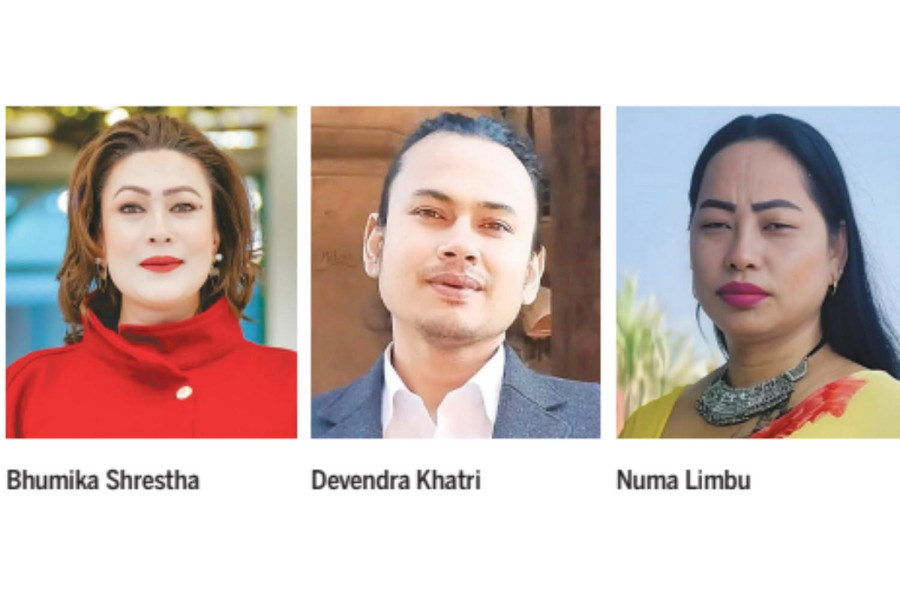
“We landed in the political battlefield as big parties have failed to address the issues of the marginalised. We want to reach Parliament to speak from our own lived experiences,” Numa Limbu (Chanchala), the party’s chairperson, who is a third-gender woman.
The party has fielded 15 candidates under the proportional representation system and six candidates under the first-past-the-post system. Limbu herself is contesting from Morang.
Other direct candidates include Pinky Rai from Okhaldhunga-1; Surendra Pandey from Kathmandu-1; Purnachand Paudel from Kathmandu-10; Binod Lama (Konika) from Kavrepalanchok-1; and Devendra Bahadur Khatri (Madhu) from Rupandehi-2.
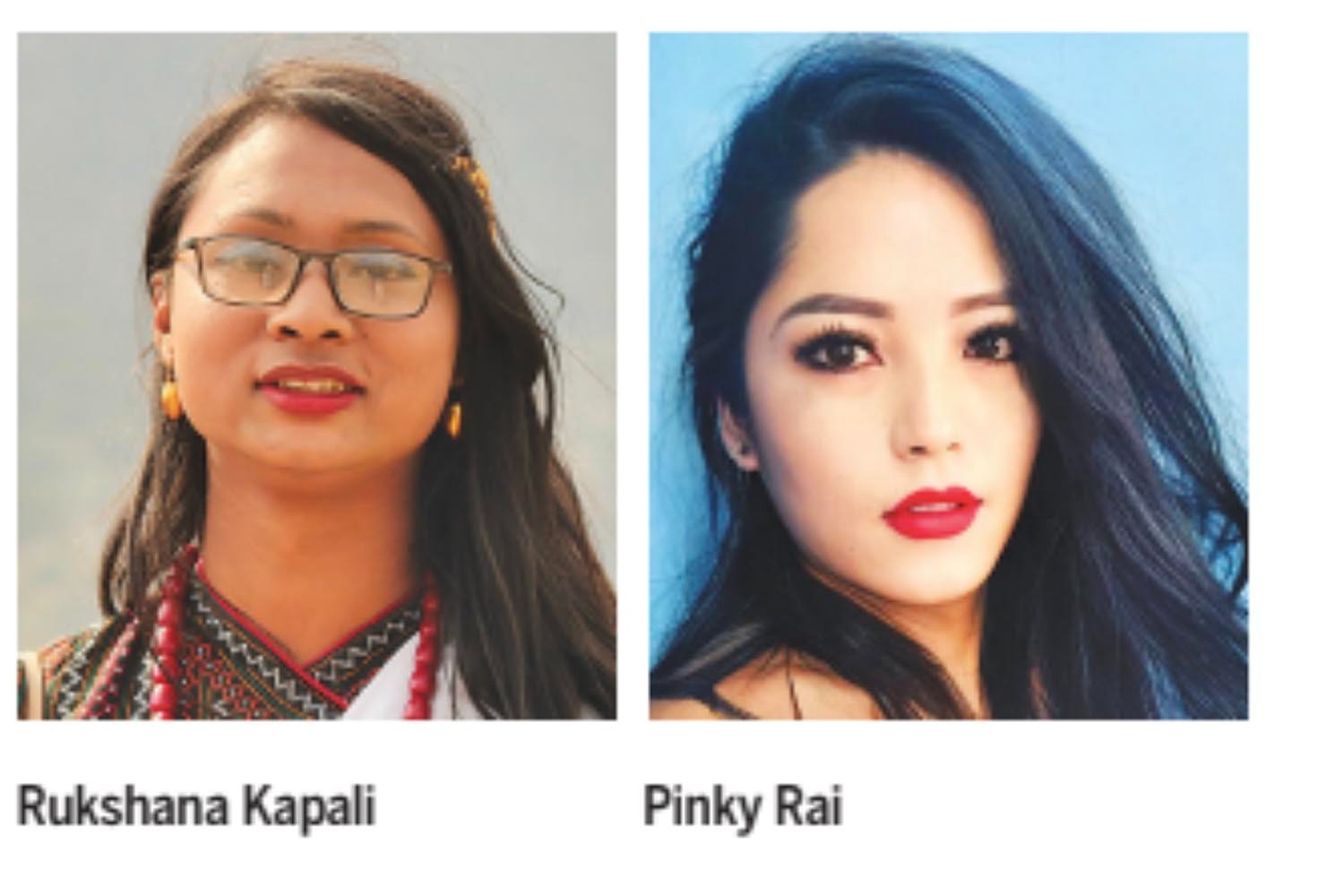
Pinky Rai, a third gender woman, described the moment as historic. ‘‘Everywhere there is opportunity and quota for all: women and men, Dalits, indigenous groups, but we have never had such opportunities—whether in governmental or non-governmental sectors,’’ she said.
Despite this, we kept seeking our rights. ‘‘As a result, today, we have succeeded in making history in Nepali politics.’’
The party’s political philosophy centres on participatory democracy within a federal system, with an emphasis on decentralising decision-making. “We want voices to be heard at the local level, not just Singha Durbar,” Limbu said.
She also emphasised that representation matters in practice. “We understand the issues of women, men, youth, Dalits and people with disabilities because we are part of those groups. If we are in decision-making positions, we won’t need to be ‘requested’ to raise these issues.”
‘‘The party also proposes collateral-free loans for youth who want to be entrepreneurs,” she said.
SGM political participation in this election is not limited to one party. Rukshana Kapali, a transgender female human rights candidate of the Pragatisheel Loktantrik Party, represents another strand of this emerging trend.
After years of judicial activism, Kapali said she concluded that rights secured through courts and non-governmental organisationslobbying alone were insufficient. “Marginalised groups are often forced to request rights from officials who do not understand them,” she said. “As a result, there is almost no debate on these issues in Parliament.”
Kapali advocates for a specific constitutional article dedicated to sexual and gender minorities, similar to provisions for women and Dalits. She also seeks a comprehensive review of discriminatory laws and new legislation addressing trans identity.
Beyond SGM rights, Kapali’s agenda includes multilingualism and indigenous rights. She has proposed a federal language Act to ensure minority languages are recognised at the local level and integrated into education and employment.
For Kapali, social justice is a framework through which all policy decisions should be evaluated. “Infrastructure like roads should be assessed based on whether they harm cultural heritage, allow women to walk safely or are accessible to people with disabilities,” she said.
“No transgender person has ever been elected to office in Nepal,” she said. ‘‘I want to help break that ceiling.’’
Another SGM voice in the electoral arena is Bhumika Shrestha, who has been included in the proportional representation list of the Rastriya Swatantra Party (RSP). A long-time activist, Shrestha said she decided to enter politics after realising that advocacy alone had not translated into policy change.
“We have raised our voices socially and institutionally for years, but our participation in policy-making and law-making has been almost zero,” she said.
Shrestha criticised political parties for what she described as tokenistic inclusion. “Parties often use the SGM community for their rainbow colours to appear inclusive, but they don’t provide meaningful participation or real opportunities,” she said, adding that politics is the “starting point” for mainstreaming SGM issues.
Citing Article 42 of the Constitution, which guarantees social justice and participation of marginalised groups in state structures, Shrestha said her priorities include addressing issues related to citizenship, education, health and employment for LGBTQ+ communities as well as disability rights and broader representation of marginalised groups.
While electoral success remains uncertain, the presence of SGM candidates across parties offers a promising sign for Nepal’s democracy. Their entry raises questions for established parties and the political system itself: where is inclusion, and how is it reflected in decision-making processes?
Queer rights activist Birat Bijay Ojha views this moment as a positive but limited step. While acknowledging the presence of a few SGM candidates in this election, he said it falls short of meaningful participation. He expressed disappointment with Nepal’s major parties —the Nepali Congress, CPN-UML and the Maoist Centre—saying the rights and concerns of the SGM community have never been their priority.
‘‘Some parties have included one or two individuals on their lists, but it is difficult to say whether that is genuine representation or just tokenism to attract votes,’’ Ojha said.
He added that structural barriers continue to limit SGM visibility in politics. ‘‘Many people hesitate to enter politics as they are forced to choose between ‘male’, ‘female’ and ‘other’ in forms and documents,’’ Ojha said. ‘‘That system itself keeps many invisible, which is why there is now a strong determination within our community to reach Parliament and push for real change.’’
Aarya Chand is a reporter at The Kathmandu Post covering social issues. Before moving to the social beat, Chand was an intern covering culture and lifestyle for the Post.




 14.81°C Kathmandu