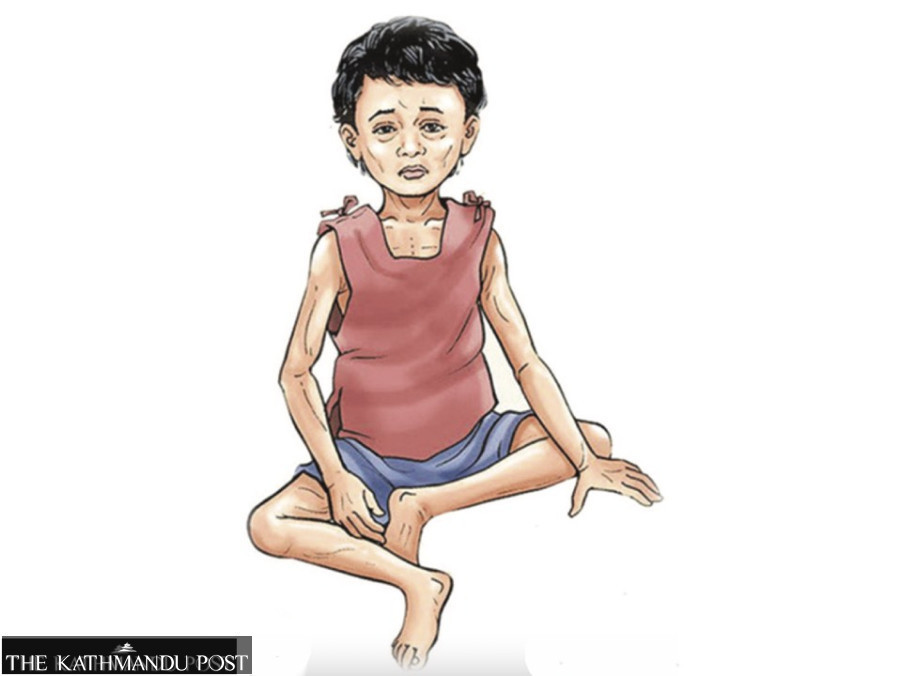
Nearly 16 percent of the children under five years of age in Sudurpaschim province have been found to be suffering from an acute form of malnutrition, a recent study shows.
Acute malnutrition, also called wasting, is considered an emergency condition once it exceeds 10 percent because child mortality rises sharply, experts say. And Sudurpaschim’s malnutrition situation is alarming, since the rate of 15.8 percent is higher than the WHO threshold of 14.9 percent for serious acute malnutrition.
According to a report of the Smart+ survey published on Tuesday, 25.3 percent of the children in the province are stunted, and 25.5 percent are underweight. Both indicators point to acute undernutrition, according to the World Health Organisation classifications.
“Stunting affects one in four children in the province, indicating a persistent problem of chronic undernutrition, while the wasting prevalence of 15.8 percent falls within the ‘very high’ category by WHO standards, indicating an emergency situation in the province,” the report stated.
“Underweight rates 25.5 percent further highlight the persisting challenge as well.”
Malnutrition has remained a silent crisis in Nepal. Severe acute malnutrition means the most extreme and visible form of malnutrition, which requires urgent hospital care. Children suffering from severe acute malnutrition are 10 times more at risk of dying compared to healthy children, doctors say.
Earlier, Nepal had made significant progress in reducing severe forms of malnutrition among children under five. According to the NDHS report, stunting decreased from 57 percent in 2001 to 25 percent in 2022.
Wasting, a debilitating disease that causes muscle and fat tissues to waste away among children under five, decreased from 11 percent in 2001 to eight percent in 2022.
The new prevalence rates are notably higher than those reported in the Nepal Demographic Health Survey(NDHS)-2022, which shows a national average of stunting 25 percent, underweight 19 percent and eight percent wasting.
The NDHS-2022 report showed that the wasting rate of Sudurpaschim province was less than 10 percent.
“Rise in acute form of malnutrition from what was achieved in 2022 is a serious setback,” said Dr Shyam Raj Upreti, former director general of the Department of Health Service, who is also a child health expert. “It is an emergency-like condition and could raise the child mortality rate.”
Experts say that nutrition has a direct link with the overall development of the country. Malnutrition affects the physical and mental growth of children, which ultimately affects the country’s economic health, according to nutritionists.
Furthermore, malnutrition weakens intellectual capacity, limits productivity in adulthood, and increases vulnerability to certain diseases.
Children who remain malnourished without timely treatment are likely to become stunted and face a higher risk of multiple non-communicable diseases later in life.
Malnutrition plays a major role in the under-five mortality rate, according to the nutrition section at the Family Welfare Division under the Department of Health Services.
“Along with the lack of sufficient nutrient foods, poor sanitation, lack of safe drinking water and treatment are blamed for wasting,' 'said Upreti. “Authorities should introduce a clear strategy to address the issue.”
Health officials admit that the province’s years of progress on nutrition have suffered a serious setback with the latest findings.
“The recent Smart+ survey carried out in Sudurpaschim province shows an alarming picture,” said Lila Bikram Thapa, chief of the nutrition section at the Family Welfare Division under the Department of Health Services. “Nutrition-specific and nutrition-sensitive investments are needed immediately in Sudurpaschim.”
Nepal also has an international obligation to improve the nutritional status of children. To meet Sustainable Development Goal targets by 2030, Nepal must reduce stunting to 15 percent from the existing 25 percent, wasting to four percent from the current eight percent, underweight prevalence to 10 percent from the existing 19, and anaemia to 10 percent from over 43 percent at present.
The study was carried out last year by the Health Directorate under the Ministry of Social Development, with technical support from Action Against Hunger, Helen Keller International, and UNICEF.
The survey covered 267 clusters and assessed approximately 1,700 children from 4266 households.
Arjun Poudel is a health reporter for The Kathmandu Post. Before joining the Post, he worked for Sagarmatha Television, Naya Patrika, Republica and The Himalayan Times.




 14.69°C Kathmandu