



 23.11°C Kathmandu

Mon, Jun 15, 2026
National
Pilgrimage retraces Mahaprajapati Gautami’s ancient path
Nuns from 13 countries walk 300km-trail from Tilaurakot to Vaishali.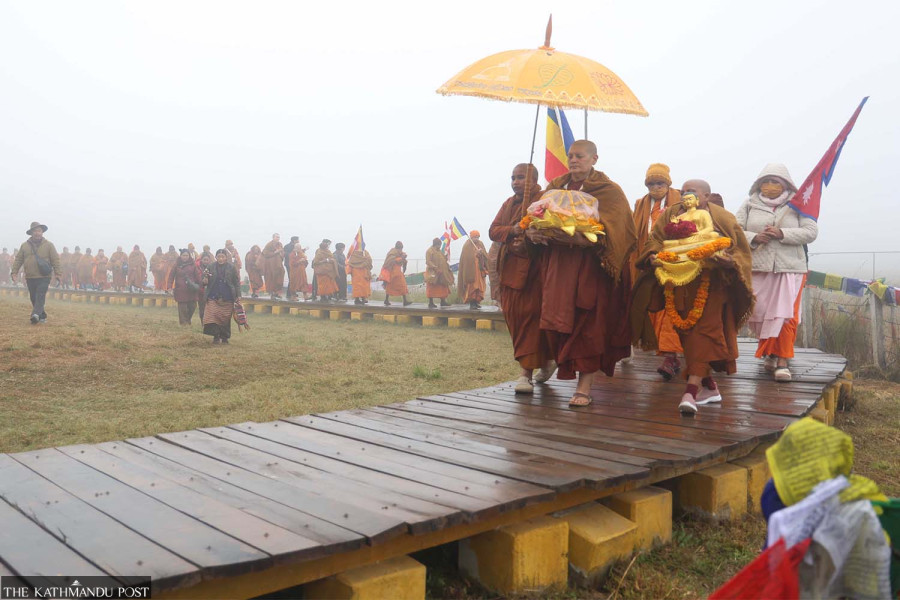
bookmark![]()
Manoj Paudel/TKP ![]()
Manoj Paudel/TKP
Manoj Paudel
Published at : December 22, 2025
Updated at : December 23, 2025 06:51
Nawalparasi West
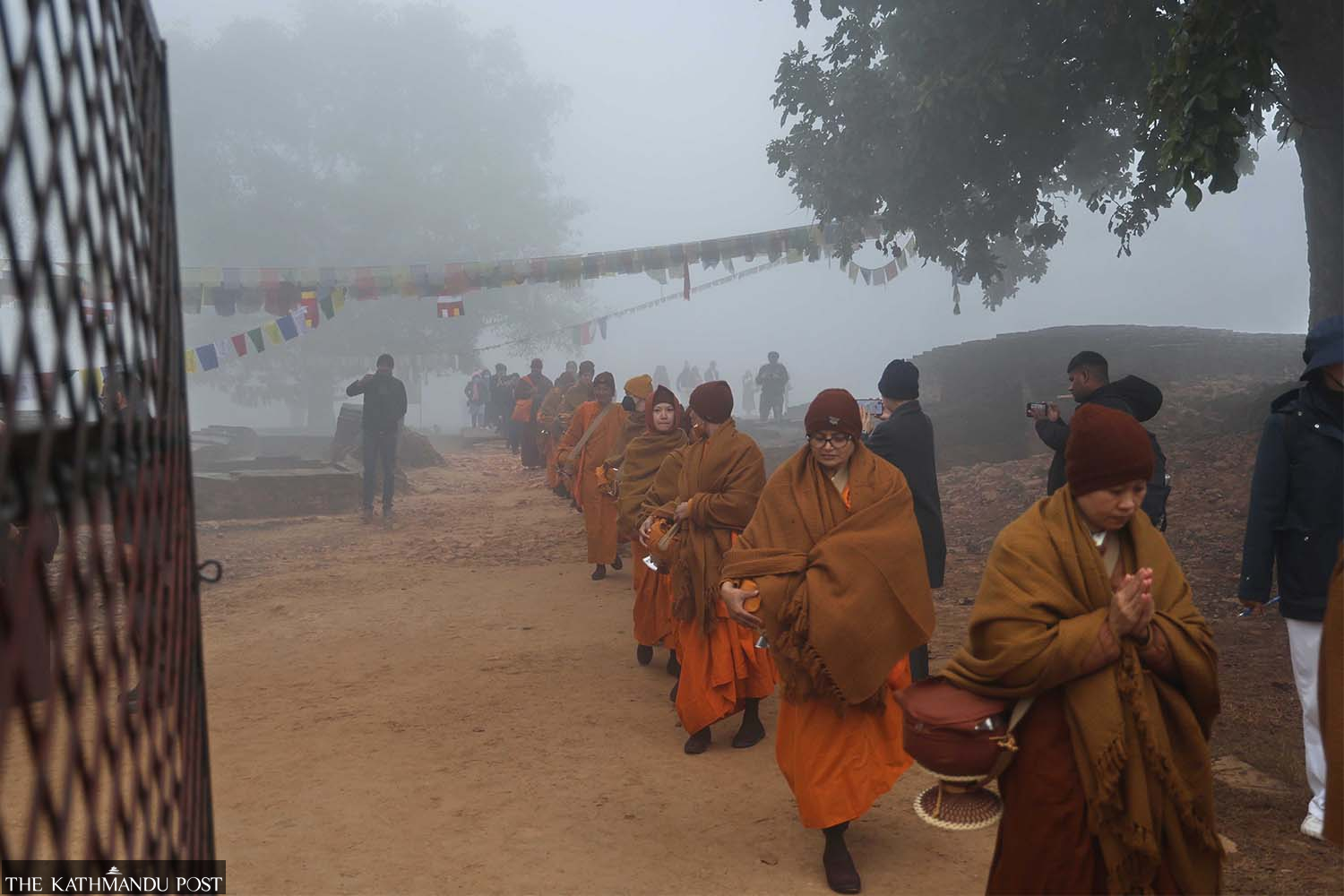
One hundred Buddhist nuns from 13 countries have embarked on a week-long pilgrimage tracing the ancient route taken by Mahaprajapati Gautami, the Shakya queen who renounced palace life to become the first Buddhist nun more than 2,600 years ago.
The participants followed the historic trail from the Shakya capital Tilaurakot, crossing dusty paths, fields and rivers, including the Anomaghat section along the Narayani River. While some boarded boats and others prepared to wade across, their purpose was not leisure: they were re-enacting the arduous journey Gautami undertook from Kapilvastu in Nepal to Vaishali in India to seek ordination.
Named the Mahaprajapati Gautami Great Renunciation Trail, the initiative has been developed by tourism entrepreneurs from Nepal and India as a new spiritual tourism product. After three days of walking in Nepal, the group crossed into India via Sunauli on Saturday and will complete the 300km route on Wednesday, December 24.
The pilgrimage began on December 17 with rituals at Tilaurakot, where Prince Siddhartha spent his youth. Twenty-four Nepali women took temporary ordination for 10 days to join the walk. The group travelled through Nigrodharam, Lumbini, Ramgram and Anomaghat before heading towards Valmikinagar, Nandangarh, Lauria Areraj, Kesariya and finally Vaishali in Bihar, India.
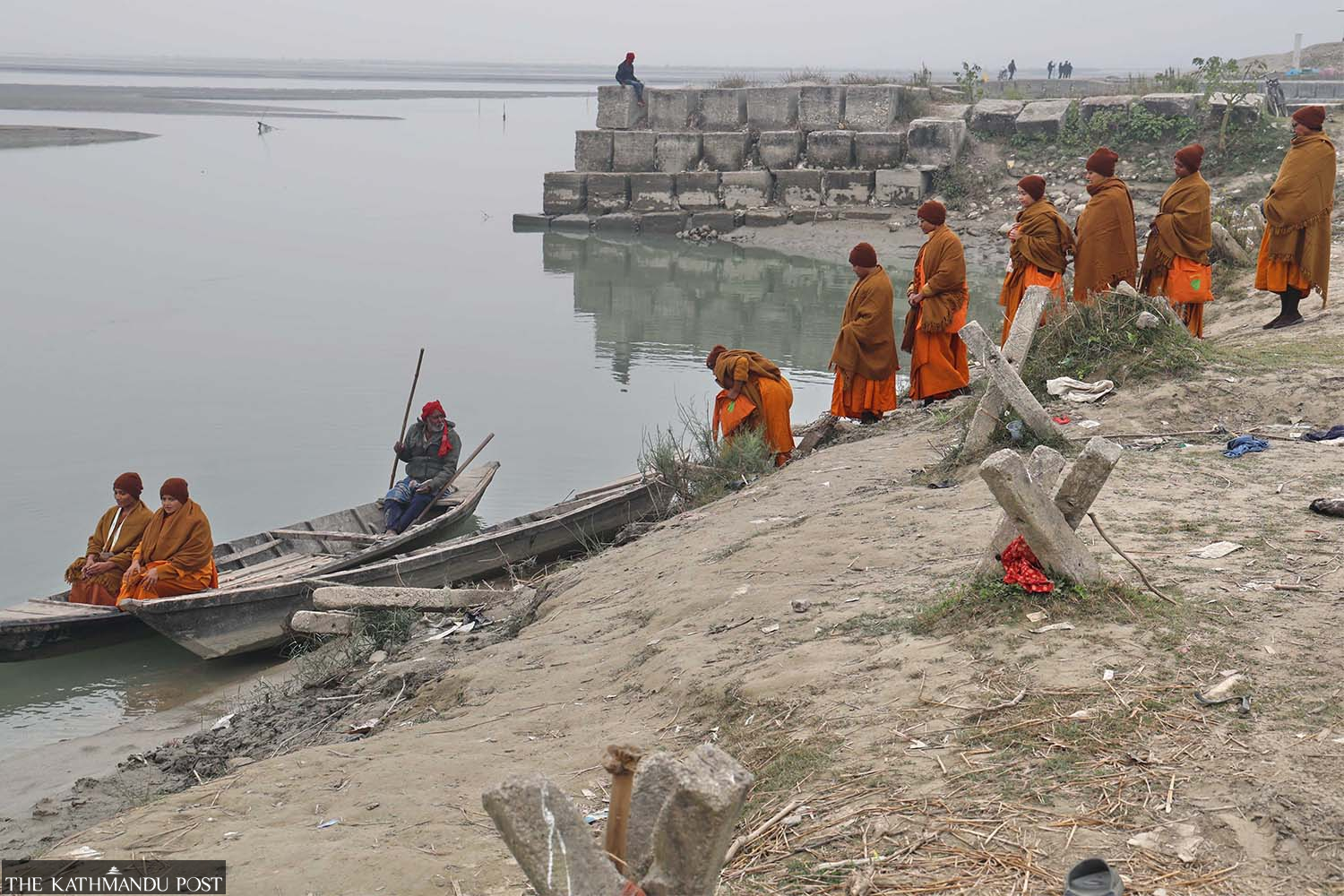
Deepak Anand, an Indian researcher who has studied the trail for eight years, said the effort aims to help participants feel “how much hardship the queen endured” when she walked barefoot for hundreds of miles.
Of the 100 nuns, 65 are from Nepal and India, with the remaining 35 from Thailand, the United States, Canada, Vietnam, Cambodia, Sri Lanka, Singapore and Australia.
For many, the journey has been spiritually transformative. Cambodian nun Dhamma Anusarya said that touching the places associated with Gautami “brought profound peace and unforgettable merit.”
Australian participant Shantachari described the walk as an honour, saying Gautami’s struggle for women’s ordination continues to inspire generations of Buddhist women.
According to senior archaeologist Basanta Bidari, Buddhist texts recount that after King Suddhodana’s death, Gautami, accompanied by Yashodhara and 500 Shakya women, walked to Vaishali to request ordination. Although the Buddha initially declined, he later permitted the establishment of the Bhikkhuni Sangha following the intervention of his disciple Ananda.
The trail is now being promoted as a joint living heritage of Nepal and India. Bikram Paudel Kaji, goodwill ambassador of the Lumbini Development Trust, said the revival of this route adds “a new dimension to peace tourism” and strengthens cross-border heritage links.
The Light of Buddhadharma Foundation International (India) is coordinating the event in collaboration with the United Theravada Bhikkhuni Sangha International, Nava Nalanda Mahavihara and Buddha Circuits (Nepal). The pilgrimage will conclude in Vaishali, once the capital of the Vajji confederacy and an important site where the Buddha spent two monsoon retreats and received devotion from the Lichhavi community.
Manoj Paudel
Manoj Paudel is the Kapilvastu correspondent for Kantipur Publications.





Most Read from National
Sudan Gurung returns as home minister, Mahabir Pun gets technology ministry
Lost on Everest for six days, Sherpa found alive

TikTok influencer Tulsa Adhikari arrested on Interpol Red Notice

PM’s remarks on ‘mutual encroachment’ draw concern of border experts, government in ‘damage control’ mode

PM Shah says that just like India has encroached on Nepali land, Nepal has also encroached on India’s
Editor's Picks
Inside the mission of Everest’s first mountain rangers

Weak arbitration defence costs government billions

Nepalis making treacherous trip to Europe through the Balkan route

Women are often at the centre of Nepali films. Why are men still telling most of their stories?

What old newspapers reveal about Kathmandu’s World Cup fever in the 80s and 90s
E-PAPER | June 15, 2026

×