Nepal’s household biogas dream is quietly collapsing
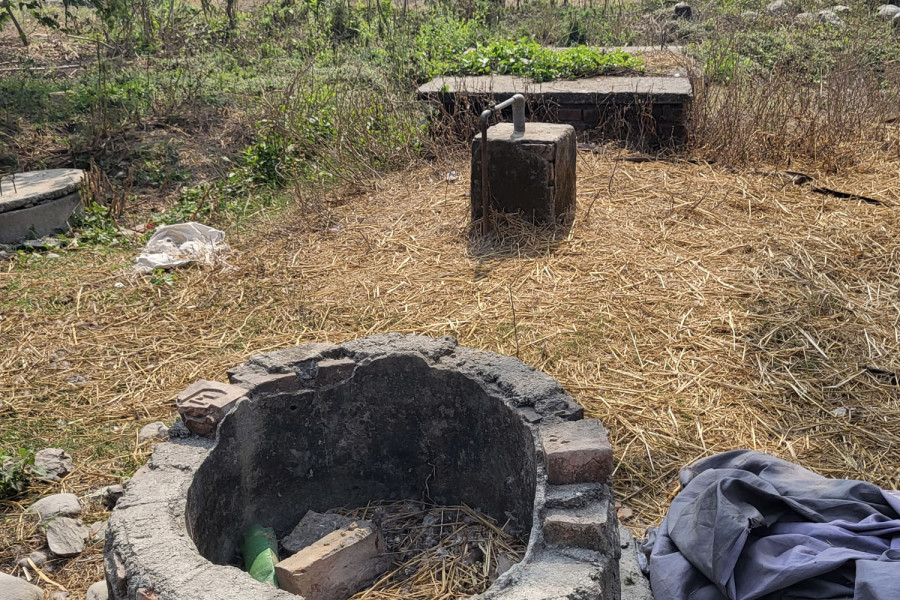
Study finds half of household plants in disuse nationwide, turning decades of investment into stranded public assets. The collapse of household biogas systems has pushed families to spend hundreds of millions annually on LPG. Handout photo
In Tanahu district, one of the many areas where Nepal has promoted household biogas for decades, the technology is now showing clear signs of decline.
As researchers moved through mid-hill settlements, they found plants in disrepair—digesters split by cracks, mixers jammed in place, and pipelines corroded after years without maintenance.
Nearly 59 percent of the biogas plants inspected in the district were no longer functioning, the highest failure rate among the areas visited.
Tanahu’s experience reflects a wider national pattern. Even in places where biogas took hold early, many systems are now struggling to survive, according to a new study by the Renewable and Sustainable Energy Laboratory at Kathmandu University.
The study uncovers a deepening crisis in Nepal’s household biogas sector, finding that more than half of the systems may have been abandoned since their installation.
Shifting rural demographics are placing growing strain on household biogas systems. Youth migration and declining livestock numbers have disrupted the traditional model, with 14 percent of households lacking sufficient manure—one of the main reasons for plant abandonment.
Smaller and ageing families, along with shrinking household sizes, are making it increasingly difficult to operate biogas systems, while larger households are better able to sustain them.
The research, published in a journal of the Nature Portfolio, highlights how technical failures, changing rural livelihoods, and flawed policy frameworks have steadily undermined Nepal’s national biogas promotion programme.
This erosion is now compromising Nepal’s ability to meet its 2045 net-zero target and broader Sustainable Development Goals.
Based on field observations across 10 districts and interviews with 2,559 households, the study portrays a sector plagued by easily preventable technical problems and a lack of institutional follow-up—calling for urgent policy intervention.
The national numbers are sobering.
Across the ten districts assessed, 54 percent of all surveyed biogas plants were non-functional, amounting to roughly 1,380 abandoned systems. With each plant costing around Rs80,000, this represents more than Rs110 million in wasted infrastructure in the study sample alone.
Nepal has installed nearly 450,000 household biogas systems over the years, almost all subsidised. If similar failure rates prevail elsewhere, the loss of national wealth would run into tens of millions of rupees.
What was intended to be a durable, subsidy-backed clean-energy solution is instead becoming one of Nepal’s largest pools of stranded public investment.
Prof Sunil Prasad Lohani, the study’s lead author, underscored the urgency of the findings. “This study reveals major challenges in Nepal’s biogas sector and underscores the need for transparent subsidies, expert involvement, and strong local service networks,” he said. “Without urgent intervention and systemic reform, Nepal’s biogas sector will collapse, and its role as a sustainable cooking solution will continue to diminish.”
The study found that most non-functional plants failed due to technical problems such as broken mixers. Even operational systems produced an average of just 0.4 cubic metres of gas per day—less than half their designed capacity.
“Households that once relied on biogas as a sustainable solution now express deep dissatisfaction,” said Poushan Shrestha, a co-author of the study. Persistent low gas output and the absence of repair services have eroded trust in the technology, he said.
Technical failure emerged as the primary driver of widespread abandonment. Many defunct systems could be revived with relatively simple repairs. Yet the lack of trained local technicians and spare parts has left households stranded, forcing them back to firewood and liquefied petroleum gas.
Prof Marc Jeuland, a co-author from Duke University, said Nepal’s experience, while alarming, mirrors challenges seen elsewhere. “Well-built systems are expensive, and efforts to keep costs low have often resulted in compromises on quality,” he said. “The problems that follow are difficult to overcome.”
The study also points to heavy reliance on upfront installation subsidies, with little attention to post-installation monitoring and maintenance, as a core policy failure. Despite earning millions of rupees through carbon credits under the Clean Development Mechanism, reinvestment into maintenance and service networks has been negligible.
As a result, the collapse of household biogas systems has pushed families to spend an estimated $5.2 million annually on LPG and led to an additional 0.66 million tonnes of carbon dioxide emissions from renewed firewood use—undercutting both economic and climate gains that biogas was meant to deliver.
Sangam Prasain is Business Editor at The Kathmandu Post, covering tourism, agriculture, mountaineering, aviation, infrastructure and other economic affairs. He joined The Kathmandu Post in October 2009.




 13.76°C Kathmandu