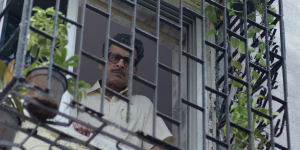
It captures the long, punishing journey of migrant workers during the pandemic while exposing the caste, labour and systemic inequalities they live with. Photo: Screengrab via YouTube
During the Covid-19 pandemic, we stayed inside, tried new recipes, watched shows with family and passed time with online games. Those moments felt safe because our homes protected us. During the same period, thousands of migrant workers in India were walking across states, trying to reach the very safety we were taking for granted. ‘Homebound’ brings this truth to the screen with clarity and pain.
The film opens with a disclaimer stating that the story is fictional and intended for entertainment. Moments later, another line appears, saying that it is based on the real life of Mohammad Saiyub. This contradiction reflects the uneasy climate in Indian cinema today, where films that highlight injustice or question those in power often face censorship pressure. Stories rooted in real suffering are pushed to soften their truth, sometimes even forced to label themselves as fiction to avoid trouble. ‘Homebound’ makes this tension visible in its first few seconds, and that contradiction becomes an important lens for understanding the rest of the film.
‘Homebound’ is perhaps the strongest Hindi film of 2025. It is raw, intimate and visually striking. It avoids melodrama and holds its ground with honesty. The film follows two friends, Mohammed Shoaib Ali and Chandan Kumar, played with conviction by Ishaan Khatter and Vishal Jethwa. At first, they travel in a tractor filled with people on their way to a railway station. They study while travelling because they hope to get a police job. They believe that a government job will give them dignity in a society that humiliates them for their caste.
The film makes this humiliation clear through small and painful scenes. They belong to a lower caste and live with insults that they have learned to endure silently. When they reach the station, the number of people sitting, studying, and waiting in line for the same dream they thought they were destined for overwhelms them. They realise they are competing with millions for only 3500 vacancies.
Chandan hides his surname during the journey. He applies for the job under the general category instead of the reserved one. He fears discrimination even after recruitment.
One of the film’s strongest moments comes when Mohammed starts working as a peon at a company. His job is to bring water to the employees. One man refuses the bottle, saying he prefers to do small tasks himself. At first, the moment seems harmless. Later we realise he does not want to drink water served by someone from a lower caste. The film captures this quiet insult with stillness, showing how caste continues to live in everyday actions.
The two friends eventually travel to Surat for work. They share a cramped room with many others. The room is rented for only half a day. Workers on night shifts sleep during the day, and those on day shifts sleep at night. Their lives are divided into shifts of exhaustion. The film pays attention to the details of their routine. Their meals, their fatigue, and the lack of privacy. These small observations reveal the architecture of poverty.
When they begin earning, most of the money goes home. Chandan’s parents start building a new cement house. These scenes bring brief joy. Their pride in their son’s earnings feels genuine. The film lets us experience their excitement. It also prepares us for the grief to come.
The lockdown announcement changes everything. Factories shut. Work stops. The men become unemployed overnight. They are left without money or transport. Their journey home becomes long and punishing. The film’s strongest section lies here. It shows highways that were once crowded now lying empty. It shows trucks overloaded with desperate people trying to go home. It shows confusion, heat and panic. The camera stays close to their faces and bodies. The exhaustion becomes physical for the viewer.
Chandan begins coughing during the trip. Other passengers panic and throw him and Mohammed out of the truck. They start walking. The road stretches endlessly. Their feet crack. Their clothes cling to sweat. The sun becomes a threat. Silence fills the frame. We remember the news reports, the photographs and the bodies on the roads. The film recreates that memory without sensationalising it.
The film also explores the friendship between the two men. Their relationship is not sentimental. They tease each other, share frustrations and protect one another. Their loyalty feels lived-in. When others tell Mohammed to leave Chandan behind, he refuses. His choice reflects the emotional centre of the film. It shows how companionship becomes a form of survival.
The colour palette remains warm, grey and dusty. This choice reflects the fatigue in the characters’ lives. Nothing looks polished. The camerawork stays close to the ground. We see roads, feet, dirt, crowded platforms and narrow rooms. These images trap the characters within their circumstances. The film does not try to beautify hardship.
The performances feel grounded. Ishaan Khatter delivers a restrained, vulnerable portrayal. Vishal Jethwa’s sensitivity shapes the emotional weight of the story. Their expressions often communicate more than dialogue. The supporting cast is convincing, though Janhvi Kapoor’s character lacks depth. She appears occasionally, without a meaningful arc. Her presence feels less functional, which weakens that portion of the narrative.
‘Homebound’ leaves the viewer with a heavy heart. Its strength lies in its attention to human detail. It refuses to flatten its characters into victims. It shows their dreams and stubbornness. It shows the costs of being born on the wrong side of privilege.
This film stands as an example of what Hindi cinema can achieve when it chooses honesty and truth without fear. It reminds us that stories of ordinary people carry power.
_____
Homebound
Director: Neeraj Ghaywan Cast: Ishaan Khatter, Vishal Jethwa, Janhvi Kapoor Duration: 122 minutes Year: 2025 Language: Hindi Available on Netflix
Sanskriti Pokharel, a former reporter and sub-editor at the Post, is a final-year student of Journalism, Mass Communication, and English Literature at St. Xavier's College, with experience in media, research, and communication.




 22.23°C Kathmandu