Debate over third telecom operator revived as CG, WorldLink and UTL eye market entry
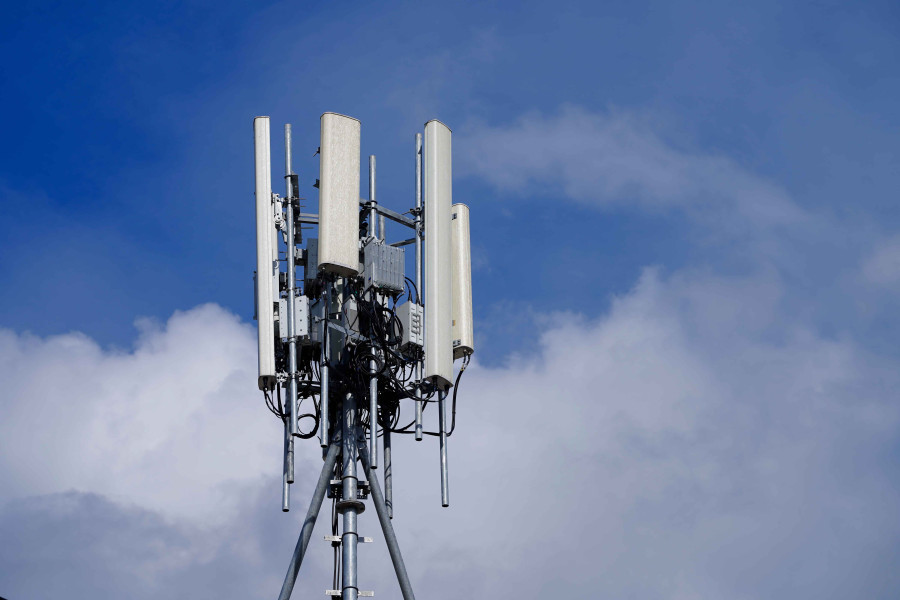
The success of a new telecom license rests on whether the state can finally overcome the legacy of political interference and outdated infrastructure policies, experts say. Shutterstock
The formation of a new government under Balendra Shah has once again revived discussions about bringing a new telecommunications service provider into the market, with the Ministry of Communications and Information Technology signalling that expanding competition has become one of its priorities.
Minister for Communications and Information Technology Bikram Timilsina has repeatedly said the government sees a need for additional telecom operators to compete alongside the country's two existing mobile service providers.
"At present we have only two operators. We believe Nepal needs another operator—or even more than one," said Timilsina during a press conference at the ministry on May 13. "The Nepal Telecommunications Authority has formed a committee to study the possibility of introducing a third mobile service provider. Its recommendations are awaited, and we intend to move the process forward. This is one of our priorities."
The debate has resurfaced amid concerns that Nepal's telecommunications market has become increasingly concentrated, with only Nepal Telecom and Ncell remaining in operation after several other operators either shut down or became inactive.
The issue has followed a familiar cycle over the years. Almost every time a new government takes office, discussions begin on issuing licences to another telecom company. Regulators launch studies, identify potential applicants and prepare reports, but the process gradually loses momentum before any concrete decision is made.
Ministry spokesperson Uday Rana Magar told Kantipur that another operator is needed to ensure effective competition in the market.
Several telecom companies that obtained licences during the 2000s—including Nepal Satellite (Hello Nepal), United Telecom Limited (UTL), STM Telecom and Smart Telecom—eventually ceased operations or became inactive after failing to meet regulatory requirements and licence conditions.
With only two service providers left in the market, successive governments have argued that Nepal should encourage a new operator to strengthen competition. The Nepal Telecommunications Authority (NTA) has once again begun preliminary work on a feasibility study to determine whether a new telecom licence should be issued.
The government has also expressed concern that the existing duopoly of Nepal Telecom and Ncell has weakened competition, potentially affecting both service quality and prices paid by consumers.
The regulator first established a committee in October 2024, led by then NTA director Ambar Sthapit, to study the feasibility of licensing another telecom operator. Officials say preparatory work on the study has now resumed.
Although the authority has issued licences to six telecom companies since Nepal liberalised the sector, only Nepal Telecom and Ncell remain operational today, narrowing competition, according to NTA spokesperson and director Meen Prasad Aryal.
However, Aryal cautioned that introducing another operator would also present significant regulatory challenges because essential national resources—including radio frequency spectrum, numbering capacity and rights of way for network infrastructure—are limited.
The decision on whether to issue a new licence will depend on the country's economic situation and actual market demand, Aryal said. “Work is currently underway on the proposal for a third operator. Once the authority's new leadership is in place, the findings of the study will be reviewed before recommendations are submitted to the government,” he added. “The authority will issue a public notice only if it concludes that another operator is genuinely necessary. Personally, however, I believe one more capable operator would help create healthier competition.”
According to Aryal, the number of telecom operators Nepal should have depends not only on market demand and supply but also on the availability of scarce national resources such as radio spectrum.
Who are the aspirants?
CG Telecom, WorldLink and UTL have emerged as the leading contenders for a basic telecommunications service licence if the government decides to introduce a new operator.
WorldLink says obtaining a mobile service licence would enable it to deliver affordable data services across the country, particularly in rural areas where extending fibre-optic networks remains difficult.
“If the government invites applications for a new operator, we will certainly participate,” said Keshav Nepal, chief executive officer of WorldLink Communications. “Internet service providers such as WorldLink now possess the infrastructure, investment capacity and technical expertise needed to operate a telecom company. Years of running fibre and broadband services have demonstrated both our financial strength and technical capability.”
CG Communications, part of the Chaudhary Group, has also been lobbying for a unified telecommunications licence for more than a decade. The company, which previously provided VSAT-based telephone services in rural eastern Nepal, says the case for a third telecom operator remains compelling.
CG said it was fully prepared to compete if the government launched an open, fair and transparent licensing process. It argued that earlier attempts to enter Nepal’s telecom market had been effectively blocked despite its investment and preparations.
“We have studied the sector’s potential for many years and have made the necessary preparations,” said the company in a statement. “Our objective is to contribute to Nepal’s digital transformation by introducing advanced technologies and delivering international-standard services.”
CG also argued that companies whose licences or applications had remained pending or had been cancelled unfairly despite substantial investments deserved an equal opportunity. “Healthy competition benefits consumers through better services, reasonable prices, technological innovation and greater choice,” it said. “Limited competition ultimately slows innovation, leaving consumers to bear the cost.”
UTL, which received a basic telephone service licence in September 2016, is meanwhile attempting to retain its operating licence. Nepal Ventures, representing the company’s Nepali investors, applied to the Nepal Telecommunications Authority in June for licence renewal before the expiry of its first ten-year term.
However, NTA spokesperson Aryal said the company had yet to clear either the prescribed renewal fee or its outstanding dues. “UTL submitted its renewal application on June 2, but it has not paid the required charges,” said Aryal. “Its unpaid liabilities exceed Rs7 billion. Including the renewal fee and the additional 15 percent penalty for delayed payment, the total outstanding amount could surpass Rs29 billion.”
Although UTL has sought concessions citing the impact of the Covid-19 pandemic and efforts to attract foreign investment, the regulator says renewal can proceed only after all statutory payments are settled. With vacancies in the authority’s board leadership, the company’s future remains uncertain.
Former communications minister Rekha Sharma said Nepal could introduce a third operator under a ‘hydropower model’, allowing wider public ownership while safeguarding national interests. She urged the government to prioritise data security and geopolitical considerations over commercial interests alone.
Policy and practical uncertainties
While the government and the regulatory body argue that the country needs another operator to foster competition, industry experts say the country’s existing legal and regulatory framework makes the idea difficult to implement.
Anand Raj Khanal, telecommunications expert, says a third operator would, in principle, benefit consumers by encouraging competition on prices, service quality and coverage. However, he argues that Nepal's current laws and licensing regime pose significant practical hurdles.
"If a new operator is licensed through the competitive bidding process under Section 22 of the Telecommunications Act, its financial obligations will differ from those of existing operators, undermining the principle of a level playing field," said Khanal. "If it is granted a unified licence under Section 23, it will face the same Rs20 billion renewal fee and spectrum auction costs that pushed companies such as Smart Telecom and UTL into financial distress."
Section 22 allows the NTA to determine the number and type of licences before awarding them through competitive bidding to applicants offering the strongest technical and financial proposals. Section 23, meanwhile, permits existing telecom operators that meet prescribed infrastructure and service requirements to upgrade to a unified licence, enabling them to provide mobile, fixed-line and internet services nationwide.
Former Ncell operator Spice Nepal obtained its GSM licence through open competition, while Smart Telecom initially secured a rural telecommunications licence before upgrading to a unified licence in 2013 after fulfilling regulatory conditions.
Another telecom expert and former Ncell chief regulatory officer Bishal Upadhyay believes Nepal should look beyond simply adding another mobile operator. Instead, he says the country needs communications and digital infrastructure companies capable of providing cloud computing, data centre services and artificial intelligence-based solutions alongside traditional connectivity.
"Rather than focusing solely on a third telecom operator, Nepal should establish a unified licensing framework covering connectivity, cloud services and data centres," said Upadhyay. "Instead of leaving valuable spectrum idle, the government should allocate unused frequencies to existing operators to improve network coverage and service quality."
The future of both prospective entrants and existing telecom companies remains uncertain. Ncell's operating licence is due to expire in 2029, but there is still no clarity over what will happen afterwards. Under Section 33 of the act, companies with more than 50 percent foreign ownership must transfer ownership to the government once their 25-year licence expires.
Ncell is currently owned by UK-based Spectrlite UK, controlled by Singapore-based entrepreneur of Nepali origin Satish Lal Acharya, and Sunivera Venture Capital, owned by his wife Bhawana Singh Shrestha. The company has proposed reducing foreign ownership below 50 percent so it can continue operating without being nationalised.
In a letter sent to the earlier government led by Sushila Karki, Ncell also proposed converting itself into a publicly listed company by offering shares to Nepali investors. The government has yet to respond.
Meanwhile, the government has announced plans to reduce its stake in Nepal Telecom from 91.49 percent to 66 percent by selling around 26 percent of its shares to the public and using the proceeds to establish a national technology hub. Nepal Telecom officials say they have yet to receive any formal instructions despite the budget announcement.
Analysts note that Nepal Telecom has reported operating losses for the past five fiscal years, highlighting broader challenges in an increasingly saturated telecom market.
Smart Telecom’s collapse illustrates the scale of those challenges. After failing to pay nearly Rs30 billion in renewal fees and other dues, its licence was suspended and the NTA assumed control under the 2022 regulations governing inactive telecom operators. Last year, Smart's towers and other infrastructure were sold through a bank-led auction to Ncell for Rs4.6 billion, a transaction that remains under investigation.
Industry observers say Nepal’s telecom sector, once among the country's strongest taxpayers and largest recipients of foreign investment, has steadily contracted. According to Ncell, it paid Rs14.51 billion in taxes and regulatory charges during the first nine months of the current fiscal year, yet the telecom’s contribution to gross domestic product has fallen from around 5 percent to just 1.2 percent.
"Talking about a third operator under the current circumstances is pointless," said Khanal. "Unless the government reforms its policies, makes spectrum pricing and licence renewals more practical, and changes its approach towards the industry, even the two existing operators may struggle to survive."
Former minister Sharma conceded that a third competitor is vital for safeguarding consumer welfare, but she reiterated that the statutory framework must be overhauled. She shared her immense political frustration, revealing that she had made exhaustive institutional efforts to amend the outdated Telecommunications Act but her efforts were completely derailed by special interest groups. "The entire process of legislative reform was fiercely resisted due to the overlapping financial interests of various intermediaries, brokers, and powerful corporate lobbies," said Sharma. "The moment we began drafting the new legal text, these cartels deliberately weaponised the media to spread false narratives, claiming the amendment was designed exclusively to financially enrich Ncell.”
The politics of licensing and frequency distribution
The issuance of new telecommunications licences and the allocation of radio spectrum have long been politically sensitive issues in the country’s telecom sector. The Radio Frequency Policy Determination Committee, chaired by the communications minister, decides spectrum pricing and the amount allocated to different services. Based on its policies, the NTA assigns, distributes and monitors spectrum for service providers. Both spectrum and telecom licences are generally awarded through competitive auctions.
Critics argue that auction-based licensing favours large corporations and wealthy investors while making it difficult for smaller or new players to enter the market. Telecommunications expert Upadhyay believes the collapse of companies such as Smart Telecom and UTL was partly due to expensive licence fees and spectrum costs.
"Maintaining telecom services with 99.9 percent network availability requires substantial investment, which proved challenging for smaller operators,” Upadhyay said. “The high cost of licences and frequency distribution was another major factor.”
The NTA last invited applications for a new operator in 2008 to provide services in designated rural and remote areas. Applicants were required to submit technical and financial feasibility studies and business plans. Smart Telecom was eventually selected, and after the unified licensing policy was introduced in 2012, both Smart Telecom and UTL were allowed to upgrade to mobile service licences upon paying the prescribed fees.
However, operators including Hello Nepal and Smart Telecom later ceased operations. Before its collapse, Smart held 5 Megahertz of spectrum in the 900 Megahertz band and 12 Megahertz in the 1800 Megahertz band. Because radio frequency is a scarce and valuable national resource, allocation, pricing and licence renewals involve billions of rupees. Allegations have frequently surfaced that politically connected companies hold frequencies at favourable prices or hold unused frequencies to limit competition.
One of the most controversial cases dates back to 2008, when Nepal Satellite Telecom, promoted by Ajeya Raj Sumargi, businessman considered to be close with then Maoist, received the licence to operate Hello Nepal. The government faced criticism after the company was reportedly allocated more spectrum than requested at heavily discounted rates. It was later accused of holding the frequency before transferring its interests to Swedish telecom company TeliaSonera at a much higher value.
Another public dispute erupted in 2019 between then communication minister Gokul Baskota and CG Telecom over the company's bid for a unified licence. The regulator argued that CG had failed to meet mandatory rollout conditions, while Baskota claimed the company was attempting to secure a unified licence after paying only for a rural telecom permit. CG rejected the allegation, saying technological advances had rendered its original rollout plan obsolete and that regulatory flexibility was needed to accommodate rapid changes in the telecom industry.
Why ‘third operators’ failed
Nepal's previous attempts to establish a viable third telecommunications operator have largely ended in failure, with companies such as Smart Telecom and UTL unable to build sustainable businesses despite obtaining licences.
Smart Telecom lost its licence after failing to pay nearly Rs30 billion in renewal fees and other outstanding dues. UTL, meanwhile, has yet to expand its services nationwide despite holding a licence for almost a decade. Hello Nepal, which once provided services in around 25 districts across western Nepal, ceased operations in 2022 while still owing the government more than Rs3.5 billion.
Although CG Telecom lobbied extensively for a unified telecommunications licence, its application was halted after the company failed to meet regulatory preconditions.
Telecom experts say weak management, political interference and attempts to secure spectrum without adequately expanding services were among the main reasons these operators struggled.
The collapse of Smart Telecom has also left hundreds of ordinary citizens and financial institutions bearing heavy losses. More than 600 house owners who leased land or buildings for Smart’s towers and offices have reportedly gone unpaid for years. Some have even faced warnings that their electricity supply could be disconnected because Smart failed to settle power bills for its tower sites.
Traders who sold recharge cards and SIM cards of Smart Telecom have also claimed losses amounting to around Rs530 million. Banks remain unable to recover billions of rupees in loans secured against the company's telecom infrastructure.
"Bank money is ultimately the public's money," said Pramod Acharya, information officer at Nepal Investment Mega Bank. "When we try to recover loans by auctioning collateral through legal procedures, we ourselves become entangled in disputes."
Nepal's private telecommunications sector has witnessed repeated changes in ownership involving both domestic and foreign investors. Ncell's shares alone have changed hands 14 times. Over the years, ownership has included Nepal's Khetan Group, India's Modi Telstra, Sweden's TeliaSonera, Malaysia's Axiata, and Nepali investors including Niraj Govinda Shrestha, Upendra Mahato, Bhawana Singh Shrestha and Satish Lal Acharya.
UTL also saw multiple investors, including India's state-owned Mahanagar Telephone Nigam Limited and Telecommunications Consultants India Limited, Tata-owned VSNL, and Nepal Ventures.
The telecom sector has frequently been influenced by political developments. In 2000, the NTA awarded Nepal's first mobile licence through open competition to a consortium led by the Khetan and Modi groups. However, senior journalists recall that after King Gyanendra assumed direct rule, businessman Raj Bahadur Singh, the King's son-in-law, entered the company by replacing the original promoters.
In November 2004, Raj Group Nepal acquired 55 percent of the shares held by the Modi Group and 40 percent owned by the Khetan Group, securing a 95 percent stake in Spice Nepal, which was later rebranded as Mero Mobile and eventually became Ncell. On the very day the acquisition was completed, Raj Group sold a 57 percent stake to Cyprus-based offshore company Daltro Trade.
Records show that in 2005, Daltro Trade sold 40 percent of its shares to Reynolds Holdings, while Raj Group transferred 18.6 percent of its remaining 38 percent stake to the same company. A year later, in 2006, Raj Group sold its remaining 19.4 percent shareholding to Synergy Nepal, marking another major shift in the company's ownership structure.
Political controversy continued after the end of Gyanendra’s direct rule. Businessman Sumargi later faced allegations of receiving political backing to operate Hello Nepal, before Sweden’s TeliaSonera indirectly acquired a controlling stake through its investment vehicle, Airbell Services Limited.
Investigative journalist Tom Burgis discusses TeliaSonera, Hello Nepal and then prime minister Pushpa Kamal Dahal in his book Cuckooland: Where the Rich Own the Truth. Published in 2024, the book explores the intersection of Nepal's telecommunications sector, politics and foreign investment.
According to the book, businessman Sumargi, with the assistance of businessman Mohamed Amersi, helped introduce TeliaSonera to the Nepal government and Maoist leaders, paving the way for the Swedish telecom company’s entry into Nepal.
Industry insiders argue that many earlier operators were more interested in acquiring valuable spectrum than competing aggressively in the marketplace.
"Most foreign investors lacked genuine commitment to expanding services," said a former government official familiar with the sector. "UTL chose CDMA technology at a time when GSM was becoming the global standard, leaving it unable to compete effectively."
The official believes the failures of earlier operators have created a perception that a third telecom company cannot survive in Nepal. However, he argues that many previous licensees simply held scarce spectrum without making meaningful investments in network expansion.
"Some operators focused more on holding frequencies than serving customers,” he said. “Meanwhile, Nepal Telecom struggled to obtain additional spectrum despite rising demand, leading to network congestion and deteriorating service quality.”
As debate over a third operator resumes, a separate political debate continues over whether Ncell should eventually come under government ownership. While opinions differ on the company's future, experts broadly agree that preserving Ncell's operational stability is crucial.
"If Ncell collapses, Nepal Telecom alone cannot absorb its traffic and infrastructure responsibilities," telecommunications expert Anand Raj Khanal said. "That would undermine Digital Nepal, weaken investor confidence and seriously damage the country's communications sector. Urgent policy reforms and a more practical tax regime are essential to prevent that outcome."




 13.9°C Kathmandu