Morang farmers get above-government support price for spring paddy
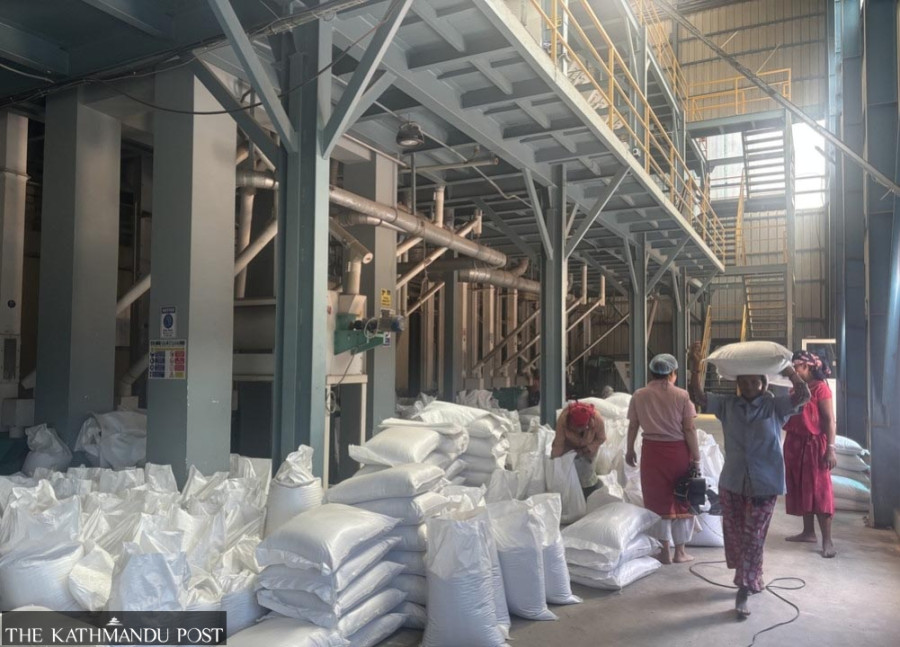
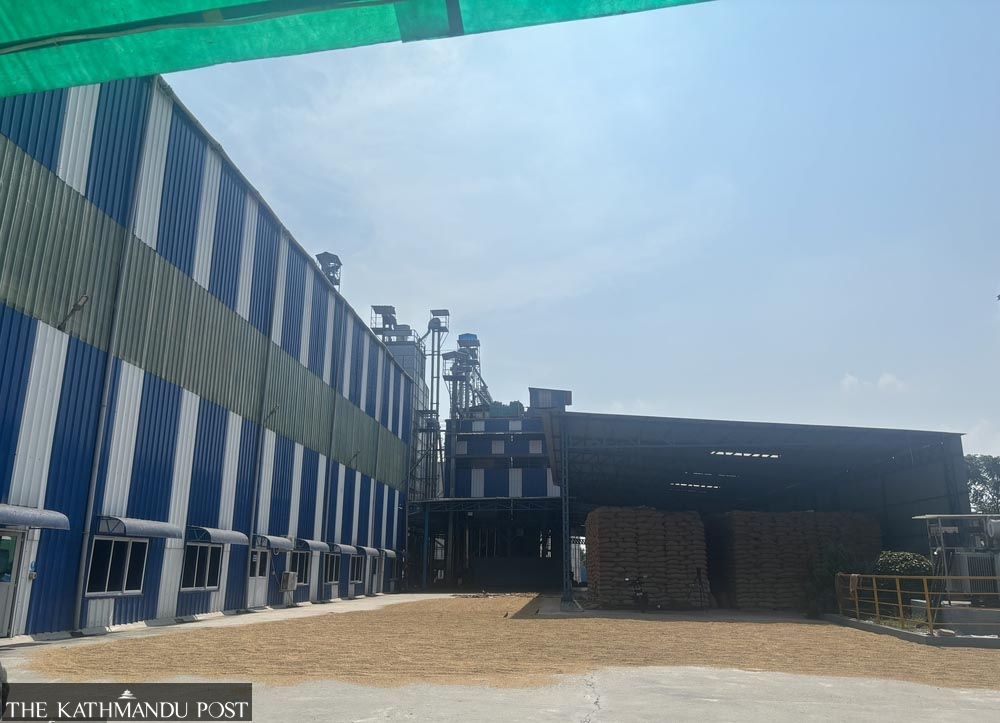
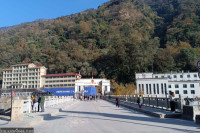
Arju Rice Mill is paying Rs28.97 per kilogramme for spring paddy, 39 paisa above the government's minimum support price, offering relief to farmers during the harvest season. Arju Rice Mill in Dangihat, Morang. Parbat Portel/TKP
Farmers in Morang are receiving more than the government-set minimum support price for this season's spring paddy after a private rice mill offered a higher procurement rate, giving growers better returns as they harvest the crop.
Arju Rice Mill, based in Dangihat of Belbari Municipality-9, has fixed its procurement price for spring paddy at Rs28.97 per kilogramme, 39 paisa higher than the government's recently announced minimum support price of Rs28.58 per kilogramme for paddy with 25 percent moisture content.
The move has been welcomed by farmers, who say better prices have boosted their confidence despite persistent concerns over market stability and government procurement.
The mill had announced indicative prices for the Haldinath-6 spring paddy variety as early as January 6, before sowing began, offering between Rs25 and Rs27 per kilogramme depending on moisture content. The federal government announced the official minimum support price only a few weeks ago.
Farmers say the higher-than-government price has come as a relief.
Yubaraj Neupane, a farmer from Rangeli, said growers were receiving more than the government benchmark because they were selling finer grain varieties.
“The government's support price is for coarse paddy, while we are selling fine varieties,” he said. “We are getting at least one rupee more per kilogramme than the official rate, and that makes a significant difference.”
Ramesh Karki of Rangeli-1 said paddy prices had improved considerably compared to previous years.
“Earlier, we could hardly earn more than Rs2,000. Now we are receiving more than Rs2,500,” he said, referring to the returns farmers receive from their harvest.
Pushkar Sharma of Belbari-6 said the private sector had provided much-needed relief by offering better prices, while farmer Karna Bahadur Thapa of Rangeli-1 recalled having to sell paddy for only Rs25 per kilogramme in previous years. The higher prices, he said, had eased some of the financial pressure on growers.
Despite the improvement, farmers say announcing a support price alone is not enough. They argue that the government must ensure the minimum price is enforced across the market, strengthen public procurement mechanisms and improve overall market management.
According to farmers, while private companies have demonstrated that farmer-friendly pricing is possible, producers will not consistently receive fair returns unless the state develops a more effective market system.
Bibekananda Jha, general manager of Arju Rice Mill, said the company had consistently prioritised farmers' interests when setting purchase prices.
“We are implementing the minimum support price,” Jha said. “After the government fixed the spring paddy price at Rs28.58 per kilogramme, we raised our procurement price to Rs28.97. For the Subasi variety, we have paid as much as Rs35 per kilogramme.”
The mill has an annual processing capacity of 25,000 tonnes of paddy and directly employs about 80 people.
According to Jha, around 2,500 contract farmers cultivate paddy across approximately 2,500 bighas of land under the mill's network. The company requires about 15,000 tonnes of monsoon paddy and 10,000 tonnes of spring paddy each year to meet its processing needs.
The company also provides farmers with improved seed varieties, modern agricultural equipment and support for farm mechanisation. Through farmer groups, machinery used from planting to harvesting is supplied at subsidised rates.
Dipendra Karna, the mill's communications officer, said the company purchases only paddy produced by Nepali farmers.
“We do not buy paddy from any source other than Nepali farmers,” he said. “The details of every affiliated farmer are stored in our computer system, allowing us to track how much paddy each farmer has sold and how much seed has been supplied. This has made transactions more transparent.”
Karna said the government support price applies only to paddy with 25 percent moisture content, whereas most paddy delivered to the mill contains between 18 and 22 percent moisture.
“Because the moisture content is lower, we can offer farmers a better price than the government's minimum support rate,” he said.




 20.12°C Kathmandu