



 9.7°C Kathmandu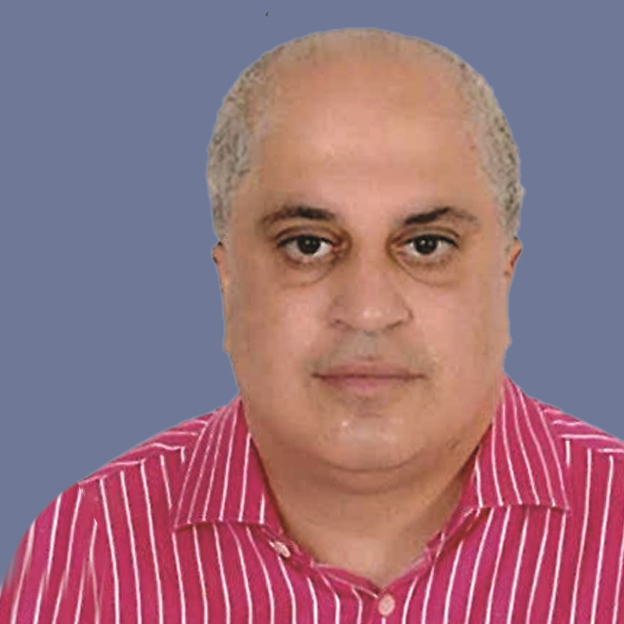

Tue, Mar 3, 2026
Money
Thought Leadership Interview: Yumiko Asakuma
The chief representative of Japan International Cooperation Agency's Nepal Office on leadership and management.
bookmark
Himendra Mohan Kumar
Published at : February 1, 2020
Updated at : February 2, 2020 16:00
Kathmandu
(This is the first in our weekly series of interviews with leaders in private and public organisations on how they manage and solve problems.)
Yumiko Asakuma has been chief representative of the Japan International Cooperation Agency’s (JICA) Nepal office since late 2018. Before her current assignment, Asakuma worked as director-general of JICA’s Yokohama Centre. She began her career in JICA in 1993 in the social development cooperation department and diversified her work experience in various JICA departments, including the industrial and mining development study, grant aid cooperation, training group and as a representative of JICA’s India office. She also served as the chief representative of JICA’s Bhutan office from December 2012 to March 2016. Asakuma is a graduate of Osaka Prefectural University’s Department of Integrated Arts & Sciences.
The interview has been condensed for clarity.
What is your formula for getting things done?
There is no specific formula as such but I would say being an effective manager is necessary to get things done at the right time through the right people. Understanding the nature and identifying key points to expedite work is crucial for effective management and smooth implementation of any project. Simultaneously, proper planning is also very significant to complete the task as per the schedule.
What do you look for when hiring employees?
We are an equal opportunity provider organisation hence our hiring strategies are very fair and transparent. While hiring any new employees, besides educational background, experience and knowledge regarding the position and work, we also take a keen interest in understanding and identifying an applicant’s overall character, attitude towards work, enthusiasm, motivation for improvement, proactiveness, and their tendency of being an efficient team player.
How do you build allies, not just within your organisation, but also in the broader industry with the other leaders you compete with?
There is a group, which includes all the development partners working in Nepal, and we have periodic meetings and discussions to keep ourselves updated with various activities and issues happening within and beyond our sectors. We also work together, with a continuous exchange of communication and information for effective implementation. Besides, I do attend formal and informal gatherings and social events as part of my networking outreach.
What’s the hardest decision—personal or professional—you’ve had to make?
I was born, raised and educated in Osaka. However, after my graduation, I decided to move away from Osaka and live in Tokyo. I chose Tokyo as it is a hub for the corporate world, consisting of all major organisations; hence, I decided to start my career there. I consider it to be the most difficult decision I have ever made as I was living away from my family, friends and my social circle, living on my own and building my career as well. Nevertheless, it was all worth it as I am very happy where I stand today and the position I am in and am satisfied with what I have achieved so far.
How do you cope with criticism?
I take it in a very positive way, as I believe constructive criticism always allows us to improve, learn and make things better. It makes us stronger as a person and enhances our knowledge, as it provides options to make corrections, which prepares us to cope with any such instances in the future. I also believe being informative and simultaneously sharing that information and describing clearly with others to overcome such criticisms is very necessary depending upon the situation.
Why do you think the public sector is better than serving in a private office?
Firstly, I believe, both public and private sectors are essential to developing the society and I think both have their respective advantages. I, initially, worked in the private sector and going by that experience, I can say that the private sector seeks immediate results which is why it appropriately defines short-term goals, which I would say is good for reaping immediate benefits and making higher profits. However, I have been working in the development sector for some time now and I can say that the public sector has a bigger vision and long-term goals, which has a longer life span. The public sector mostly works to build a future, setting the development agenda for a nation’s prosperity and betterment of all citizens, so that no one gets left behind.
Himendra Mohan Kumar
Himendra is a senior business editor at the Post. He has worked with major global publications in India and the UAE, and has reported from the UK, Italy, France, China and Kazakhstan.





Most Read from Money



Editor's Picks
Five and half decades of KP Oli in Nepali politics

How Facebook’s algorithm is amplifying one party over all others

Nepal’s IT exports near $1 billion. Can the momentum be sustained?
Parties’ lofty pledges on economy collide with hard realities

Upper house passes tourism bill with tougher Everest rules
E-PAPER | March 03, 2026

×