



 14.82°C Kathmandu
Sat, Oct 24, 2026
Money
Energy dominates party agendas ahead of polls
Manifestos focus on hydropower expansion, cross-border trade, green energy and digital infrastructure as pillars of economic transformation.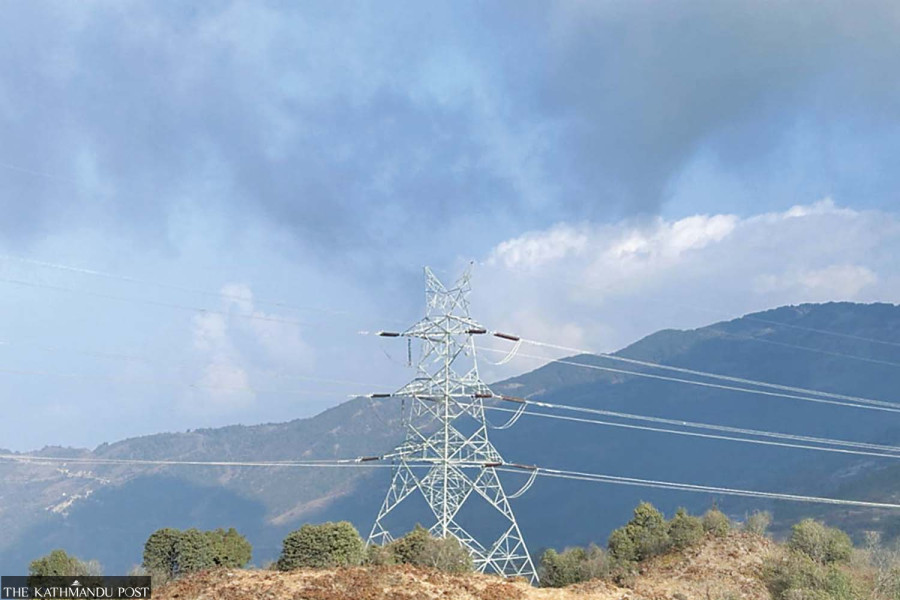
bookmark
Post Report
Published at : March 2, 2026
Updated at : March 3, 2026 06:57
Nepal’s major political parties have projected the energy sector as the backbone of future economic prosperity, unveiling ambitious plans ranging from large-scale hydropower expansion to cross-border electricity trade and digital infrastructure powered by surplus energy.
In its manifesto, the Nepali Congress has pledged to reserve a 15 percent share quota in national pride projects and large hydropower schemes for Nepalis working abroad, allowing them to become direct stakeholders in national development.
The party has also proposed concessional loans for low-income families among project-affected local residents to enable them to purchase the 10 percent priority shares allocated in hydropower companies. These loans would be repaid gradually through dividends. Construction workers involved in such projects would also be provided financial facilities to buy shares.
The Nepali Congress has set a target of increasing per capita electricity consumption from around 450 units to 750 units within five years, while raising installed capacity from about 4,000 megawatts to 14,000 megawatts. The party says it will implement a policy of rising consumption and declining tariffs.
It plans to push ahead with major reservoir-based projects such as Budhigandaki and Dudhkoshi, and bring an additional 10,000 megawatts — including solar energy — to the construction phase through international and private sector investment. Policy and regulatory reforms would be introduced to meet the 14,000-megawatt target.
The party has also pledged viability gap funding, if required, to prioritise projects including Budhigandaki (1,200 MW), Dudhkoshi (670 MW), Betan–Karnali (439 MW) and Chainpur Seti (210 MW). It has committed to taking forward the long-delayed Pancheshwar Multipurpose Project (5,040 MW), stalled for nearly three decades, through technical and political consensus while safeguarding national interest.
Production and transmission licences for hydropower projects would be extended to 50 years, up from the current 35-year ceiling, and commercial operation deadlines would be adjusted based on objective grounds. The party has also promised not to increase existing royalty rates on electricity sales, citing rising project costs and climate risks, in order to encourage private sector investment.
Power purchases would continue under the take-and-pay principle until alternative trading mechanisms are developed, with a framework to minimise financial risk.
On transmission, the Nepali Congress has pledged to complete key cross-border lines with India — Chameliya–Jauljibi (220 kV), Nanpara–Kohalpur (132 kV), Inaruwa–Purnea (400 kV) and Dododhara–Bareilly (400 kV) — as well as the Kerung–Chilime (220 kV) line with China within five years.
It has also promised to complete the east–west electricity highway and expand the national grid in line with the transmission master plan. Enhanced economic diplomacy would be pursued to expand Nepal–India electricity trade at the sub-regional level.
The Communist Party of Nepal (Unified Marxist–Leninist), or CPN-UML, has similarly highlighted renewable energy as central to economic transformation. Its manifesto envisions Nepal as a “clean energy export hub” in South Asia by strengthening hydropower, solar and green hydrogen production, transmission and distribution systems.
The party has pledged to double electricity production and per capita consumption, increase state investment in clean energy infrastructure, and create an enabling environment for the private sector to build transmission lines and export electricity.
Projects such as Upper Arun, Dudhkoshi and Budhigandaki would be implemented to ensure year-round supply, including during winter shortages. The party has also promised to complete the Sunkoshi–Marin and Bheri–Babai river diversion projects, which integrate irrigation and hydropower components.
The CPN-UML says it will review existing laws and policies to strengthen community electricity consumer institutions and make electricity services more accessible, particularly to support small and medium enterprises in rural areas and promote agricultural industrialisation.
The Nepali Communist Party has pledged to raise per capita electricity consumption to 750 kilowatt-hours within five years and meet a long-term goal of generating 40,000 megawatts within the next two decades. It plans to boost both domestic and foreign investment in hydropower and open Power Purchase Agreements for new projects, allowing private companies to enter into such deals.
The party aims to add 10,000 megawatts over five years, taking the national system’s capacity to 15,000 megawatts. It has also promised to make electricity export agreements with India and Bangladesh more effective and promote renewable sources such as solar, wind and micro-hydropower.
Environmental and social safeguards would be strengthened under a sustainable development model, with a long-term goal of transitioning to 100 percent green energy use.
Meanwhile, the Rastriya Swatantra Party has proposed leveraging surplus electricity to power server farms, cloud infrastructure and artificial intelligence computing. The party says Nepal can connect more deeply with the global economy through data centres and digital services supported by abundant energy.
The Rastriya Swatantra Party, backed by former Kathmandu Metropolitan City mayor Balendra Shah, popularly known as Balen, has set one of the most ambitious targets — generating 30,000 megawatts within 10 years and significantly expanding exports through improved regional diplomacy.
It aims to raise per capita electricity consumption to 1,500 kilowatt-hours by 2035, up from roughly 465 kWh at present. The party has pledged to formulate a new energy policy, promote battery pump storage and other technologies, open energy trade to the private sector, and extend generation licences to 50 years.
It has also committed to pursuing formal energy trade agreements with India and Bangladesh through strengthened diplomatic engagement.




Most Read from Money

Why does an hour long flight to Dhangadhi cost more than a flight to New Delhi?

Nepal travel agents threaten to stop selling Thailand trips over visa rules
Malaysia rejects Nepal’s demand to open recruitment to all manpower agencies

No school, but a graduation cap for women dairy farmers
Nepal arrests four medical service providers as Malaysia recruitment row deepens
Editor's Picks




E-PAPER | October 24, 2026

×