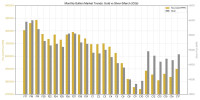
Deposits of Nepalis in Swiss banks stood at 84.85 million Swiss francs (Rs 9.15 billion) in 2013, down from 125.95 million Swiss francs (Rs 13.58 billion) in 2012
Nepalis’ money in Swiss banks has declined in 2013. Deposits of Nepalis in Swiss banks stood at 84.85 million Swiss francs (Rs 9.15 billion) in 2013, down from 125.95 million Swiss francs (Rs 13.58 billion) in 2012, according to “Banks of Switzerland 2013” report published by the Swiss National Bank (SNB).
Bankers and observers said the decline in the deposits might have come down due to the relaxation in banking secrecy laws by Switzerland amid strong pressure from the US. Until a few years ago, Swiss banks were known for confidentiality of client information.
The US government has passed an Act with a provision that foreign banks and financial institutions have to provide details about bank accounts maintained by US taxpayers.
Not only Nepalis’ money in Swiss banks, but also that of most of the South Asian nations has declined. Only India and Bangladesh saw growth in their citizens’ money in Swiss offshore accounts in the year. “This suggests the broader trend that those hiding money in Swiss banks no longer feel safe there,” said NIC Asia Bank CEO Sashin Joshi. “That’s why they might have shifted their money to areas where scrutiny is lower.”
Along with the US and EU, which have mounted pressure on the Swiss government for disclosure about bank accounts, India has also has formed a special taskforce to ascertain the amount of the black money of its citizens.
Former Finance Secretary Rameshore Khanal said it is becoming difficult for people to hide black money due to global pressure. “As keeping black money is Swiss Banks is getting riskier, they are moving away their money to tax heavens like Mauritius, Cayman Islands, Seychelles, Hong Kong, among others, where international scrutiny is relatively lower.”
A former banker said there is also a growing trend of investing black money in real estate, shares and gold which goes relatively unnoticed compared to cash holdings.
Money earned from corruption, and commissions received for being agents of big infrastructure projects and aircraft purchase deals are deposited in offshore accounts, bankers say, adding political leaders and bureaucrats who become a party of profits from such deals also park their money in tax heavens.
As Nepali commercial banks do not usually put their foreign currency holdings Swiss banks, bankers say affluent Nepalis mu-st have parked their funds there. They said the money in offshore accounts is largely kickbacks politicians receive for large deals.
Bankers said there is also a trend of siphoning money out by under-invoicing exports. “For example, traders under-evaluate exports and receive extra money in foreign currency abroad, which is one means of capital flight.”
According to the former ban-ker, even travel agents maintain offshore accounts and they don’t bring all the money they receive for providing tourism services. “That’s why foreign exchange earnings from tourism have been too low compared to the growth of tourist numbers,” he said.
While powerful countries have been searching the money by their taxpayers in offshore accounts, there has been little effort from the Nepal government to find out who held such accounts and whether the deposited money was earned legitimately.
In the past, the government tried to find out if there was existence of ofshore accounts of former King Birendra and his family members. But it failed to find out the existence of any such accounts. “In the case of other depositors, the question is whether the government is eager to ask the Swiss government to provide the details about Nepalis having accounts in Swiss banks,” said a banker.




 22.12°C Kathmandu