



 12.97°C Kathmandu
Sun, Oct 11, 2026
Money
Inside Nepal’s fake rescue racket
Investigations reveal a vast network of trekking firms, helicopter operators, hospitals and agents staging fake evacuations, fabricating medical records and inflating bills to siphon millions from global insurers.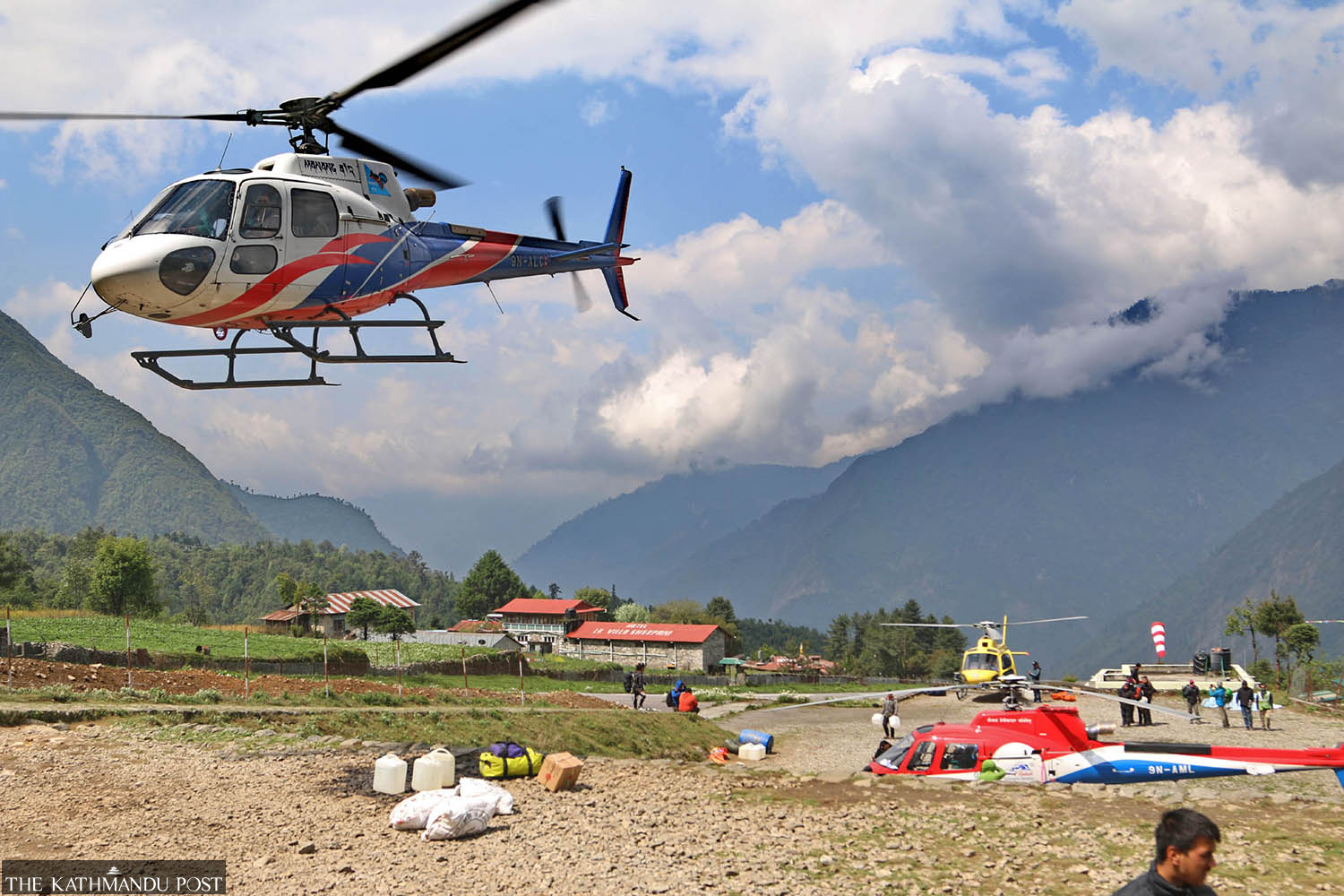
Sangam Prasain
Published at : March 27, 2026
Updated at : March 29, 2026 16:16
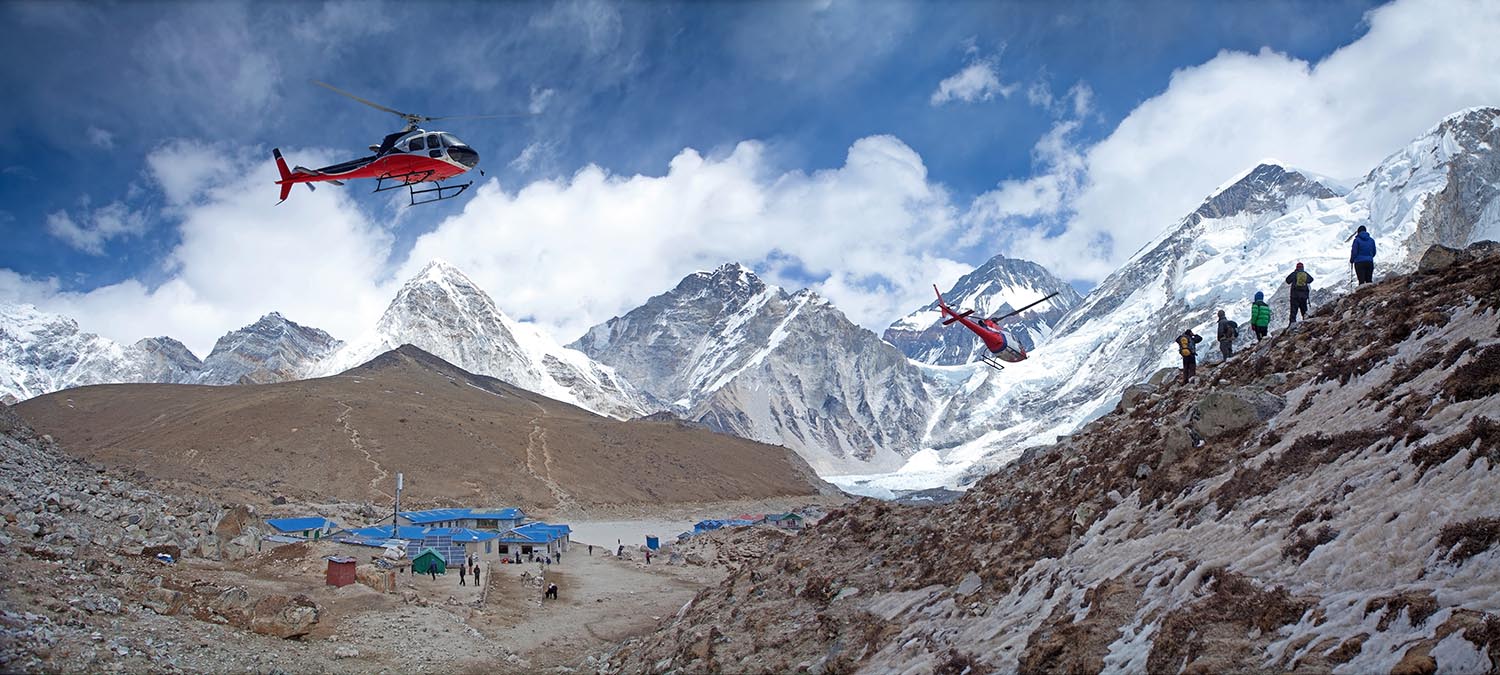
In Nepal, helicopter rescue on high altitude is, by any measure, a genuine lifesaving operation. At high altitude, where oxygen thins and weather changes without warning, the ability to airlift a stricken trekker to Kathmandu within hours has saved countless lives. But threaded through that legitimate system, exploiting its urgency, its opacity, and its distance from oversight, — is one of the most sophisticated insurance fraud networks in the world.
Nepal’s fake rescue scam is not new. The Kathmandu Post first exposed it in 2018. Months later, the government convened a fact-finding committee, produced a 700-page report, and announced reforms. In February 2019, The Kathmandu Post published a long investigative report.
Last year, Nepal Police’s Central Investigation Bureau reopened the file, and what they found is that the fraud did not stop — instead it was growing.
How does the scam work?
The mechanics of the fake rescue racket are straightforward: stage a medical emergency, call in a helicopter, check a tourist into a hospital, and file an insurance claim that bears little resemblance to what actually happened. But the sophistication lies in how each link in the chain is compensated, and how difficult it is for a foreign insurer — operating from Australia and the United Kingdom— to verify events that occurred at 3,000 metres in a remote Himalayan valley.
The CIB investigation identifies two primary methods for manufacturing an “emergency.”
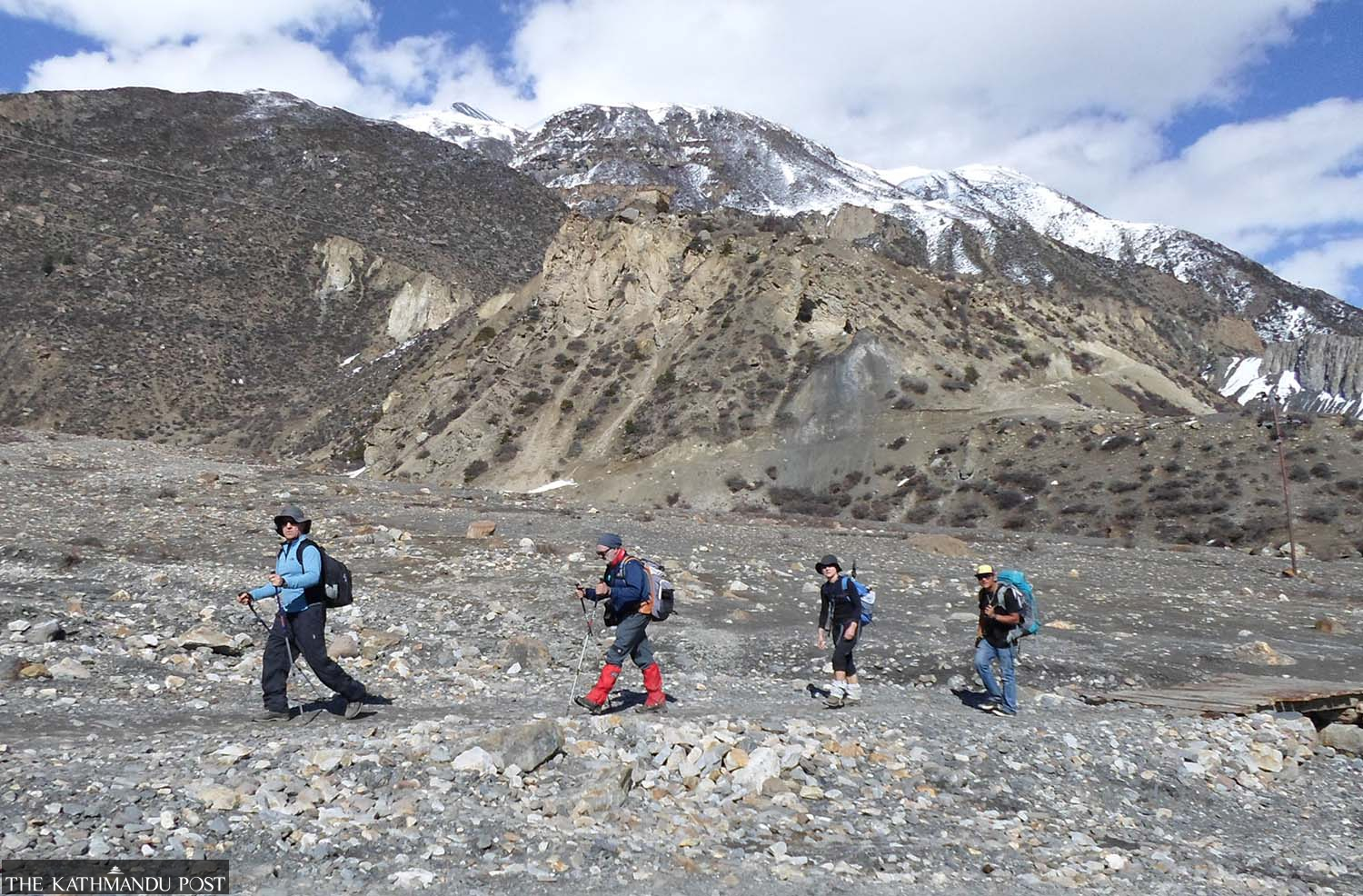
The first involves tourists who simply don’t want to walk back. After completing a demanding trek — an Everest Base Camp trek, for instance, can take up to two weeks on foot — guides offer an alternative: pretend to be sick, and a helicopter will come. The guide handles the rest.
The second method is more troubling. At altitudes above 3,000 metres, mild symptoms of altitude sickness are common. Blood oxygen saturation can drop, hands and feet tingle, headaches develop. In most cases, rest, hydration or a gradual descent is all that is needed. But guides and hotel staff, according to the CIB investigation, have been trained to terrify trekkers at precisely this moment. They tell them they are at risk of dying, that only immediate evacuation will save them. In some cases, investigators found that Diamox (Acetazolamide) tablets, used to prevent altitude sickness, were administered alongside excessive water intake to induce the very symptoms that would justify a rescue call.
In at least one case cited in the investigation, baking powder was mixed into food to make tourists physically unwell.
Once a “rescue” is called, the financial choreography begins. A single helicopter carries multiple passengers. But separate, full-price invoices are submitted to each passenger’s insurance company, as if each had their own dedicated flight. A $4,000 charter becomes a $12,000 claim. Fake flight manifests and load sheets are fabricated. At the hospital, medical officers prepare discharge summaries using the digital signatures of senior doctors who were never involved in the case. In some cases, these are done without those doctors’ knowledge. Fake admission records are created for tourists who were, in some documented instances, drinking beer in the hospital cafeteria at the time they were supposedly receiving treatment.
In one case, an office assistant at Shreedhi Hospital admitted that he had provided his own X-ray report taken about a year ago at a different hospital, to be used as a case for treatment of foreign trekkers to claim insurance.
The commission structure that holds the network together was described in detail during police interrogations. Hospitals pay 20 to 25 percent of the insurance payment to trekking companies and a further 20 to 25 percent to helicopter rescue operators in exchange for patient referrals. Trekking guides and their companies benefit from inflated invoices. In some cases, tourists themselves are offered cash incentives to participate.
What is the actual scale of the fraud?
The numbers that emerge from the CIB investigation are striking.
Between 2022 and 2025, investigators identified 4,782 foreign patients treated across the implicated hospitals. Of these, 171 cases were confirmed as fake rescues. Over that period, Era International Hospital received deposits of more than $15.87 million linked to these activities. Shreedhi International Hospital received over $1.22 million.
Among rescue operators, Mountain Rescue Service conducted 171 fraudulent rescues out of 1,248 total charter flights, claiming approximately $10.31 million from insurers. Nepal Charter Service carried out 75 fake rescues from 471 flights, claiming $8.2 million. Everest Experience and Assistance was linked to 71 suspicious rescues from 601 flights, with insurance claims totalling $11.04 million.
In one instance that illustrates the brazenness of the scheme, police documented a case in which four tourists were rescued on a single helicopter flight, on the same date, using the same helicopter and manifest. Insurance claims were nonetheless submitted as multiple separate rescues, with the total rescue bill reaching $31,100, plus a separate hospital bill of $11,890.
Dr Girwan Raj Timilsina of Shreedhi Hospital, speaking during interrogation, said that in one case alone, his hospital paid approximately Rs9.1 million in commissions to Nepal Charter Service, Rs1.5 million to Heli on Call, and a further Rs1.5 million to trekking operators. “My hospital has also given commission from its earnings to trekking companies and rescue companies to promote business,” he said in a recorded statement.
Are all the trekkers scammed?
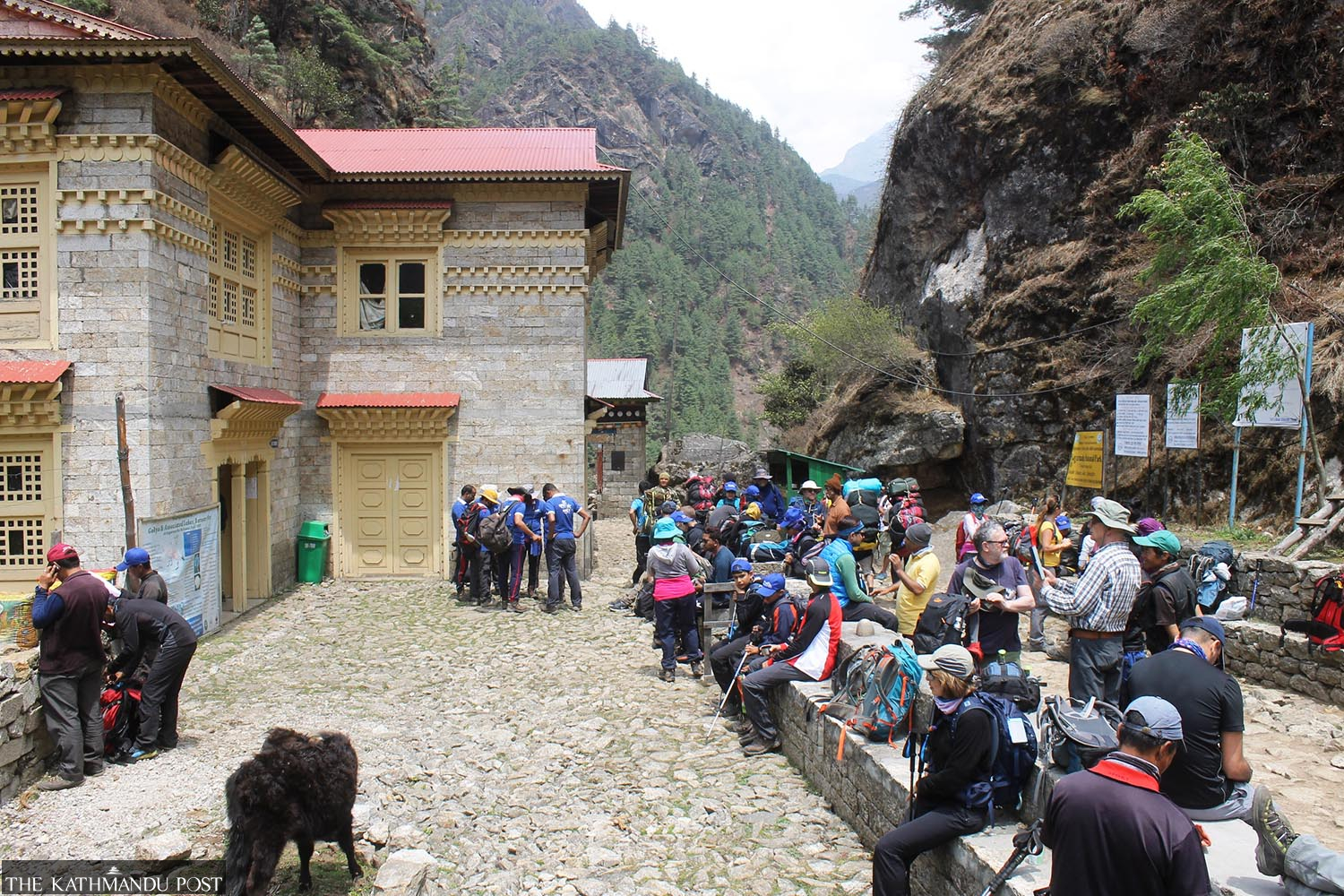
Not all the foreign nationals who come to Nepal for trekking are scam victims. Some of them are willing participants, according to evidence in the CIB investigations.
A WhatsApp exchange recovered during the investigation reveals a German trekker, Petra Homens, complaining to Rabindra Adhikari, the chairman of Nepal Chartered Service and one of the key figures in the network, that she appeared to have been double-billed. “Your company charged double!!!” she wrote, noting that her insurer had already paid the helicopter cost directly. Adhikari acknowledged that there may have been a double charge and offered a refund.
The exchange is significant because it confirms that the helicopter bill had been deliberately inflated for insurance purposes, and that the same individual was also implicated in fake treatment claims.
On the other side, two Canadian trekkers (whose names the Post is withholding to protect their privacy) proactively filed a complaint with the CIB in late 2025, alleging fraudulent medical evacuation during their November trek. Their complaint described a now-familiar pattern: oxygen readings reported to insurers as dangerously low (50 to 51 percent), unnecessary CT scans and ICU admissions, and hospitals that exaggerated conditions to justify the paperwork.
Wasn’t the system supposed to be fixed?
The new investigation is a story about institutional failure in Nepal. In 2018, following early reporting in The Kathmandu Post, a government fact-finding committee spent months investigating ten helicopter companies, six hospitals, and 36 travel and trekking agencies. The resulting 700-page report, which was submitted to then Tourism Minister Rabindra Adhikari, documented widespread fraud. It cited multiple insurance claims for single helicopter rides, pressure placed on trekkers to agree to unnecessary airlifts, and allegations that food was adulterated to make tourists sick.
The committee recommended that all helicopter companies, hospitals, tour operators and insurance firms be required to submit details of rescue flights and medical treatment to the Tourist Search & Rescue Committee, the Tourist Police, and the Department of Tourism. Intermediaries were to be eliminated and tour operators were held legally responsible for their clients throughout a trip.
But none of that worked.
“The scam continued due to lax punitive action,” said Manoj Kumar KC, chief of the CIB, during a recent interview with the Post. “When there is no action against crime, it flourishes. The insurance scam too flourished as a result.”
The current investigation was triggered on September 26, 2025, when a citizen group called Deshbhakta Gen Z filed a fresh complaint with the CIB, prompting the bureau to reopen files that had gone cold for several years.
Why are insurance claims so hard to verify?
Most travel insurance policies require the insurer to be contacted before an evacuation takes place. In the Himalayas, in altitudes where communication is a challenge and many areas are without proper cellphone signals, this almost never happens. By the time an insurer is notified, the evacuation is already complete, the patient is in a hospital hundreds of miles away in Kathmandu, and a local rescue company or trekking operator has already begun preparing the paperwork.
Large insurers maintain their own 24/7 emergency response teams, while smaller ones contract this to global assistance companies. When a case arrives from Nepal, these companies typically contact a local Nepali assistance company to review invoices, medical reports, and flight manifests on their behalf.
This is where the fraud is most easily hidden. The local assistance company operates within the same commercial ecosystem as the hospitals and rescue operators. The insurer, based overseas, is relying on local business partners to validate documents that those same intermediaries may have helped produce.
The rescue company’s incentive is to maximise the number of passengers on each flight while billing each insurer separately. The trekking company’s incentive is to refer cases to rescue operators who pay the highest commissions. The hospital’s incentive is to admit patients, perform unnecessary procedures, and maintain referral relationships with the operators who send them business. At no point in this chain is there a party whose interests are aligned with the insurer paying the claim.
The charges that were filed earlier this month could send a strong signal. On March 12, 2026, the CIB charged 32 individuals with offences against the state and organised crime. It has arrested nine people and the remaining are said to be absconding. Among those charged are operators and staff from three helicopter companies: Mountain Helicopters, Manang Air (since rebranded as Basecamp Helicopters), and Altitude Air. It has also charged physicians and administrators from Swacon International Hospital, Shreedhi International Hospital and Era International Hospital.
The case records include CCTV footage confirming that foreign tourists reported as critically ill were filmed drinking beer at a cafe run by one of the charged physicians, at the time their medical records show them receiving hospital treatment.
What does this mean for Nepal’s trekking industry?
For international insurers, tour operators and trekking agencies that send tourists to Nepal, the investigation and its findings raise uncomfortable questions. The fraud documented by the CIB was not the work of a few rogue actors – it was a structured, commission-based network that operated openly for years, involved licensed medical professionals who vouched to serve patients, and registered companies that processed hundreds of millions of rupees through formal banking channels.
The reforms that were announced after the scam was discovered in 2018 were well intentioned, but they were never enforced. Whether the current prosecutions produce a different outcome will depend in large part on whether Nepal’s courts impose penalties severe enough to alter the commercial calculus. It also depends on whether the Department of Tourism builds the verification infrastructure to catch inflated claims before they are paid. With a new government sworn in this week, all eyes will be on how incidents like this will be treated and whether investigations and their findings will reach a meaningful conclusion.
Sangam Prasain
Sangam Prasain is Business Editor at The Kathmandu Post, covering tourism, agriculture, mountaineering, aviation, infrastructure and other economic affairs. He joined The Kathmandu Post in October 2009.
Related News


×