



 13.44°C Kathmandu
Sun, Oct 11, 2026
Kathmandu
Maternity hospital to manage medical waste of KMC’s urban health promotion centres
Along with private health facilities, some state-run health facilities also mix up hazardous medical waste with household waste.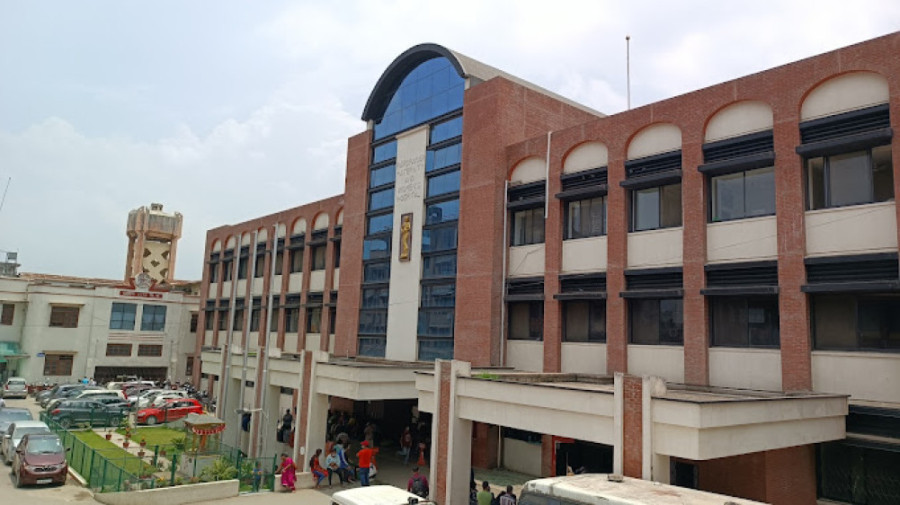
bookmark
Post Report
Published at : March 26, 2026
Updated at : March 26, 2026 06:47
Kathmandu
The Thapathali-based Paropakar Maternity and Women’s Hospital will manage the medical waste generated by all urban health promotion centres run by the Kathmandu Metropolitan City, following an agreement between the hospital and the city office.
As per the agreement, the city office will provide Rs20 million to the hospital to set up a new medical waste treatment plant, including an incinerator, on the hospital’s land, where medical waste produced at the hospital and urban health promotion centres will be properly processed and managed.
“We were unable to find a suitable site to establish a medical waste management facility,” said Deepak Kumar KC, chief of the Health Department under the city office. “We found that the maternity hospital already has its own waste treatment system, is managing hazardous medical waste properly, and also has space for a new facility. Therefore, we decided to provide a grant to support the construction of a new facility.”
The department runs 32 urban health promotion centres—one in each ward of the metropolis. Some centres also run laboratories.
Hospital waste management is a neglected but serious issue in Kathmandu Valley. Along with private health facilities, including hospitals, nursing homes, polyclinics, and laboratories, some state-run health facilities also mix up hazardous medical waste with household waste.
The private companies, which collect household garbage in the Valley, also collect hazardous medical waste mixed up with household waste and take it to a landfill site to dump. A random inspection by the environment department of the city office in the past showed that some private hospitals in Kathmandu Valley have not even been carrying out autoclaving of used syringe needles and hazardous medical wastes. Autoclaving is a steam sterilisation process that medical facilities use to disinfect small equipment, tools or medical waste, so that it can be disposed of safely.
“Our officials deployed in the landfill site had fined some companies in the past for discarding hazardous medical waste in the landfill site without proper treatment,” KC said. “We will coordinate with our Environment Department and monitor waste management practices of health facilities soon.”
Many health facilities including state-run hospitals do not have their waste disposal system. Doctors say mixing hospital waste with household waste poses a serious threat of spreading infections—HIV, Hepatitis B, Hepatitis C, tuberculosis, tetanus, and coronavirus—to those handling the waste.
Officials said that not only the metropolis’s cleaning staff but also ragpickers get injured and infected by the needles used in the health facilities. The risks of spread of infections in communities grow when hazardous waste is mixed up with household waste.
It is estimated that there are over 2,100 health facilities in operation in KMC alone. Most health facilities discard medical waste mixing it up with household waste. Some also burn such waste out in the open, they admit.
Experts say burning medical waste is the worst idea as it can produce dioxin, furan and other hazardous chemicals, which can even cause cancer. Pathological waste contains harmful microorganisms—bacteria and viruses—which can easily spread if not managed properly.
A report published by the Ministry of Health and Population in 2020 showed that private hospitals were rampantly burning, burying and disposing of hazardous immunisation waste and mixing it up with municipal waste.
The study titled ‘Assessment of Immunisation Services in the Private Sector in Kathmandu Valley’—carried out by the Health Ministry and a consortium of Atlanta’s Center for Disease Control and Prevention, Johns Hopkins University, John Snow Institute—showed that only 7.7 percent of private health facilities were found practising the disinfection and recycling method.
According to the study, 19.2 percent of private health facilities were found burning immunisation waste, 15.4 percent were disposing of hazardous immunisation waste along with municipal waste and 2 percent of health facilities were found burying hazardous needles.
The World Health Organisation says hazardous waste poses many health risks such as the potential to inflict physical injury (stabs from sharp and pointed items such as needles), chemical burns, toxic exposure to pharmaceuticals, radiation exposure, and exposure to infectious and disease-causing microorganisms.


Editor's Picks

Constitutional Bench caught in seniority, ‘pick and choose’ dispute

A Dom boy’s long road to becoming a doctor

From blankets to handmade dolls, two foreign women bring comfort to flood survivors

News Analysis: When institutional defence exposes institutional fault lines

It’s a bird … it’s a plane … it’s the Indian ambassador’s farewell tweets
E-PAPER | October 11, 2026

×