Agriculture exports from Karnali top Rs3.64 billion, but livestock imports drain Rs951 million
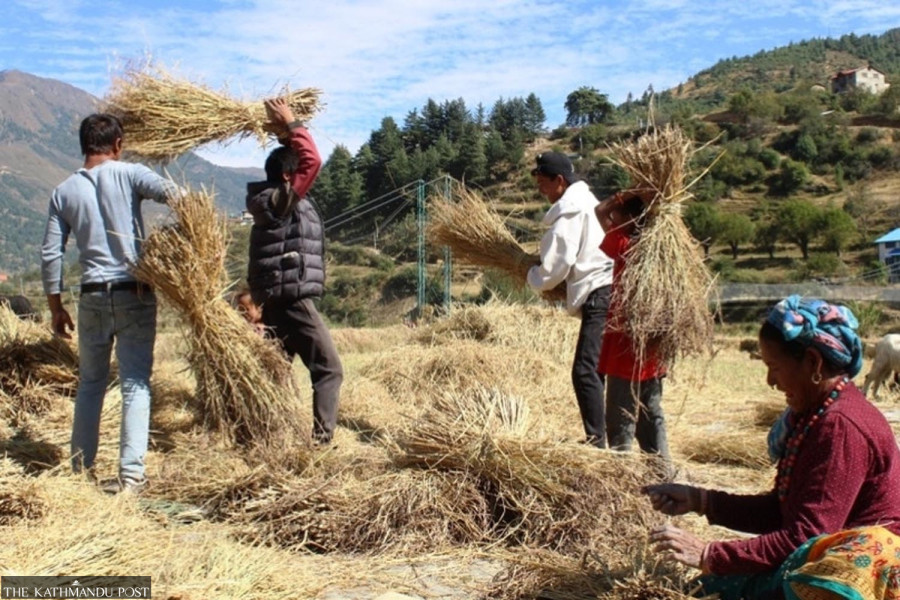
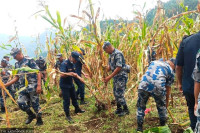
The province exported 77,495 tonnes of crops and other farm produce, while imports of livestock products continued to outpace local production.Post Photo
Karnali province exported agricultural produce worth Rs3.64 billion in the last fiscal year, while spending Rs951 million on imports of livestock products including milk, meat, fish, eggs and animal feed.
According to the Ministry of Land Management, Agriculture and Cooperatives, the province exported 77,495 tonnes of agricultural produce, including grains, pulses, fruits, ginger, turmeric, potatoes, honey and mushrooms. Livestock products generated an additional Rs287.3 million in export earnings.
The figures were released at the ministry’s annual progress review for the 2025-26 fiscal year. Of the Rs2.57 billion allocated to the ministry, Rs1.47 billion was spent during the year.
The provincial government distributed 88,000 fruit saplings and expanded commercial orchards across about 300 hectares, benefiting more than 45 farmer groups and 2,150 households, the ministry said.
It also provided Rs11.5 million in interest subsidies to 421 farmers and Rs10.43 million in incentives to 1,992 dairy farmers.
Under its small-scale irrigation programme, 195 projects were built or repaired, bringing irrigation to an additional 555 hectares. More than Rs11.34 billion was mobilised through 310 cooperatives across the province.
Chief Minister Mangal Bahadur Shahi said Karnali needed to move away from subsistence farming and towards modern, commercial agriculture. He called for greater organic production and urged farmers to adopt biofertilisers as part of efforts to make Karnali a model province for pesticide-free farming.
Economic Affairs and Planning Minister Tek Raj Pachhain said the provincial budget had prioritised the commercial development of agriculture.
The ministry identified a shortage of technical staff, poor road infrastructure, difficulties with farmers’ cost-sharing requirements and the lack of operating guidelines at the local level as major constraints to expanding the sector.




 15.26°C Kathmandu