In Jajarkot, crops are ready to harvest but farmers have nowhere to store them
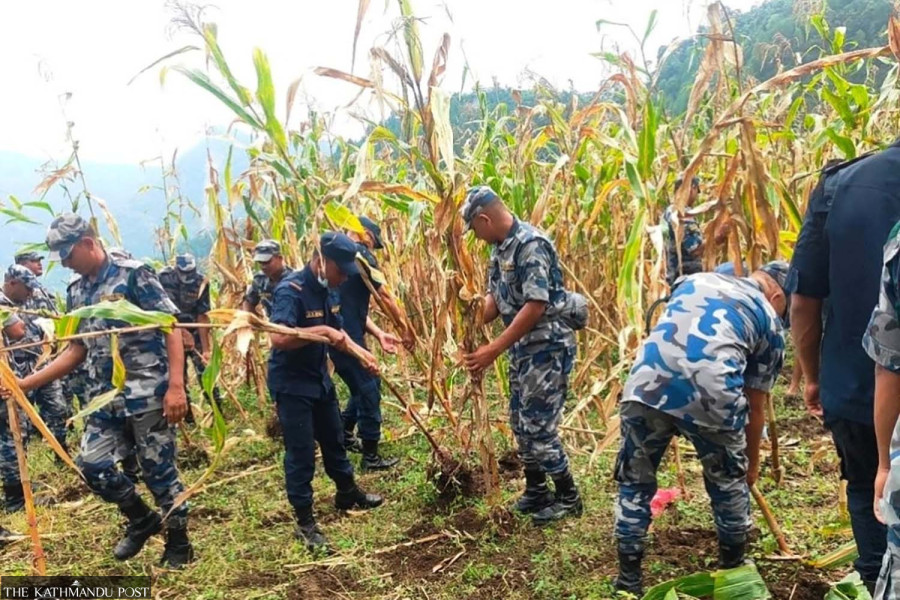
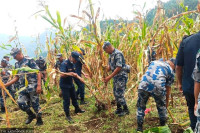
Local farmers face a cruel double blow as they lose both their homes and the crops needed to feed their families, while officials warn of a food shortage. Security personnel clear a maize field to set up temporary shelter in Bheri-2 recently. Post Photo
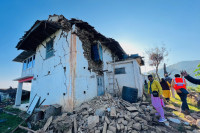
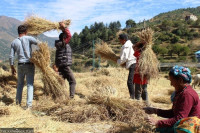
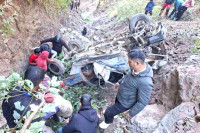
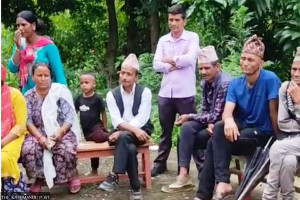
Devendra Karki of Jajarkot is in a bind. The maize in his field is ready to harvest but he has nowhere to take the crop. Devendra had planted maize on nearly eight ropanis of land, enough to feed his seven-member family for much of the year. But his house in Bheri Municipality-2 was destroyed in last week’s landslides that left four dead and 11 injured. Most of those who survived, including Devendra and his family, are currently taking shelter at a local school.
Devendra’s neighbour Ratna Bahadur Karki faces a similar dilemma. He had been living in a temporary shelter since the 2023 earthquake destroyed his house. A landslide has now reached within about 50 metres above the shelter. “The rain has not stopped and the landslides keep coming,” he said. “Even if I harvest the maize now, I do not know when the shelter will be buried.”
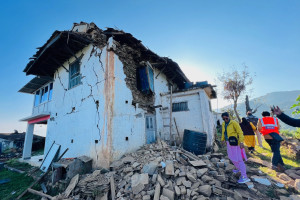
The disaster has affected 893 people from 168 households in ward 2 of Bheri Municipality. Thirty-four houses have been destroyed, while about 90 farming families have lost fields containing ready-to-harvest crops. Another 134 houses are considered at high risk.
“The landslide keeps growing,” said Govinda Karki, another local resident. “Even the maize we harvest may not be safe.”
Bhim Bahadur Karki, ward chief of Bheri-2, said there is a serious risk of food shortages in the local unit this year. “Some families have lost their houses as well as farmland,” he said. “In some cases, food stocks were buried when houses collapsed.”
Those whose houses were completely destroyed have nowhere to go, said the ward chairman.
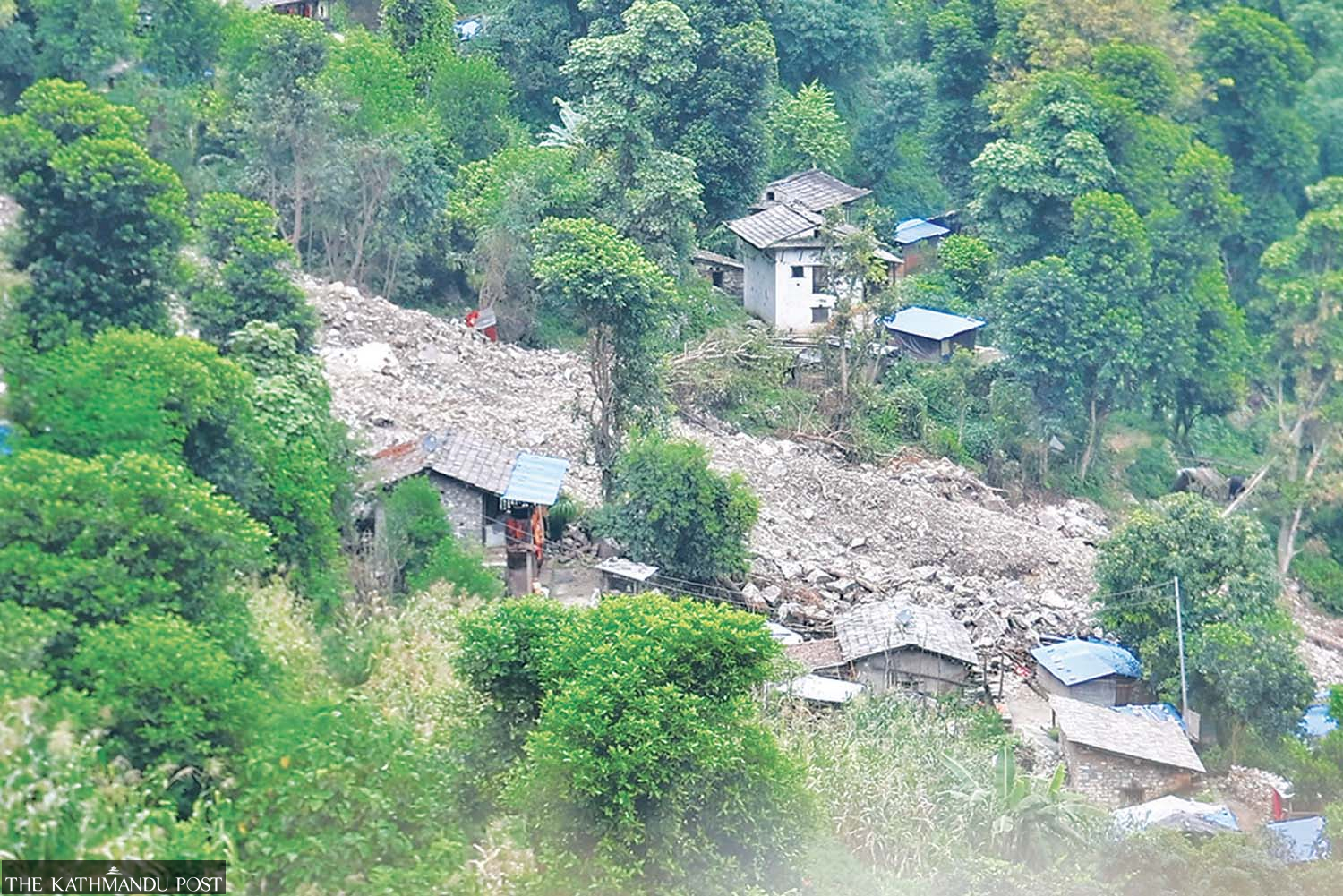
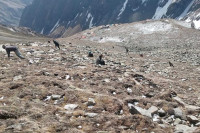
The Risang village that was struck by last week’s landslide in Bheri Municipality-2, Jajarkot. Post Photo
Suresh Sunar, undersecretary at the National Disaster Risk Reduction and Management Authority, said relief was inadequate because many displaced people were concentrated in a small area.
Sunar added that during the earthquake, damage was widespread across the district, and strong public sympathy brought so much relief that managing it was difficult. “This time, the damage is concentrated in one ward, but the number of displaced people is higher,” he said. “Managing so many people in a small area has raised the risk of infectious diseases and created problems with sanitation, food and accommodation.”
Authorities have sheltered 251 displaced people at Tribhuvan Basic School, 28 at the Bheri Municipality assembly hall, 27 at Bijay Basic School in Syala and 80 at Bishnu Basic School. They are now moving families to sites below and above the school in Risang because the existing shelters are considered unsuitable.
Meanwhile, some maize fields are being cleared to make room for tents and temporary structures.
Chief District Officer Khadananda Adhikari said the sites were selected after technical assessment and would house families until permanent homes are built.
“Some of the land selected for the displaced people has maize growing on it, and we have started clearing some of the crop,” he said. “We are building tents and temporary shelters and will move the families from the schools within two or three days.”
Sunar said experts had assessed the sites for landslide risk, terrain, drainage and road access. The displaced are being divided among three locations. Bheri Municipality will pay the land rent.
The crisis follows a series of disasters in Jajarkot, where communities were still recovering from the 6.4-magnitude earthquake of November 2023 when this monsoon’s landslides struck.




 12.9°C Kathmandu