Q&A: How Nepal can still identify those who died in the flood
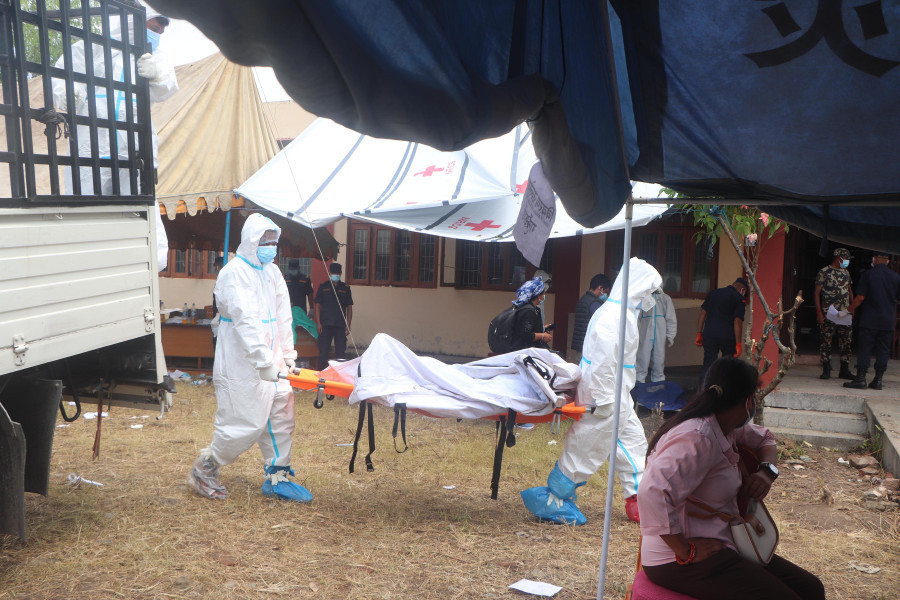
Forensic scientist Lata Gautam on documenting the dead, the limits of DNA, the choices Nepal is making over the hundreds of unidentified flood victims — and the forensic capacity the country still lacks. The body of a flood victim being carried after a DNA test in Bharatpur Hospital, Chitwan on Saturday. RSS
The devastating floods that tore through Nepal’s northern villages on August 26 have left authorities grappling with the recovery and identification of hundreds of bodies, including severely damaged and decomposed remains. Amid mass burials of unidentified victims — in the absence of adequate facilities for long-term preservation and amid public health concerns — questions have emerged over how the remains should be identified, documented and preserved for possible identification in the future.
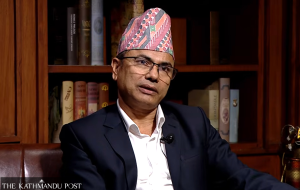
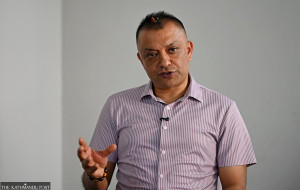
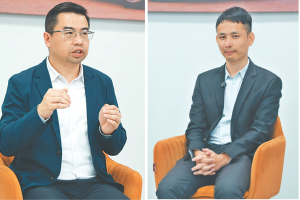
Professor Lata Gautam, who previously worked at Nepal’s National Forensic Science Laboratory, currently teaches and researches at Anglia Ruskin University in the UK.
Bhagirath Yogi, a journalist based in London, spoke to Gautam to understand the forensic challenges of disaster victim identification, the role of DNA and other methods, and how unidentified remains should be managed and “temporarily” buried while preserving the possibility of future identification.
This conversation has been edited for length and clarity.
What are the main forensic challenges in identifying victims of a major flood such as the one that struck northern Nepal on August 26, particularly when bodies have been badly damaged, decomposed, or recovered from water?
Apart from the difficulty of recovering the victims from complex, hazardous, and often inaccessible locations, the bodies are likely to be in an advanced stage of decomposition and contaminated with debris and other biological material. Prolonged submersion can damage soft tissue; skin may slough away or be affected by scavenger activity, while bodies can become fragmented and commingled with other remains and contaminated with mud, vegetation, sewage, fuel and other debris. This limits identifiable features, affects the quality of the biological material and complicates forensic examination.
Under these circumstances, visual identification would be highly unreliable and, on its own, does not constitute a reliable means of identification under INTERPOL DVI (Disaster Victim Identification) standards. Positive identification is based primarily on DNA, odontology and fingerprints, depending on the condition of the remains and the available resources.
Fingerprints may be difficult to recover where decomposition is advanced, while odontology requires the head or dental structures. DNA therefore becomes particularly important. Profiles can be obtained from bone and teeth, although this is more complex than extracting DNA from soft tissue and requires more advanced equipment, laboratory settings, skilled personnel and time.
What is the internationally accepted process/protocol for identifying large numbers of disaster victims, and how important are methods such as DNA profiling, dental records, fingerprints and forensic anthropology in such circumstances?
This is an open disaster, meaning it was not known exactly who were in the affected areas when the floods occurred.
The internationally recognised framework for managing and identifying disaster victims is the INTERPOL DVI process, which is used worldwide. It consists of four phases: recovery of remains and evidence; collection of post-mortem information, collection of ante-mortem information from families and records; and reconciliation of these datasets to establish identity.
Nepal has national guidelines governing the management of dead bodies following disasters and the management of unidentified and unclaimed bodies.
DNA profiling, odontology and fingerprint analysis are the three primary scientific methods used for positive identification. Where suitable ante-mortem records are available, dental and fingerprint comparisons can provide rapid and reliable identification. Their usefulness, however, depends on the condition of the remains and the availability and quality of records.
DNA is likely to be particularly important in this disaster because of the condition of the remains. DNA profiles can be generated from blood, soft tissue, bone and teeth and can be compared with known reference samples, or through kinship analysis, with samples from biological relatives.
The availability of ante-mortem data is likely to be a significant challenge. While Nepal Police operates an Automated Fingerprint Identification System (AFIS), and biometric data are being collected through the National Identity Card programme, a comprehensive population-level fingerprint database is not currently available for routine forensic comparison. Dental records may also be limited, while DNA identification requires suitable family reference samples and information about missing persons. This can become particularly difficult when several members of the same family have died.
If bodies are recovered from remote and difficult-to-access areas, what immediate steps should authorities take to preserve forensic evidence and maximise the chances of accurate identification?
The immediate priorities should be safe recovery, preservation of evidence and full traceability. Each body or body part should be assigned a unique identification number and photographed, with its exact recovery location and associated personal effects recorded.
A clear chain of custody should be maintained throughout recovery, transport, examination, storage and, where necessary, temporary burial. Where adequate mortuary or refrigerated storage is unavailable, and human remains are deteriorating, temporary burial may be considered as a contingency measure. Such burials should be carefully documented and mapped so the remains can be located and recovered later for further examination.
At the same time, ante-mortem information from families and available medical, dental and other records should be collected to support subsequent identification and reconciliation. Based on the available discussions with experts working in Nepal, forensic examinations and DNA sample collection are being carried out. A notice has been issued asking family members to contact the nearest police office.
According to reports, Nepal is facing limitations in forensic infrastructure, specialist personnel and DNA-testing capacity. How could British or international forensic teams practically support Nepal without compromising the chain of custody or the integrity of the identification process?
The international community can support the Nepal government by providing specialist equipment, resources and technical expertise. Such assistance should be coordinated within the framework established by the Nepali authorities, who should retain appropriate oversight of the identification process and ensure legal compliance, accountability and public confidence.
As media reports indicate that body parts have been recovered and that some remains are in an advanced state of decomposition, DNA analysis may be particularly valuable. International partners could provide lab equipment, supplies, and technical assistance to expand DNA analysis capacity. Where necessary, bone and dental samples could also be processed temporarily at suitably accredited international labs. Rapid DNA technologies may have the potential to generate profiles more quickly, but their availability, logistical feasibility, regulatory approval, and operational suitability would need to be assessed in the specific disaster context.
What is the appropriate and dignified procedure for storing unidentified bodies, determining their identities, and eventually releasing or disposing of them after a mass-fatality disaster? What risks arise if bodies are buried or cremated before identification is complete?
The management of unidentified bodies should prioritise traceability and preserve the possibility of future identification. Every reasonable effort should be made to establish identity and reunite remains with families.
If identification cannot be achieved immediately, DNA profiles and any other available information such as fingerprints and photographs should be retained for future comparison. Permanent records of burial location and associated forensic data should be maintained nationally.
Temporary burial allows remains to be preserved and potentially exhumed if new information, family reference samples or advances in forensic technology make identification possible.
From your experience of international disaster victim identification, what lessons should Nepal draw from previous mass-fatality events, and what long-term forensic capacity should the country develop to respond more effectively to future climate-related disasters?
One of the most important needs is a centralised dead body storage facility. Experience from the 2015 earthquake and the Rasuwa floods has shown that storage is a major weakness in managing mass fatalities. It would not be feasible or sustainable to maintain refrigeration capacity for thousands of bodies solely for use during disasters. Temporary burial, with appropriate documentation and safeguards, may therefore provide a long-term storage option.
Following the Rasuwa floods, remains are being interred in several districts. It is important that post-mortem and ante-mortem data are centrally coordinated and that a long-term plan is developed for transferring remains, where appropriate, to a secure location for continued identification efforts.
While local bodies, voluntary organisations and other stakeholders are assisting in the cremation of remains from time to time, there is no structured mechanism for their management.
The guarded opinion in this regard is that families would rather be presented with skeletal remains than be told that their loved ones were cremated. Cremation can deprive families of the possibility of identifying their relatives, perform funeral rites and participate in the grieving process.
Nepal therefore needs a national forensic institution with a mandate covering both disaster-related and routine unidentified and unclaimed bodies.
Continued investment in DNA analysis, forensic odontology, fingerprint comparison, lab services, mortuary management, and ante-mortem data systems would strengthen the country’s preparedness for future mass-fatality events.
Which international bodies or agencies can Nepal reach out to to identify and carry out dignified management of bodies after major disasters?
Nepal may already have reached out, or may be in the process of engaging, relevant international organisations. The country has prior experience of DVI operations following the 2015 earthquake, and support from several countries has already begun to arrive. Potential sources of additional technical, forensic, humanitarian or logistical support include: INTERPOL, International Commission on Missing Persons, International Committee of the Red Cross, International Federation of Red Cross and Red Crescent Societies, and foreign governments and forensic authorities.




 15.67°C Kathmandu