Maternal mental health screening at Thapathali hospital remains stalled for six months
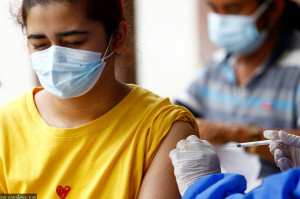
Mental health problems during pregnancy and after child birth are responsible for six percent of maternal deaths in Nepal and rank as the second leading cause, according to a National Statistics Office report. Mental health issues, including postpartum depression, are among the leading causes of maternal deaths in Nepal that kill scores of women every year. SHUTTERSTOCK
A few months ago, a 26-year-old new mother was taken to the Thapathali-based Paropakar Maternity and Women’s Hospital after she stopped breastfeeding her newborn and caring for herself. Her in-laws told the attending doctor that she also cried constantly, had stopped eating properly and remained silent most of the time.
“The woman was suffering from a severe form of postpartum depression,” said Dr Pratikshya Ghimire, the psychiatrist who treated the patient at the hospital. “We admitted the patient for several weeks, counselled her, and prescribed antidepressants along with other medications.”
Mental health issues, including postpartum depression, are among the leading causes of maternal deaths in Nepal that kill scores of women every year. It is the second leading cause of maternal death, after postpartum haemorrhage (excessive bleeding during childbirth), and pre-eclampsia (pregnancy-related high blood pressure disorders).
According to a report on maternal mortality prepared by the National Statistics Office in 2022, six percent of maternal deaths were due to self-harm, with most cases occurring during pregnancy.
To address the growing maternal deaths linked to mental health issues, the Ministry of Health and Population (now the Ministry of Health and Food Safety) hired a psychiatrist on a contract basis and deputed to the Thapathali hospital some 18 months ago. The World Health Organisation had also helped the government to start the screening service.
However, after the doctor’s contract expired, mental health screening for pregnant women and new mothers at the hospital has halted indefinitely.
“Mental health screening service remains suspended for the past six months,” said Dr Shree Prasad Adhikari, director at the hospital. “The service has stopped at our hospital not because it is unnecessary but because the doctor's contract has ended.”
Dr Ghimre, who served at the Thapathali Hospital for around a year, said that the woman recovered well, continues to attend follow-up appointments and recently visited the hospital with her baby. She said many women suffer from postpartum depression, which involves intense feelings of sadness, anxiety and exhaustion, and can make it difficult for new mothers to cope with the changes, care for themselves and look after their babies.
Experts say that the indefinite suspension of the mental health service at the Thapathali hospital is unfortunate.
Dr Basudev Karki, a consultant psychiatrist serving at the Nepal Mental Hospital said such a move does not help reduce growing mental health problems during pregnancy and after childbirth, or reduce ongoing maternal deaths.
Experts say prenatal and postnatal depression can occur at any stage during pregnancy or after childbirth. Many women experience anxiety due to hormonal changes during pregnancy and after delivery. Some experience extreme sadness, anxiety, fatigue, and changes in sleeping and eating habits. Others worry about financial concerns or feel unprepared to shoulder additional responsibilities.
“Proper counselling, along with treatment, can help pregnant women and new mothers cope with mental health problems,” said Karki. “A small investment by the government can go a long way in easing these problems and reducing deaths linked to mental health issues.”
Meanwhile, an official at the Ministry of Health and Food Safety said the ministry plans to deploy medical doctors who completed their medical education under the government’s scholarship programme.
Nepal reduced the maternal mortality rate from 539 deaths per 100,000 live births in 1996 to 239 in 2016. For this, the country even received a Millennium Development Goals award.
According to the World Health Organisation, Nepal has reduced maternal deaths by over 70 percent since 2000. The UN health body, in its latest report, stated that 142 Nepali women die from maternity-related complications per 100,000 live births.
Nepal’s original target under the UN’s Sustainable Development Goals is to reduce maternal mortality to 75 per 100,000 births by 2030.
The SDGs, a follow-up on the Millennium Development Goals (MDGs), aim to end poverty, hunger and all forms of inequality in the world by 2030. Nepal has committed to meeting them.
Arjun Poudel is a health reporter for The Kathmandu Post. Before joining the Post, he worked for Sagarmatha Television, Naya Patrika, Republica and The Himalayan Times.




 23.12°C Kathmandu