Government plans burn wards in all provincial hospitals
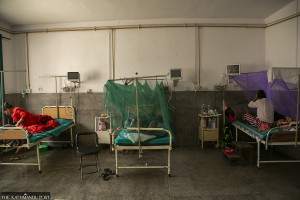
Experts welcome decision, but stress sustained funding, trained manpower and strong political commitment. The Kirtipur Hospital alone provides treatment to around 800 burn victims each year. Post File Photo
Until a few weeks ago, the Nepal Cleft and Burn Centre at Kirtipur in southwestern Kathmandu had been forced to place burn victims in the visitors’ ward, as all available beds of the hospital were occupied by burn cases.
Burn cases spike every winter, and most hospitals across the country refer victims to Kathmandu, as they provide only basic care. As a result, Kirtipur Hospital is routinely overwhelmed with serious cases.
Doctors say many burn victims in Nepal either succumb to their injuries or are left with lifelong disabilities and require long-term rehabilitation, largely due to the lack of specialised care in most hospitals.
To address this longstanding problem, the 100-point governance reform agenda unveiled by the Balendra Shah-led government includes a plan to set up burn wards in all provincial hospitals and ensure treatment at subsidised rates.
“As burn injury doctors, we welcome the decision,” said Dr Peeyush Dahal, chief consultant plastic surgeon at Bir Hospital, which is Nepal’s oldest and one of the busiest state-run hospitals. “We are ready to provide our expertise to help make the government’s initiative a success, but what we should not forget is that previous governments had also taken similar decisions.”
Nepal is among the countries with the highest incidence of burn injuries. In rural areas, burns are the second most common injury, accounting for about five percent of disabilities, according to the World Health Organisation.
The Ministry of Health estimates that each year, around 55,000 people suffer burn injuries in Nepal. One study shows that over 40,000 people sustain burns [minor or severe] every year and around 1,500 to 2,000 of them succumb to their injuries.
The burns centre at Kiritpur alone provides treatment to around 800 victims every year. Despite the scale of the problem, the government has neither upgraded or expanded treatment facilities, nor run awareness campaigns on immediate burn care.
Most hospitals provide only basic treatment for burns. Experts say such care does not ensure patient safety, and a multidisciplinary team of experts is needed to provide specialised care to victims.
Such capacity calls for a big investment, both in infrastructure and skilled human resources, which experts say is a major challenge.
“We are ready to help the government in setting up burn wards in every provincial hospital,” said Dr Ishwar Lohani, a consultant plastic and cosmetic surgeon. “Many lives can be saved if basic burn care is available in district and provincial health facilities. And this will also ease the burden on tertiary hospitals.”
The erstwhile government had pledged free treatment for burn victims from low-income groups, and to reimburse designated hospitals for the cost of care. Hospitals designated to provide free treatment include the Kirtipur hospital in Bagmati province; BP Koirala Institute of Health Sciences in Koshi province; Narayani Hospital in Madhesh province; Pokhara Institute of Health Sciences in Gandaki province; Bheri Hospital in Lumbini province; Surkhet Provincial Hospital in Karnali province; and Seti Provincial Hospital in Sudurpaschim province.
But experts say merely designating hospitals or setting up a few beds is not enough for ensuring quality care. For quality care, trained human resources, and funding, advanced equipment, and strong political commitment are needed.
“Fire does not discriminate between rich and poor, but most burn victims are poor, marginalised, women and children,” said Dr Roshan Pokhrel, former health secretary. “Such victims cannot afford treatment. The government must shoulder the responsibility and ensure quality care, regardless of patients’ ability to pay.”




 24.95°C Kathmandu